
Bayous, Birdsong, and Bald Cypress
Taking Refuge in the Cypress-Tupelo Swamp | Travel With Spirit
Growing up on the wide-open plains of Montana, I first learned about swamps in elementary school. In my imagination, they were shadowy places filled with drifting mist, lurking alligators and the sort of restless spirits that belonged in Southern folklore. To a child raised beneath big skies and dry prairie winds, the swamp felt impossibly exotic, mysterious, and dangerous, and I wanted desperately to see one for myself.

Long after childhood dreams first took hold, and after far more time than anticipated, I finally made it to the cypress-tupelo swamps of the American South. But when I did, I discovered something entirely different from the eerie wilderness I had imagined as a child. These swamps were not places of menace. They were sanctuaries for birds, reptiles and ancient trees, and, unexpectedly, for me as well. For a city dweller accustomed to noise, schedules and glowing screens, there is a rare kind of stillness in a swamp. The deeper you drift into it, the more the outside world loosens its grip.
Cypress Island Nature Preserve, Louisiana
Southern Louisiana has a way of slowing you down before you even reach the water. Roads thread through low country lined with moss-draped oaks, zydeco spills from open doorways, and the humid air carries the scent of earth and rain. Just beyond Lafayette lies Cypress Island Nature Reserve, 10,000 acres of hardwood forest and cypress-tupelo swamp that somehow still feels wonderfully undiscovered.

I arrived early, just as the morning mist was lifting from Lake Martin. The preserve is famed for its rookery, one of the most important bird nesting areas in North America, and during spring and early summer, the swamp erupts with life. Thousands of birds gather here to court, nest and raise their young.
From the shoreline, flashes of white and pink moved through the trees. Snowy Egrets, White Ibises and the unmistakable Roseate Spoonbills, their feathers glowing like watercolours in the soft light. Great Blue Herons stalked silently through the shallows while Anhingas dried their wings in statuesque poses. Nearly 250 species have been recorded here, that’s a quarter of all bird species found in North America. Even for someone with only a casual knowledge of birding, it felt extraordinary. But while the rookery was a spectacle, what waited inside the swamp was something quieter and stranger.

The boat’s motor hummed softly as we entered narrow channels beneath towering bald cypress trees, some more than 300 years old. Spanish moss hung from their branches in long silver curtains, brushing my shoulders as we passed underneath. The further we travelled into the maze of waterways, the quieter the world became. The swamp absorbed sound. Conversation faded. Even time seemed reluctant to move too quickly here.
Occasionally, a woodpecker hammered somewhere deep in the trees or a warbler called overhead, but otherwise, there was only the gentle ripple of water against the boat. Then, without warning, an alligator slid silently from a sun-warmed log and disappeared into the dark water beside us. No drama. Just a quiet reminder that this swamp belongs to creatures perfectly adapted to it.
 An American alligator resting in a bayou swamp in Lake Martin
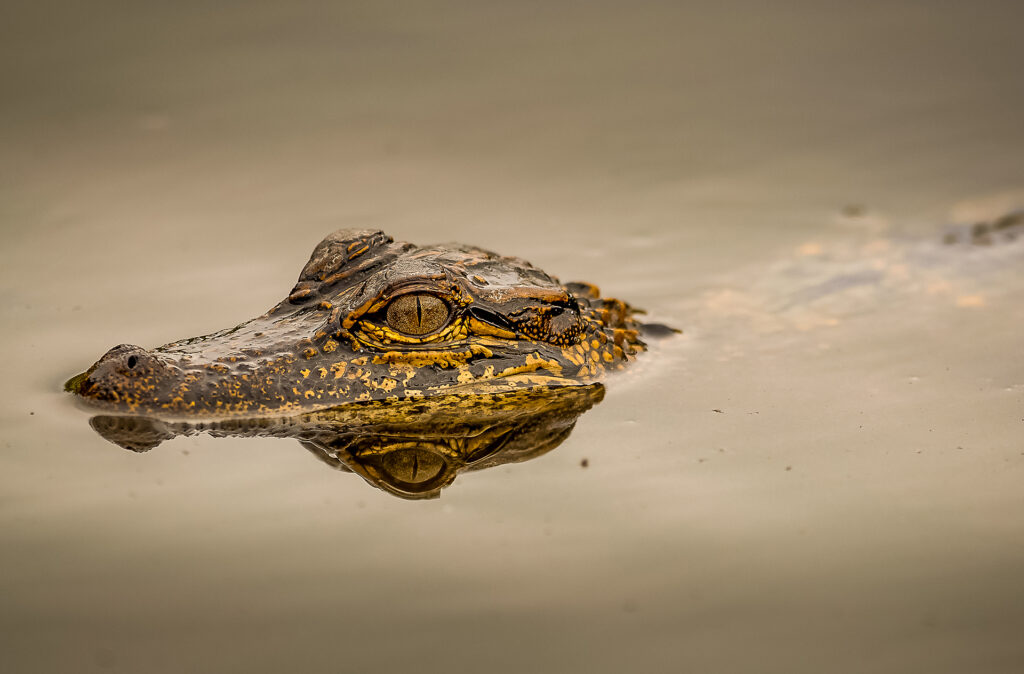 Close up of a baby Alligator – about 10 inches long
Louisiana’s conservation efforts have helped American alligator populations rebound dramatically, and Lake Martin is home to around 1,200 of them. During late summer, hatchlings emerge from nests hidden along the banks. Our guide pointed out a pod of tiny alligators floating near the reeds, each barely larger than my hand. I briefly considered touching one as it swam curiously toward the boat. Common sense prevailed, however. Mother alligators are famously protective, and I had no desire to test these particular limits of Southern hospitality.
Back on dry land, Lafayette proved the perfect base for exploring the region. The city pulses with the culture of Cajun and Creole Louisiana, two communities whose histories are woven deeply into this landscape. Music spills from dance halls and downtown bars most nights of the week, from swamp blues and jazz to the infectious rhythms of zydeco.
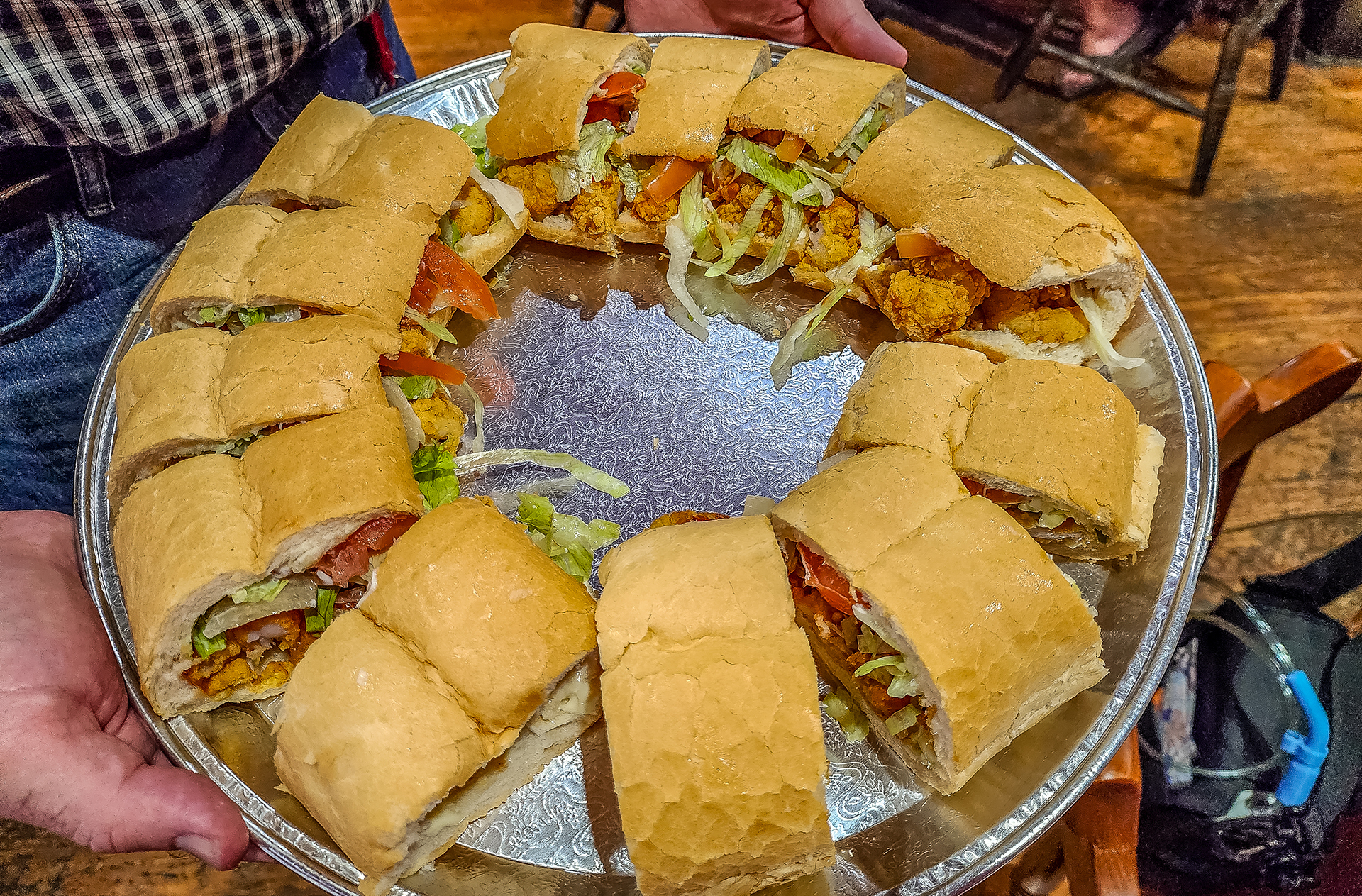
And then there is the food. Gumbo rich with spice, crawfish étouffée, smoked boudin sausage, and overstuffed po’boys appeared at nearly every meal. Meals here are not rushed affairs; they are gatherings, stories and traditions served on a plate. If there is a better way to end a day spent drifting through the swamp than with live music and a slice of king cake, I have yet to discover it.
Spring is perhaps the most atmospheric time to visit, particularly during the weeks leading up to Lent, when Mardi Gras celebrations spill through towns and villages across the region. Beyond the famous New Orleans festivities, Cajun country celebrates with colourful parades, masked riders and the wonderfully chaotic Courir de Mardi Gras traditions that feel deeply rooted in another era.
Caddo Lake, Texas and Louisiana
If Louisiana’s swamps introduced me to the soulful side of these wetlands, Caddo Lake revealed their haunting beauty.
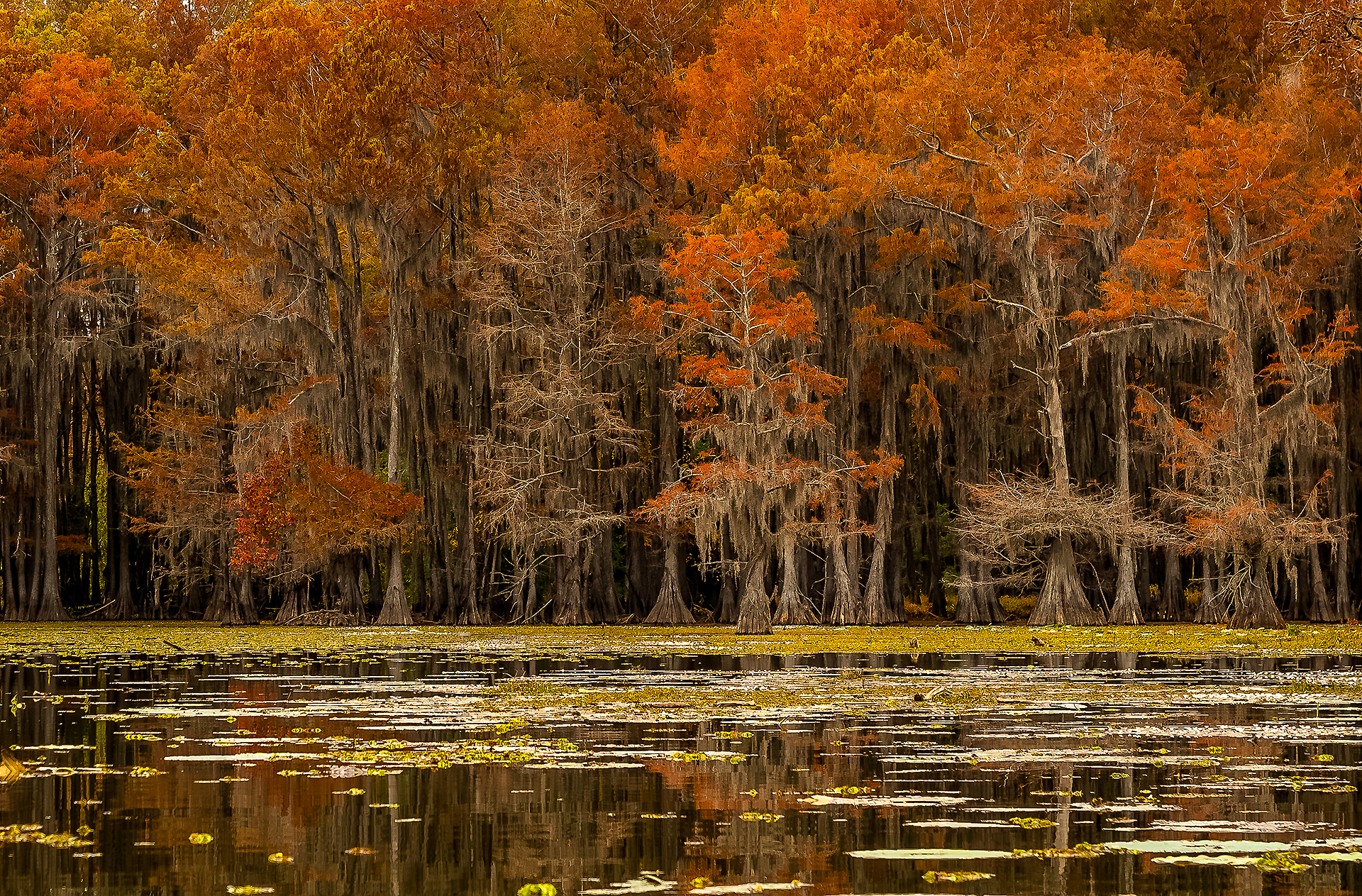 The brilliant display of Autumnal colours at Caddo Lake, on the Texas/Louisiana border.
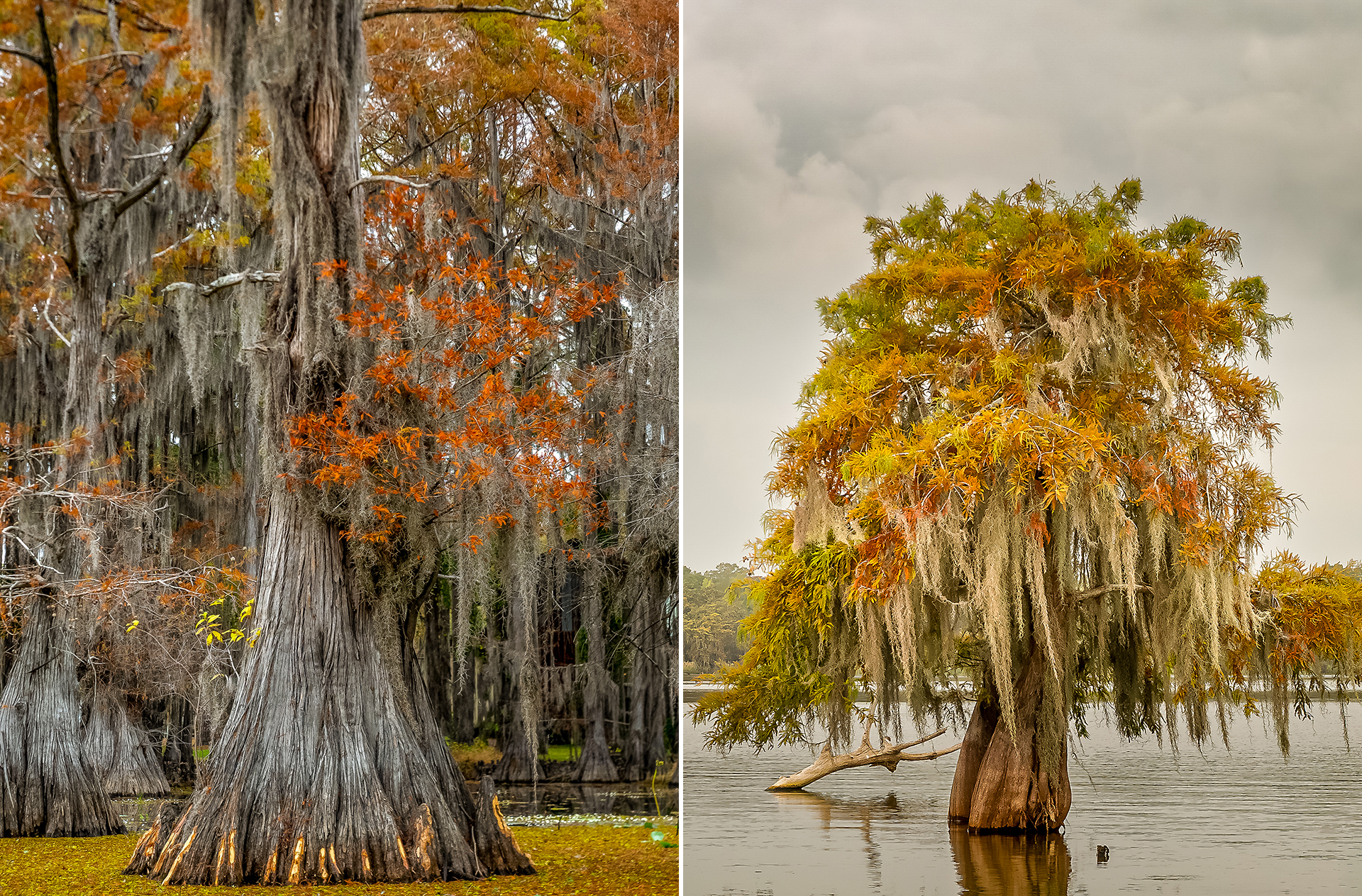
 The trunk and knees of a Bald Cypress tree
Straddling the Texas-Louisiana border around 400 miles north of the Gulf Coast, Caddo Lake spreads across 25,000 acres of bayous, flooded forests and tangled waterways. In autumn, the landscape transforms into something almost cinematic.
I visited in November, when the bald cypress trees were turning brilliant shades of burnt orange and copper beneath heavy grey skies. Water tupelos added flashes of scarlet and gold along the water’s edge. The ancient cypress forests here, some trees more than 400 years old, rose from the lake like cathedral pillars, their enormous, buttressed trunks anchored in knotted roots, with cypress knees protruding from the water like weathered sculptures. Once again, Spanish moss draped everything in soft silver strands, giving the landscape an almost dreamlike quality.
The best way to experience Caddo Lake is from the water. Kayaks and canoes glide quietly through narrow channels while experienced local guides navigate hidden passages through the flooded forest. It is beautiful, but also disorienting. The maze of bayous twists endlessly, and I quickly understood why locals recommend visitors avoid venturing too far alone.
Most tours depart from the wonderfully named town of Uncertain, Texas, population around 80 on a busy day. The name somehow suits the swamp perfectly.
Uncertain itself is little more than a scattering of cabins, boat launches and small cafés, but that simplicity is part of its charm. Life here moves at the pace of the lake. Nearby, Caddo Lake State Park offers camping, cabins and canoe rentals for travellers wanting to stay close to the water.

For a little more comfort, the historic town of Jefferson lies about 15 miles away. Its brick streets, antique shops and old-fashioned storefronts feel wonderfully preserved. I spent an afternoon wandering through the Jefferson General Store, which has been trading since 1870. Inside were shelves crammed with nostalgic sweets, quirky souvenirs and the sort of treasures you never knew you needed until you spotted them.
But what stayed with me most from Caddo Lake was not the shopping or even the photographs I brought home. It was the silence. At sunrise, drifting beneath the cypress canopy as mist curled across the water, the swamp felt suspended outside ordinary life. No traffic. No notifications. No urgency. Just water, trees and the occasional cry of a distant bird.

Traveller’s Notes
Louisiana — Cajun Country
Tours & Experiences
- Cajun Country Swamp Tours — Small-boat guided tours through Lake Martin and the cypress-tupelo swamp. Book ahead during spring nesting season.
- Cajun Food Tours, Lafayette — Guided walking tours through Lafayette’s best Cajun and Creole kitchens.
Nature & Parks
- Cypress Island Nature Preserve (The Nature Conservancy) — Free to visit. The Lake Martin viewing area off Highway 31 near Breaux Bridge is open year-round.
Getting There
- Fly into Lafayette Regional Airport (LFT) with connections via Dallas or Houston, or into New Orleans (MSY) and drive two hours west along the I-10. A hire car is recommended.
Where to Stay
- Base yourself in Lafayette for culture, dining and live music. Consider smaller guesthouses in Breaux Bridge for easy access to Lake Martin.
Best Time to Visit
- March–July: Birdlife and nesting season at Lake Martin
- February–March: Mardi Gras — seek out the rural Courir de Mardi Gras
- August–September: Alligator hatchling season
Useful links: Louisiana Travel · Visit Lafayette · The Nature Conservancy
Texas & Louisiana — Caddo Lake
Tours & Experiences
- Caddo Lake Photo Tours — Specialist photography boat tours departing from Uncertain, Texas. Early morning for the best mist.
Nature & Parks
- Caddo Lake State Park (Texas Parks & Wildlife) — Camping, cabins, canoe rentals and guided paddling. Book cabins well ahead for October–November.
Getting There
- Fly into Dallas/Fort Worth (DFW) — around 3 hours by road — or Shreveport Regional (SHV), around 60 miles from the lake. A hire car is essential.
Where to Stay
- Caddo Lake State Park cabins for the closest water access and morning mist
- Excelsior House Hotel, Jefferson (est. 1858) — one of the oldest hotels in Texas
Best Time to Visit
- Late October–November: Peak autumn colour on the bald cypress
- March–May: Best paddling conditions before summer humidity
- December–February: Quiet, stark winter beauty
Useful links: Travel Texas · Visit Jefferson, Texas · Texas Parks & Wildlife