Shadows of the Past
Every country has its monuments to conflict, but northern France is especially peppered with memorials to great generals, foot soldiers, and momentous events that have shaped the continent over centuries of warfare.
Battlefield tours are as old as history but the landmarks of previous conflicts come alive for the tourist taking time to discover the past and the cemeteries and memorials which form an important part of our remembrance of military actions. A fascination with bygone battles started when I realised my birthday fell on the anniversary of the Battle of Agincourt in 1415, a time when Henry V needed to engage in a foreign adventure to distract England’s citizens from domestic troubles.
On St. Crispin’s Day, furthering his claim and those of his ancestors to the French throne, he defeated a French army almost five times the size of his forces, in an astonishing pitched battle lasting just three hours. The English losses amounted to a little over 400, while the French losses, estimated between 7,000 – 10,000, have left this David and Goliath feat one of the most richly documented of all medieval battles. On that day, the British longbow archers proved as deadly and accurate as any machine gunners of the 20th-century world wars, unleashing up to half a million arrows to rain down upon the advancing French knights. In the town’s longbow-shaped museum at the Pas-de-Calais, today’s battlefield tourist can see the only archaeological relic of this historic conflict – an ornate French spur unearthed in 1936.
Nowadays, any journey across northern France and the Low Countries is littered with reminders of 20th-century conflicts. The most brutal reminders are surely along those Normandy beaches where Allied forces stormed ashore on June 6, 1944, embarking upon the liberation of Europe from Nazi occupation.

It was this year’s 80th anniversary of those D-Day landings that spurred me to make my first battlefield visit. I chose to make this with a 50-strong coach party from Nottingham, organised by the Sherwood Rangers Yeomanry Association of former reservist soldiers whose forebears played a decisive part in that largest seaborne invasion in history.
I first encountered the men of the Royal Yeomanry as a young reporter assigned to cover their manoeuvres for a regional newspaper in the 1980’s.
I travelled with them to annual camps, firing ranges, and on major exercises in northern Europe, namely Crusader and Lionheart, designed to test whether Allied forces could counter a Russian threat by mobilising an army in three days to check any advance of an invading force along the German border. With my head out of the turret of a Fox armoured car, I travelled up to 60 miles a day across the Bavarian countryside, traversing fields of asparagus, trundling along the lines of beech forests, and tracking ‘enemy’ German Leopard tanks as British Challenger tanks faced them down. Fast-forward to today and the previous British government has raised the question of whether the army should be bolstered by undertaking some form of national service. Same threat, different times.
But in Normandy this June, we were there to honour the brave deeds of a tank regiment that from D-Day onwards was in the thick of the action in their Sherman tanks through to VE-Day and the end of the war in Europe. They covered thousands of miles and endured some of the fiercest fighting in Western Europe. Their engagements stretched from the Normandy beaches to the bridges of Eindhoven. They were, as historian James Holland pointed out, “The first British unit into Germany, grinding across the Siegfried Line into the Nazi heartland.”
This county yeomanry regiment consisted of squires, gamekeepers, horsemen, and country folk before it transferred from horseback to armoured vehicles and distinguished itself in desert tank battles under the burning sun of North Africa. It was these battle-hardened veterans who took their ‘floating’ D-Day tanks ashore in the first wave upon the exposed Normandy beaches.
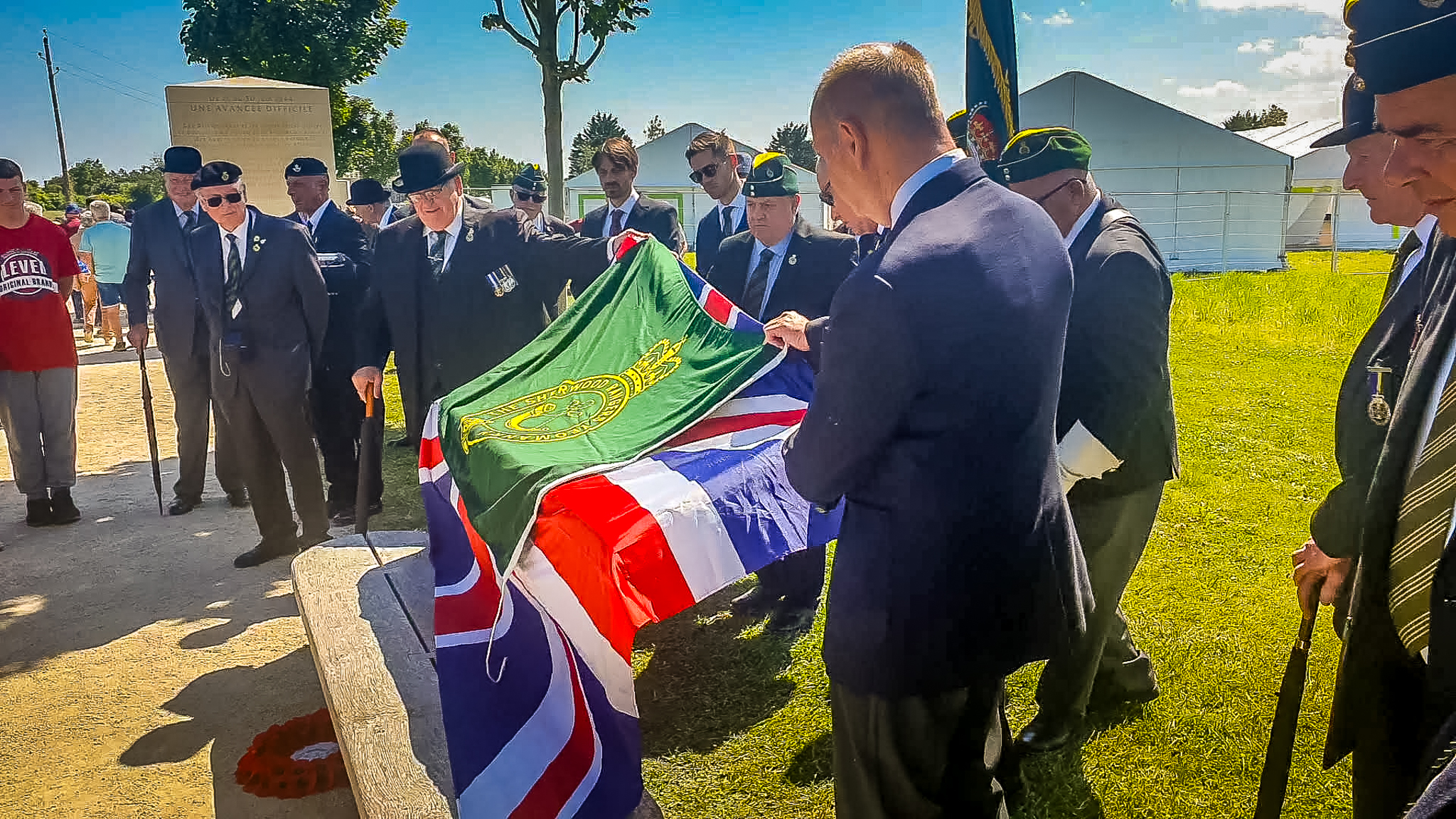
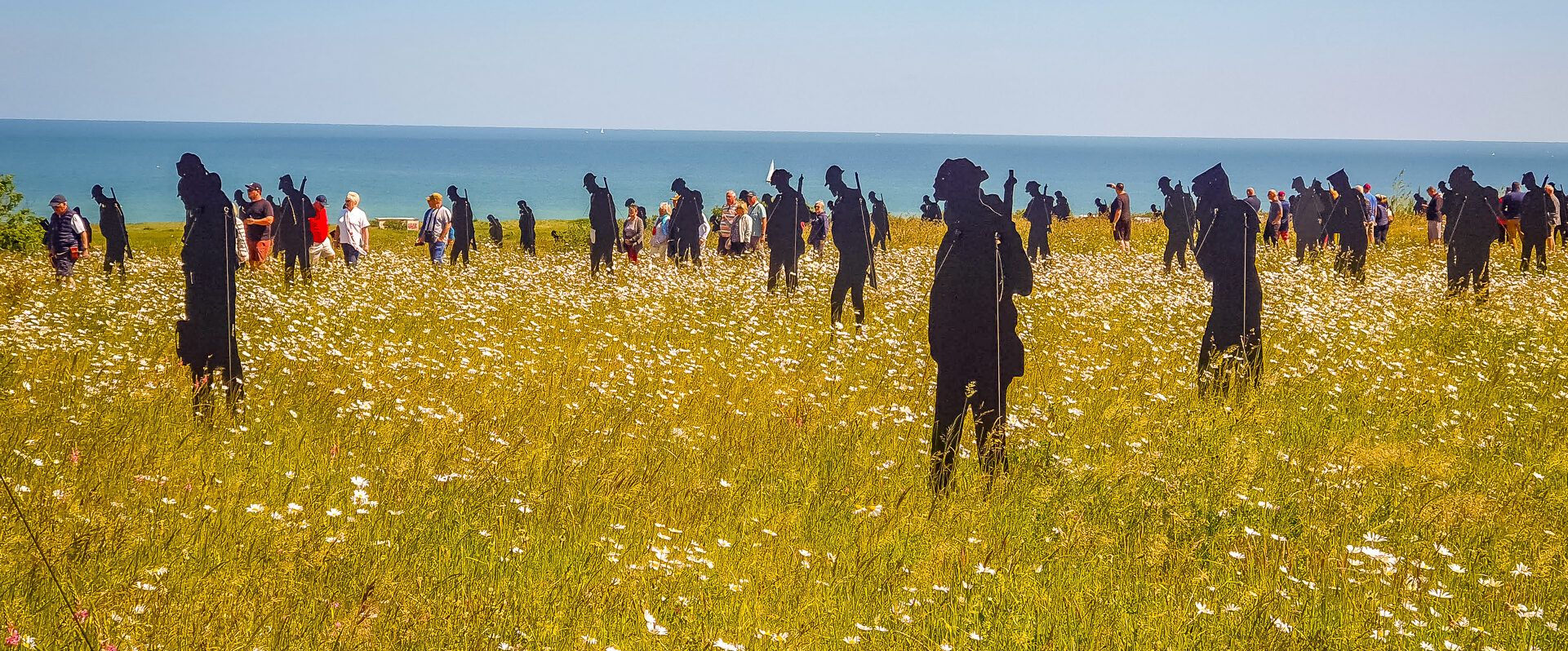
The principal reason for this private five-day tour with the Sherwood Rangers Yeomanry – this time including a party of former miners, a train guard, a mortgage broker, and a solicitor, among other professions – was the unveiling of a commemorative bench at the British Normandy Memorial at Ver-sur-Mer. Here, a ghostly army of soldier silhouettes peers out to sea, and the footpaths, when viewed from above, form the Union Jack flag. As I stood silently at this memorial alongside a major from the Sherwood Rangers, we were approached by a woman searching for her father’s name. Using the Commonwealth War Graves Commission app, we guided her to the exact pillar commemorating her father. Tears filled her eyes.
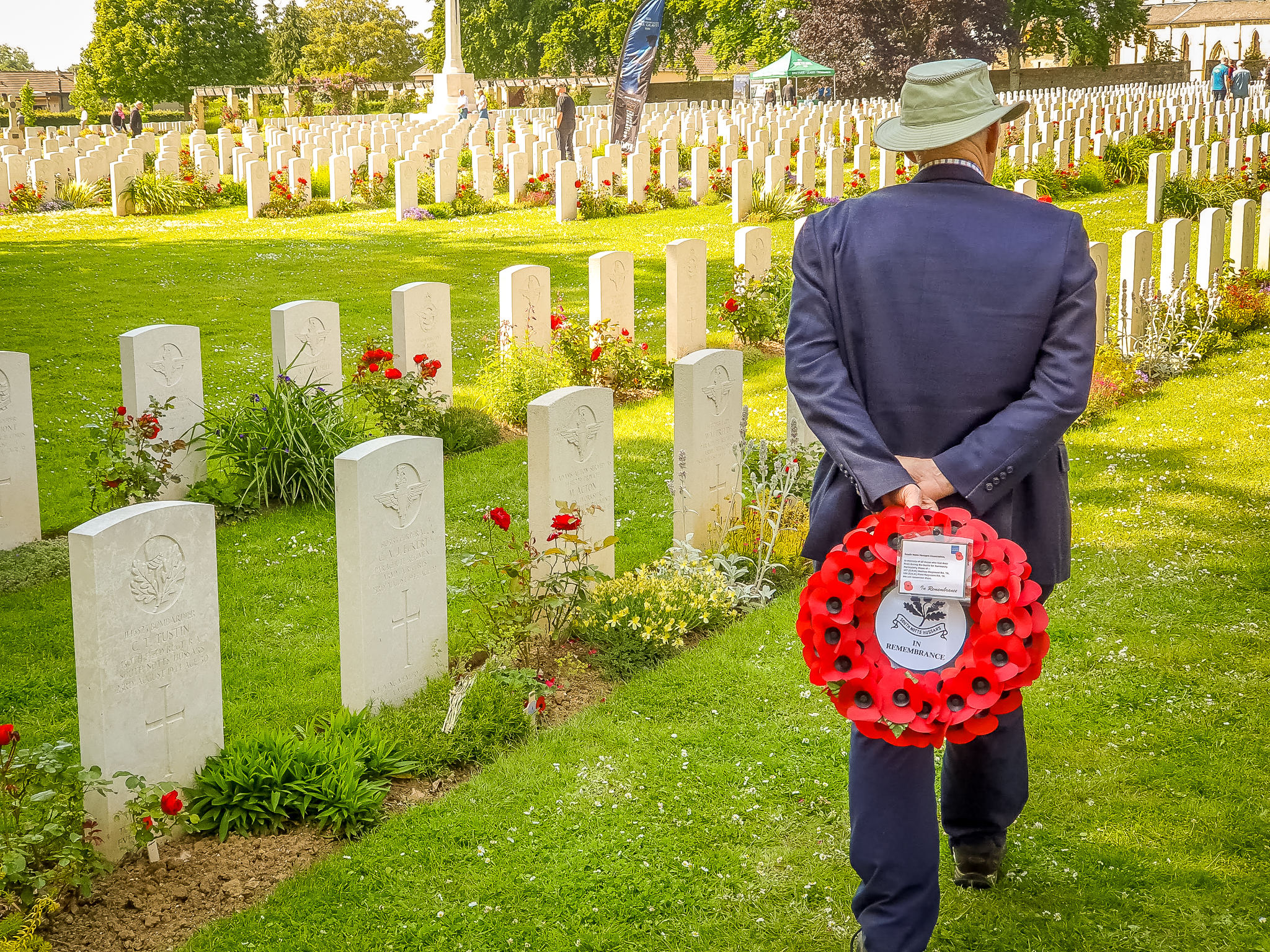
There were many such poignant moments as we visited other shared and squadron-specific ceremonies, including the British war cemetery at Bayeux, and Pegasus Bridge, where the museum’s design resembles a glider. Inside, a storyboard depicts the route of the Pathfinder glider crew who landed just 47 feet from the bridge on that momentous night 80 years ago. Outside, a lifesize glider looking dangerously fragile provides just a hint of the perilous assignment these crews embarked upon.

Barely 500 live in the village of Berjou, but they turned out in force to welcome the return of the Sherwood Rangers Yeomanry where 26 comrades were killed or wounded in a desperate battle for this sleepy but strategic corner of Normandy. The children, who had made beautiful friendship posters and trench art, asked for regimental pin badges, while we were charmed by local hospitality – Calvados, ciders, and sweet biscuits.
At another commemoration, this time in Mouen, southwest of Caen, the family of Major Henri LeGrand, were out in force to remember this hugely popular Belgian who joined the Sherwood Rangers after escaping from occupied Europe in 1940. Just two months shy of reaching his homeland after four years of fighting, LeGrand was killed when his tank was hit by an anti-tank gun when approaching Mouen. His remains were never recovered.
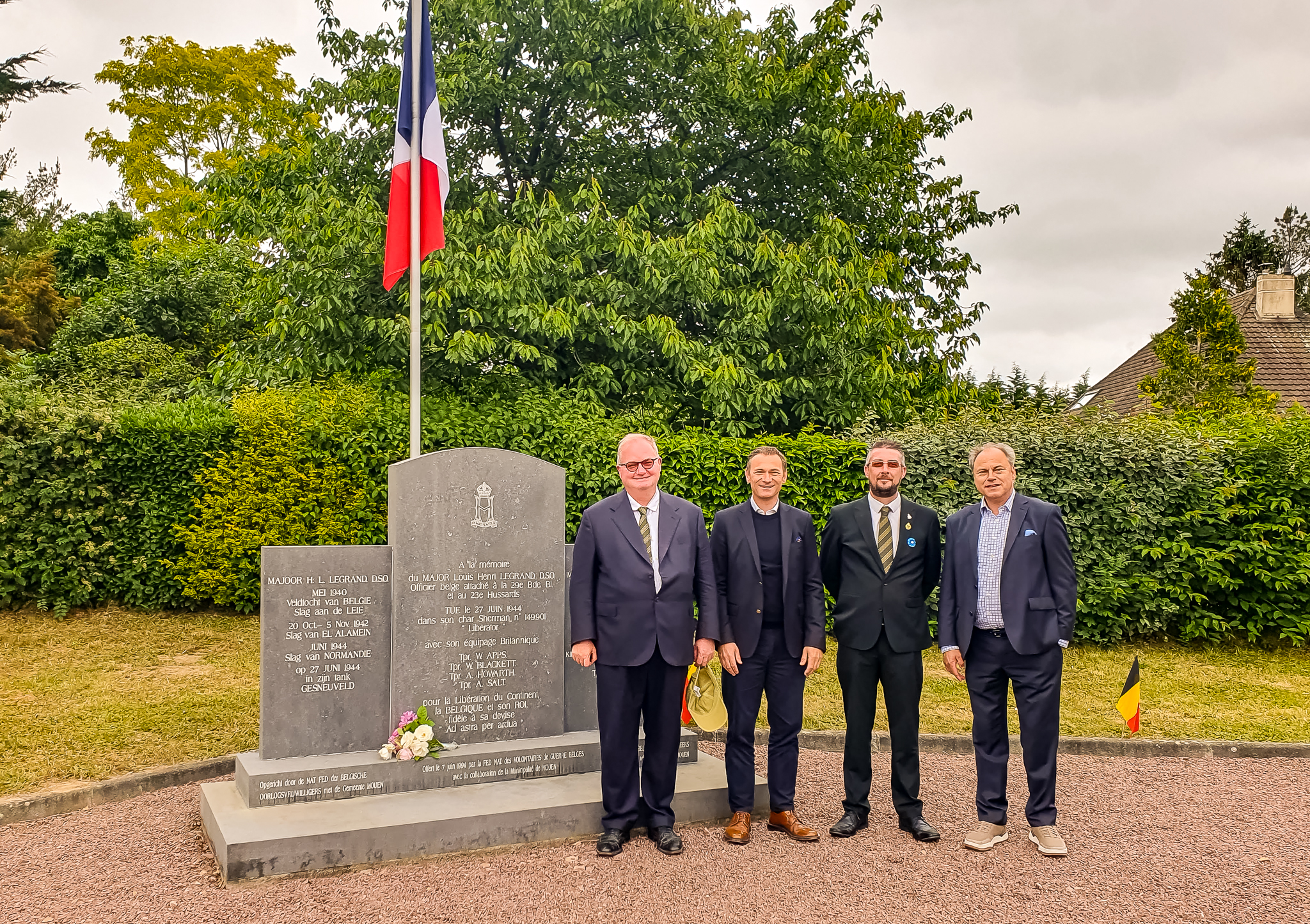
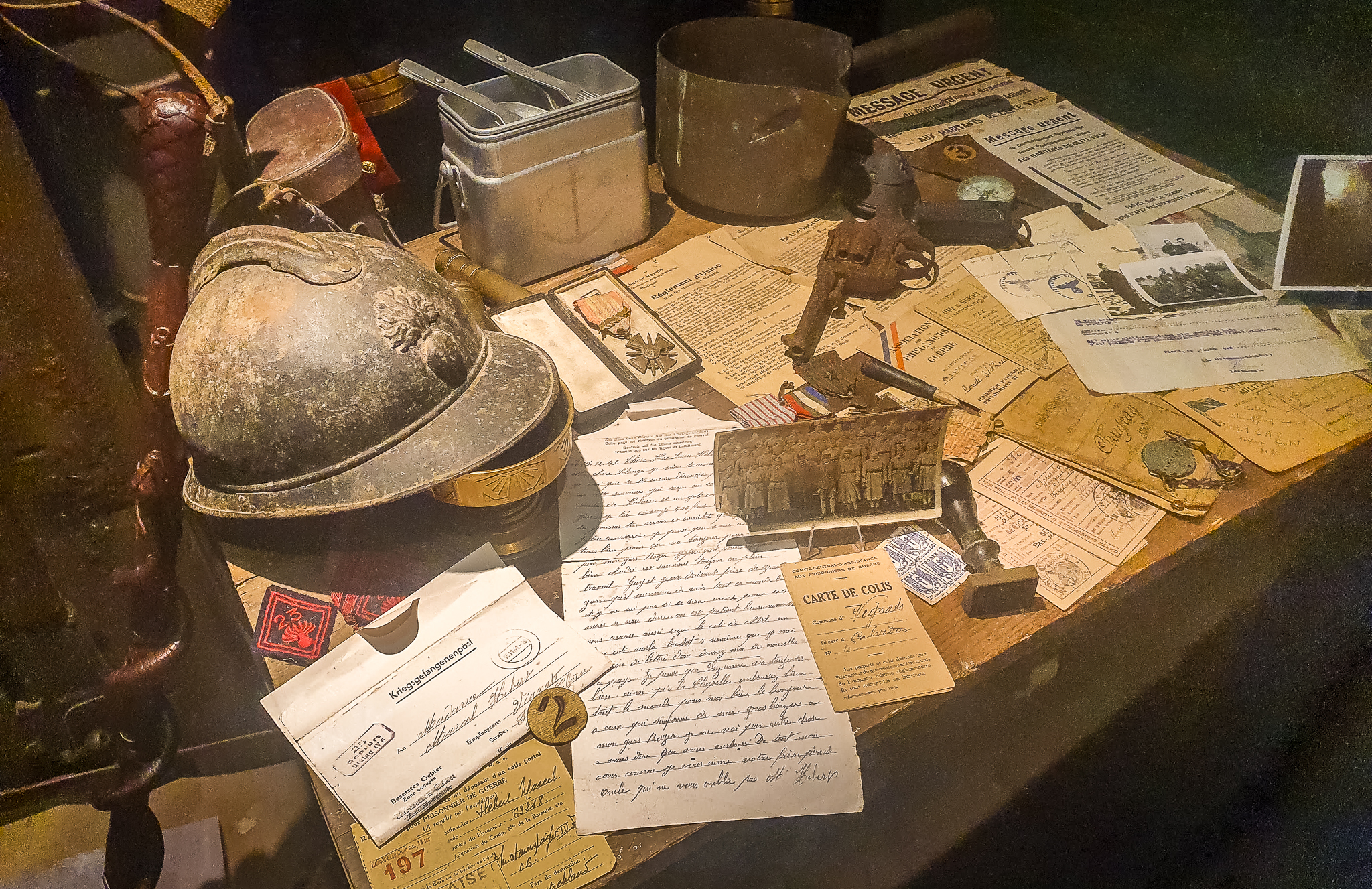
My Normandy visit reinforced a lasting impression of courage and fortitude from a generation who stepped up to defend freedom and democracy. Educational, fascinating, and packed with historical detail, the experience left me, above all else, with an overwhelming sense of the scale and horrors of war, and its ultimate futility. Ultimately, it was the stories of individual courage and sacrifice that most touched my heart. And the young cafe girl, working in a new museum in a field near Berjou, who handed me a German bullet casing, recently discovered under a nearby tree. The past is still surfacing.
Simon Greaves is Film and Video Revise Editor at the Financial Times