

Back into History
There is an old song that sings about “Faraway places with strange sounding names”, and many have, and will continue to be explored on this site.
Sometimes, however, one doesn’t have to go far to discover a little jewel of a destination.
Rye, in East Sussex, is one such. Now nearly two miles from the sea, it was once all but surrounded by water and was the largest and most important port on the South Coast. Originally just a small settlement on an isthmus projecting into a bay, the building of a beautiful church shortly after the 1066 Norman invasion, began its medieval journey to wealth and prominence. The bay, formed between the shingle desert of Dungeness to the east and the cliffs of Fairlight to the west, provided a safe haven for ships of the time and the town became a thriving centre of trade and shipbuilding.

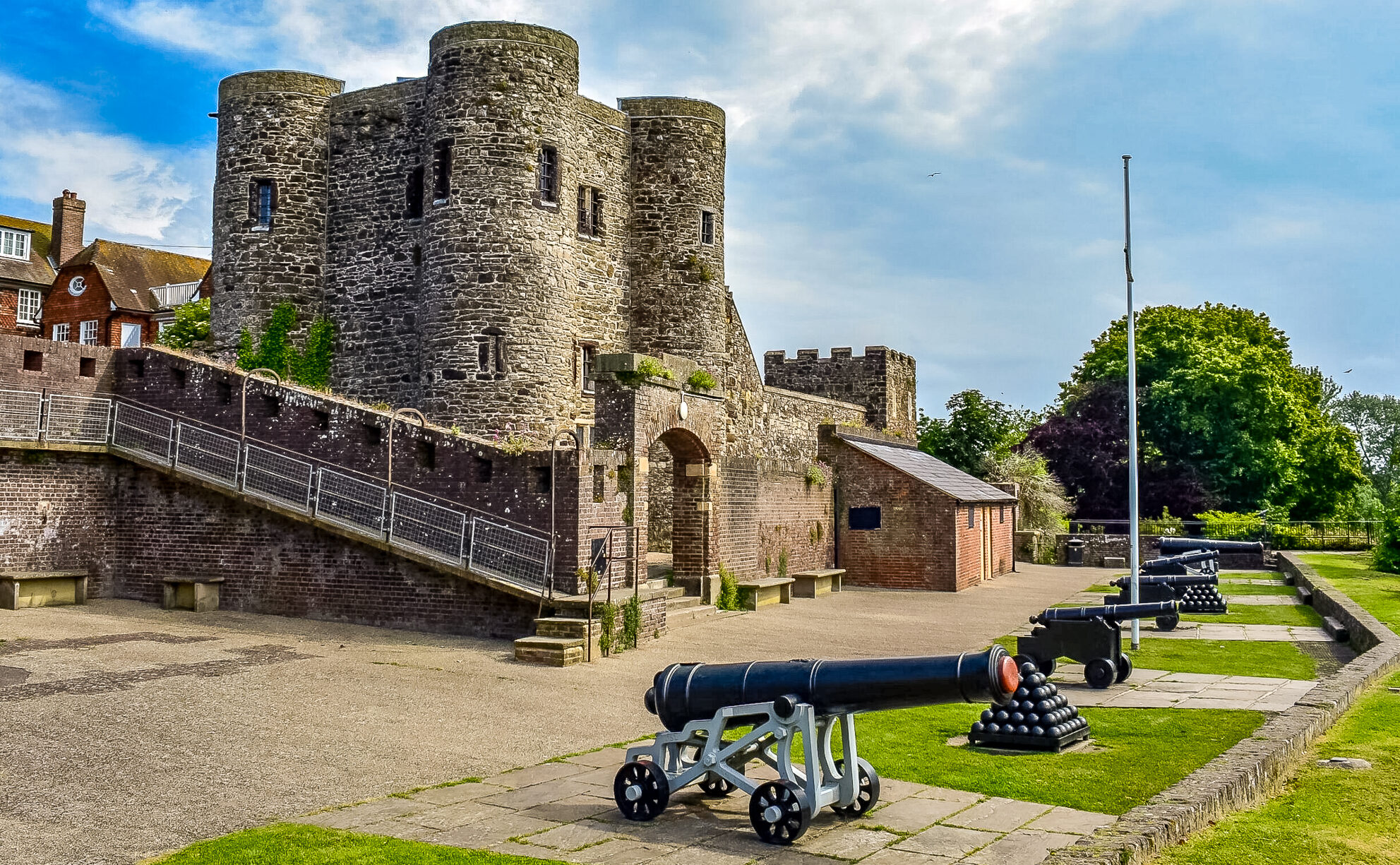
Thriving that is, until the sacking by the French during the Hundred Years War spanning the 14th and 15th centuries. Other than the church (which stands to this day, on the highest point of the town), the town was destroyed and burnt to the ground in 1377. Rebuilding took time – apart from the church, the great Landgate (protecting the landward entrance to Rye), part of the town wall, and the small castle known today as the Ypres Tower (pronounced ‘Wipers’ by the locals) are amongst the few buildings of that time remaining.
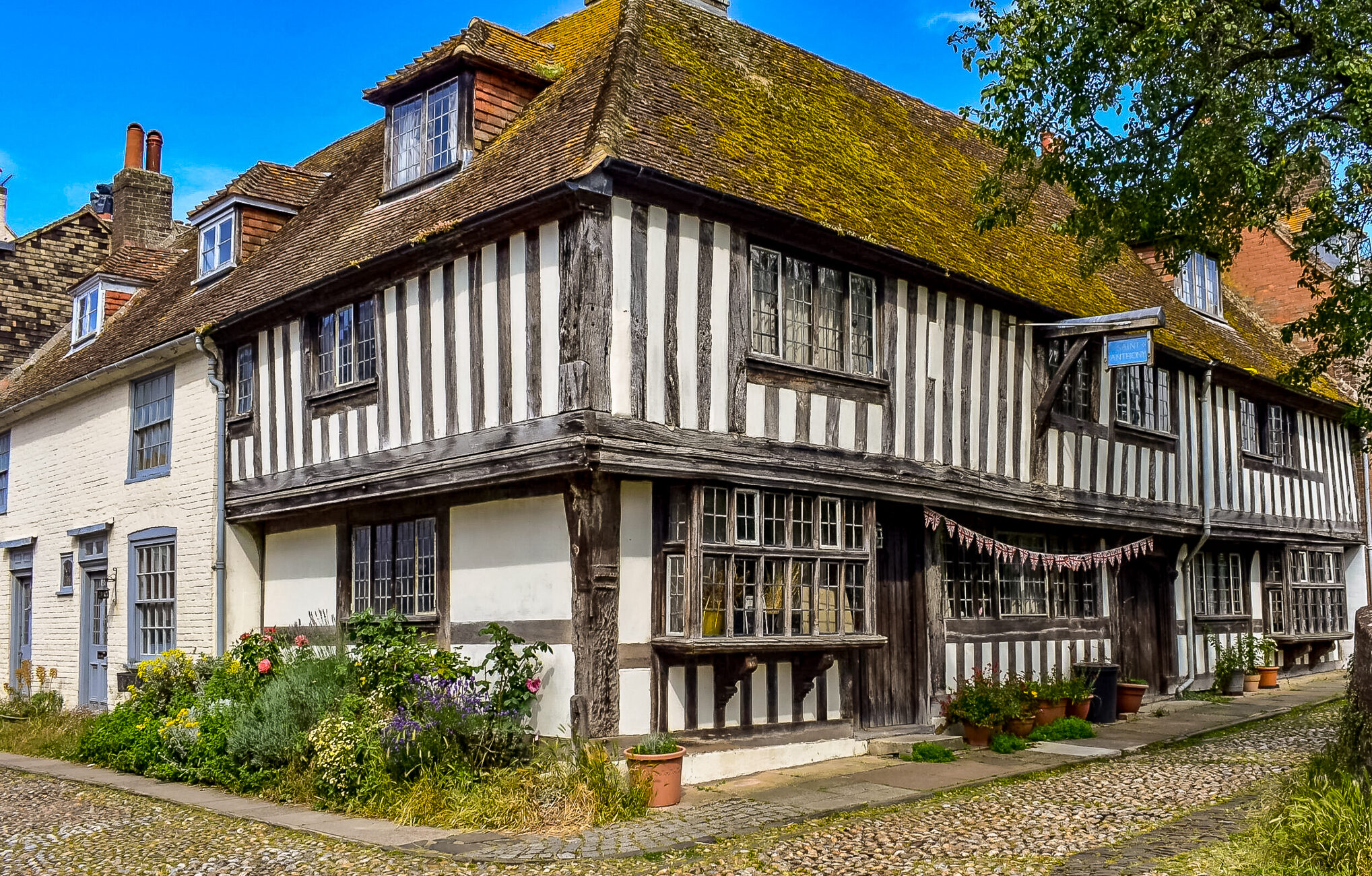
However, rebuilding took place, and today a large part of the area inside the original town wall remains much as it was when rebuilt in the early 15th century. The modern town has, of course, spread well beyond the bounds of the original, but turn uphill (and be prepared for hills) out of the High Street and you enter a world of narrow streets, many still cobbled, and ancient timber-framed houses clustered round the centrepiece of the Norman church. From the top of the tower, on a clear day it is just possible to see the French coast.
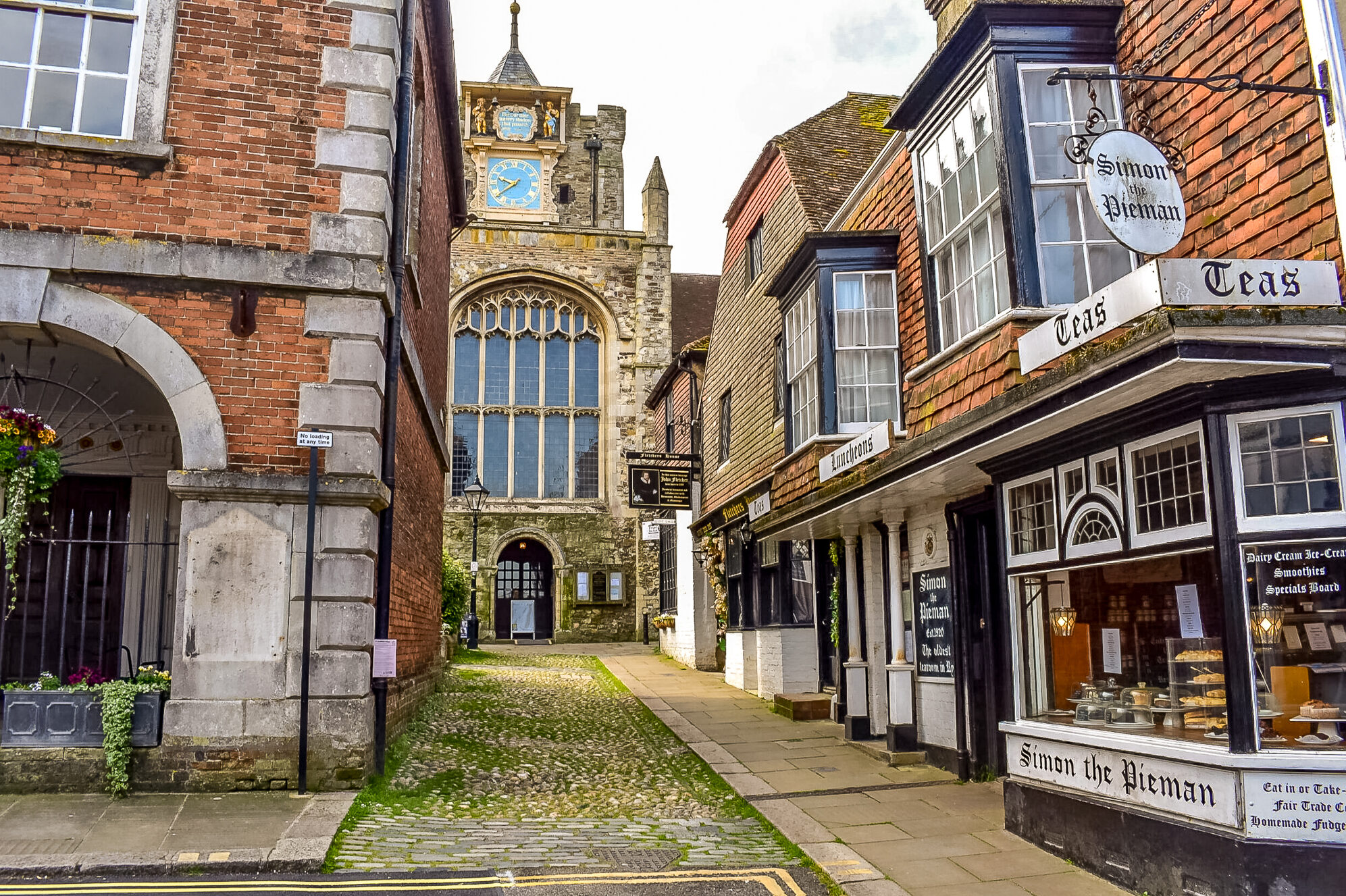
Stroll around the church and you come to Watchbell Street, today, perhaps the most expensive street in which to buy a property. It wasn’t always so, and in Victorian times (and probably earlier) part of it was the red light district with at least one pub (now a private house) of very dubious repute. At the western end a lookout spot, complete with a large bell to be rung if an invasion fleet was sighted, gives the street its name. At the opposite end, the Ypres Tower now forms part of the Rye Museum which, like other places in Rye, has its ghost, rumoured to have been seen coming out of a door and down some steps into a small garden within the castle grounds.
Another exit from the square around the church will take you down a narrow street, to Lamb House. Now owned by the National Trust and open to the public, it is younger than some of the surrounding properties, dating from the early Georgian period. In fact, King George 1 once stayed there for a night after his ship was driven ashore on nearby Camber Beach. The building has a fascinating literary history, having been home at various times to authors Henry James, EF Benson, and Rumer Godden. It is also connected to a gruesome murder when a local butcher, mistaking the deputy mayor for the mayor of Rye, against whom he held a grudge, and who lived at Lamb House, stabbed and killed him. The butcher was subsequently tried (by the mayor) and hanged, with his body left to rot in a cage hanging from the gibbet.

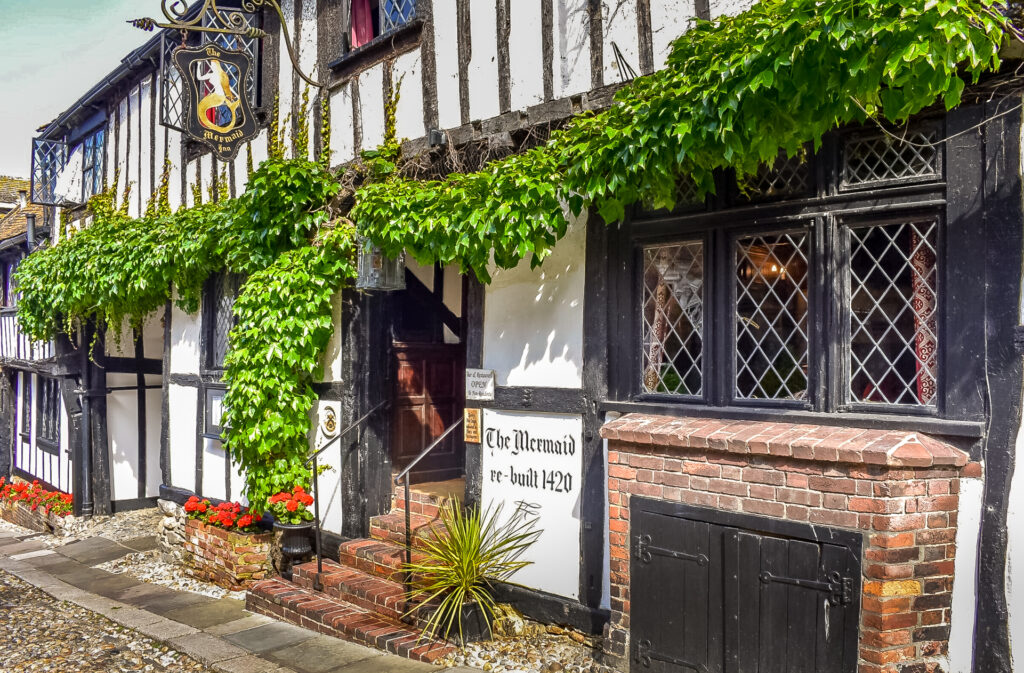
Having lingered, perhaps, for a while at Lamb House, a minute’s walk brings you to the most famous street in the town, and one of the most photographed streets in the country – Mermaid Street. Cobbled, and on a steep hill leading down to the Strand, it really is a step back in time, appearing untouched for centuries. The curious name comes from the tale of a fisherman who one day caught a mermaid in his net, fell in love, married her, and came to live in the street. When she finally died, the name was changed to Mermaid Street in her memory.

The old part of Rye (still referred to as ‘the Citadel’) is a place of history, tales, some true, some apocryphal, of smuggling gangs using ancient cellars under houses, of art and literature. The smugglers, incidentally, were not the romantic characters suggested by the Dr Syn books of Russell Thorndike, or of Rudyard Kipling’s smuggler’s song, “Brandy for the parson, baccy for the clerk……..Watch the wall my darling, while the gentlemen go by”. They were, in fact, almost certainly unpleasant and extremely violent.
After trekking up and down steep cobbled streets, absorbing all that history, culture, art, and architecture, what about some refreshment?
Well, visitors to Rye are in luck… with an abundance of tea rooms, pubs, restaurants, and hotels, any visitor is spoilt for choice. My personal favourites are The Water Works in Tower Street. Originally a water pumping station, then a soup kitchen, it is now a fun micro pub with an exuberant host and excellent local beer. The Standard, situated in The Mint at the bottom of the High Street, is an old building with beams and a massive fireplace sympathetically refurbished a few years ago. An interesting and regularly changed menu offering good ‘pub fare’ serves visitors well-cooked lunch, snacks, and supper.
There are restaurants for all tastes and all budgets. Following a devastating fire in 2019, the completely rebuilt George Hotel in the High Street offers top-end hospitality with prices to match its stylish interior. The Fish Café in Tower Street satisfies with good food, nicely cooked and finely presented, while Simply Italian on The Strand, is busy, sometimes noisy, and relatively inexpensive, with a simple (as its name suggests)and unique Italian vibe. Just three out of well over a dozen to choose from.

If it’s just a cup of tea or coffee you’re after, then walk down the High Street and you will be spoilt for choice. A particular favourite would be The Apothecary, on the corner of High and East Streets, which delivers an old-world ambiance and excellent cakes and pastries.
Visiting for more than a day? There are Airbnbs in abundance and a choice of hotels. My top pick would be The George, stylish and serving a great margarita, or, simply for its ambiance, genuine history, and total Rye experience, The Mermaid, in Mermaid Street, with its ancient beams, four poster room, and, of course, the resident ghost or two.
Perhaps the best time to visit Rye is spring or early autumn, just before or after the main tourist season. Highlighting the rich artistic heritage, September’s Rye Arts Festival features many celebrated performers descending on the town to provide music, readings, talks, and plays. November heralds Bonfire Night and the local Bonfire Society’s dramatic parade lit by flaming torchlight – a traditional event also held in several other Sussex towns. To the loud beat of drums, the parade through town culminates with a huge bonfire and an always-impressive fireworks display. Very noisy, occasionally a little macabre, but great fun and worth seeing at least once.
Finally, it is always worth a visit to the Heritage Centre on Strand Quay. Here you can pick up a town map, tips on places of interest, booked conducted tours, and, marvel at the wonderful large model of the medieval town complete with light shows bringing Rye’s history and all its stories to life.
Useful links:
Rye Heritage Centre; https://www.ryeheritage.co.uk/
The George Hotel: https://thegeorgeinrye.com/
The Mermaid Inn: https://www.mermaidinn.com/
Lamb House: https://www.nationaltrust.org.uk/visit/sussex/lamb-house
Rye Castle Museum: https://ryemuseum.co.uk/


