
The Unexpected Desert
There has, for me, always been something intriguing about deserts.
Whether it is the archetypal camel train plodding its way silently towards the next oasis, or the roar and dust of a hundred cars and motorcycles carving their way through the dunes on the Paris/Dakar rally, the image is one of sand stretching its way to the horizon, broken only by rippling dunes forever changing shape and size with the wind.
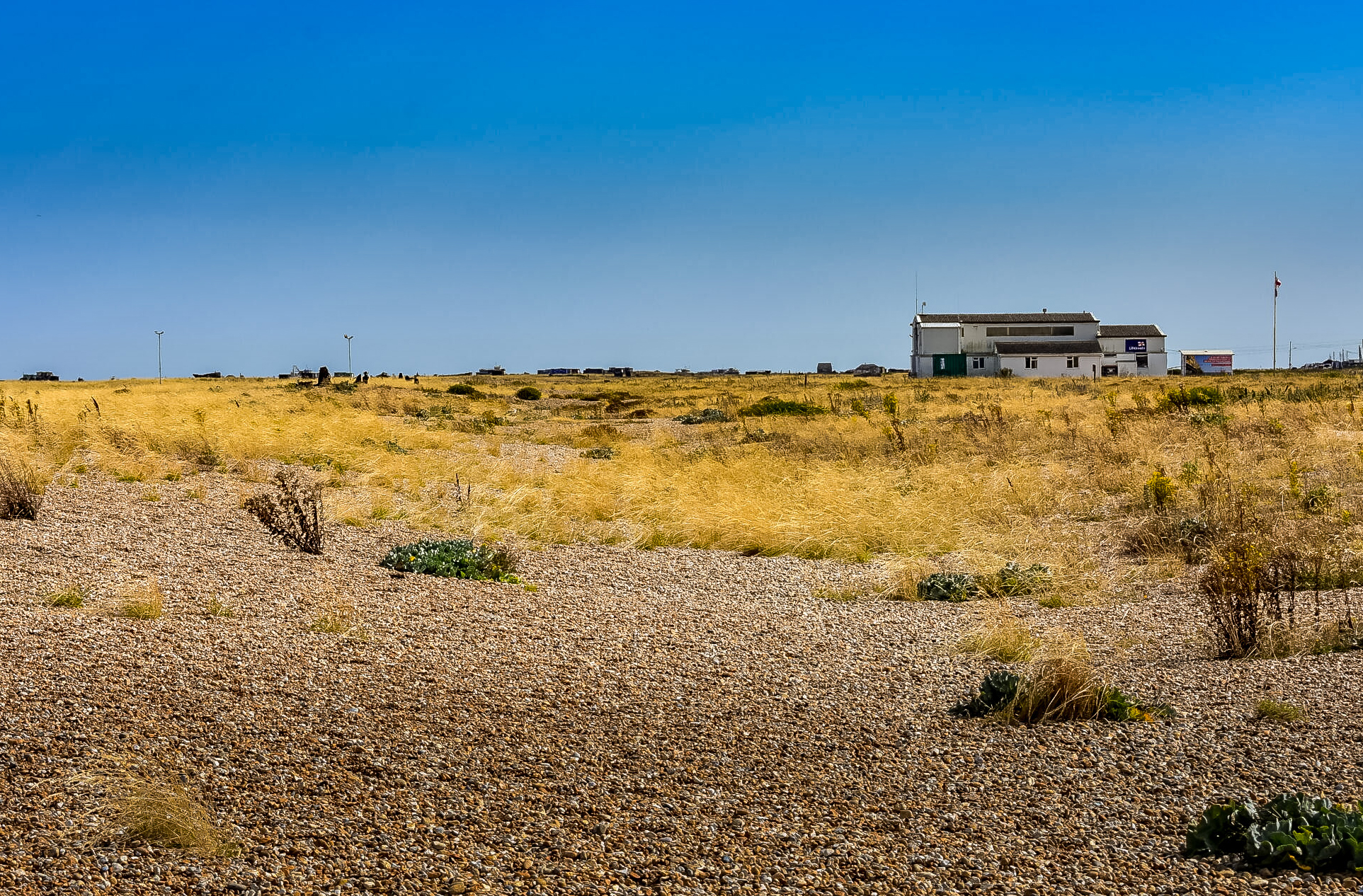
I used to think they were found only in strange remote parts of the world – Africa, Central Asia, South America. But it seems I was wrong, for there is one much closer to home, here in England. Smaller and less impressive, perhaps, than the great wilderness areas of the world, but officially designated a desert, nevertheless. It is, of all places, in the county of Kent and occupies a large spit of land projecting out into the English Channel. It’s called Dungeness.
I first came across it during an Army weapons training course back in the last century, for part of the area is owned by the Ministry of Defence and used for instruction and training with rifles, machine guns, and other non-artillery weapons. Since then I have driven past on the landward side and sailed past, viewing it from the sea, but a recent warm summer day was the first time I had ventured on foot into this tiny desert.
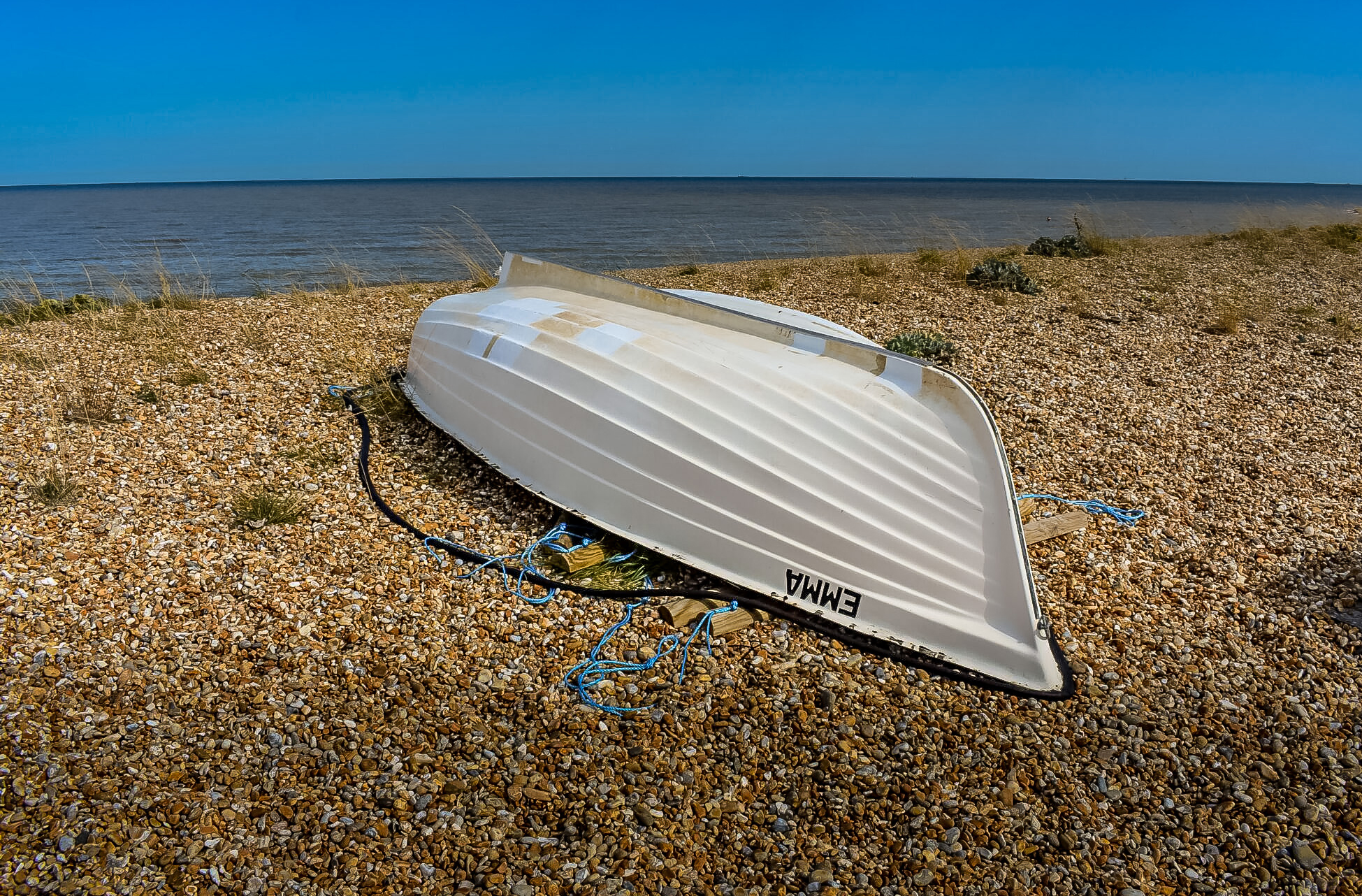
It’s a strange place – flat and approached via a long straight road which, at one point is little more than a causeway running between two large lakes. Then, as far as the eye can see, the land becomes, not sand but shingle, cricket ball-sized stones that sink and move underfoot, putting a serious effort into walking any distance. Far away, there is the sea, on this day blue and calm, with a very gentle breeze from the west bending the wispy clumps of pampas-like grass that defied the environment to exist amongst the pebbles. Still, it takes little imagination to picture the scene in winter with chill easterly gales howling across the shingle, grey skies, and steep Channel waves crashing on the beach.

Not a comfortable part of Kent – the Garden of England – but it has its own fascination, and others must have thought so too, for there are small cottages scattered across the landscape. Many of these began life as converted railway carriages, surplus to the train company requirements in the 1930s and some can still be seen, but most have either been incorporated into larger dwellings or replaced by small often single-storey homes with their tarred weatherboard exteriors. Many would doubtless have been occupied by fishermen who operated the small boats, drawn up onto the beach when not in use. Fishing, however, is not the local industry that it once was and although a few boats still operate from the Eastern side of Dungeness, the only signs of the numbers that were once there are the disused and rusting remains of the many winches used to haul the boats up onto the beach.
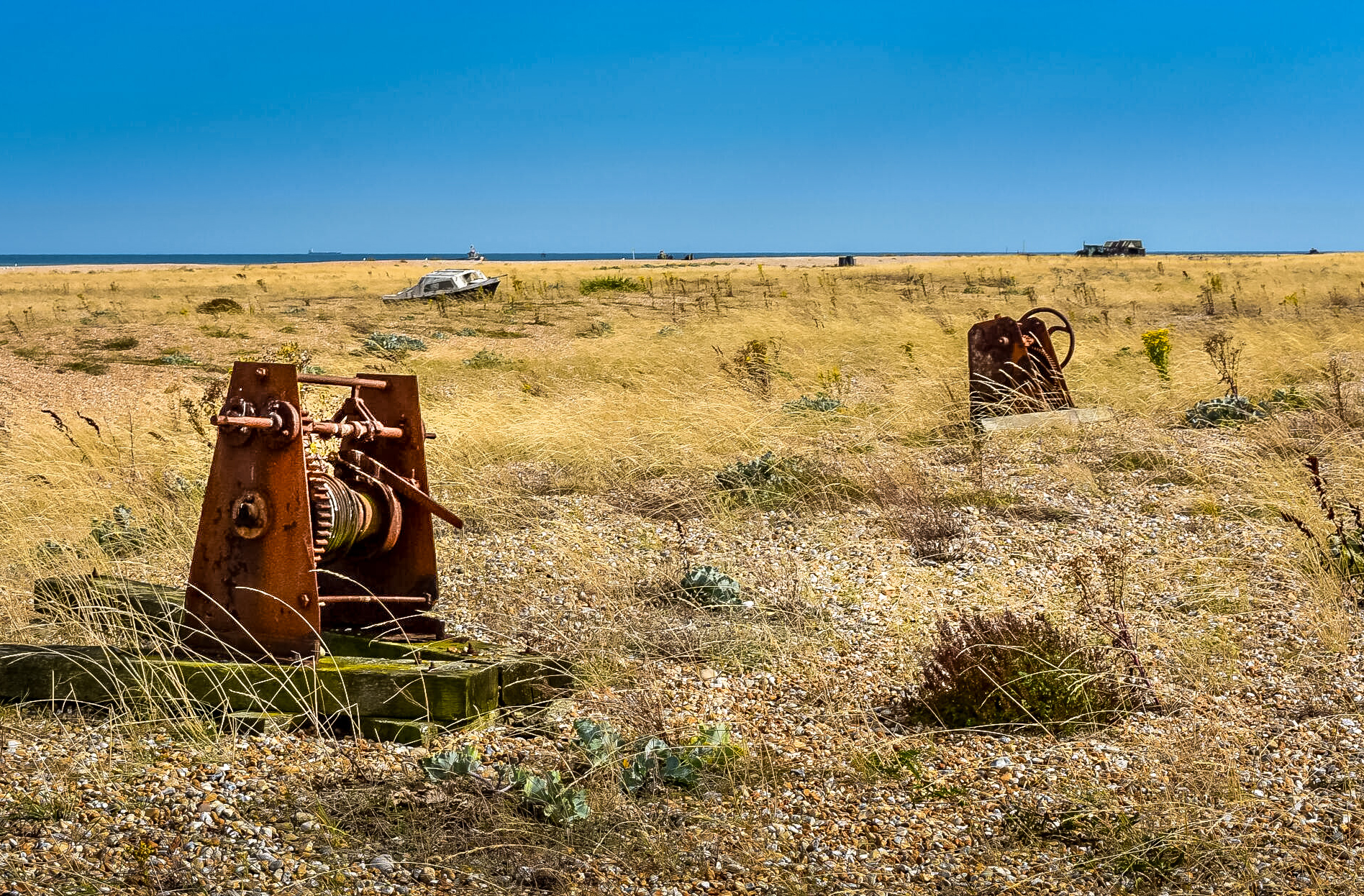
Some of the cottages are still occupied year-round, although many have been given modern interiors with all the comforts of 21st-century life and are now let out as holiday homes. And one can see the attraction as a getaway from big city life. Even at the height of summer, there is a sense of solitude here. Bleak, with surreal beauty, it is a quiet place, far removed from the hustle and bustle of urban living. A reflective place, somewhere to be alone with one’s thoughts and with nature.
This desert holds a unique, almost uncanny atmosphere, one that inspires artists to create work that conveys the experience of being there. Big skies and rare plants provide creative inspiration and one dwelling, Prospect Cottage, home to filmmaker and artist Derek Jarman, till his death in 1994, has become a site of pilgrimage for artists, architects, and garden designers from across the globe. Jarman loved the absence of walls or fences and the lack of demarcation of private property. “My garden’s boundaries ” he wrote, “are the horizon. The landscape is wide open, and the garden is too.” The ‘beach garden’ he created around his home, including stone circles, driftwood totems, sea kale, and fishing floats, is preserved to this day.
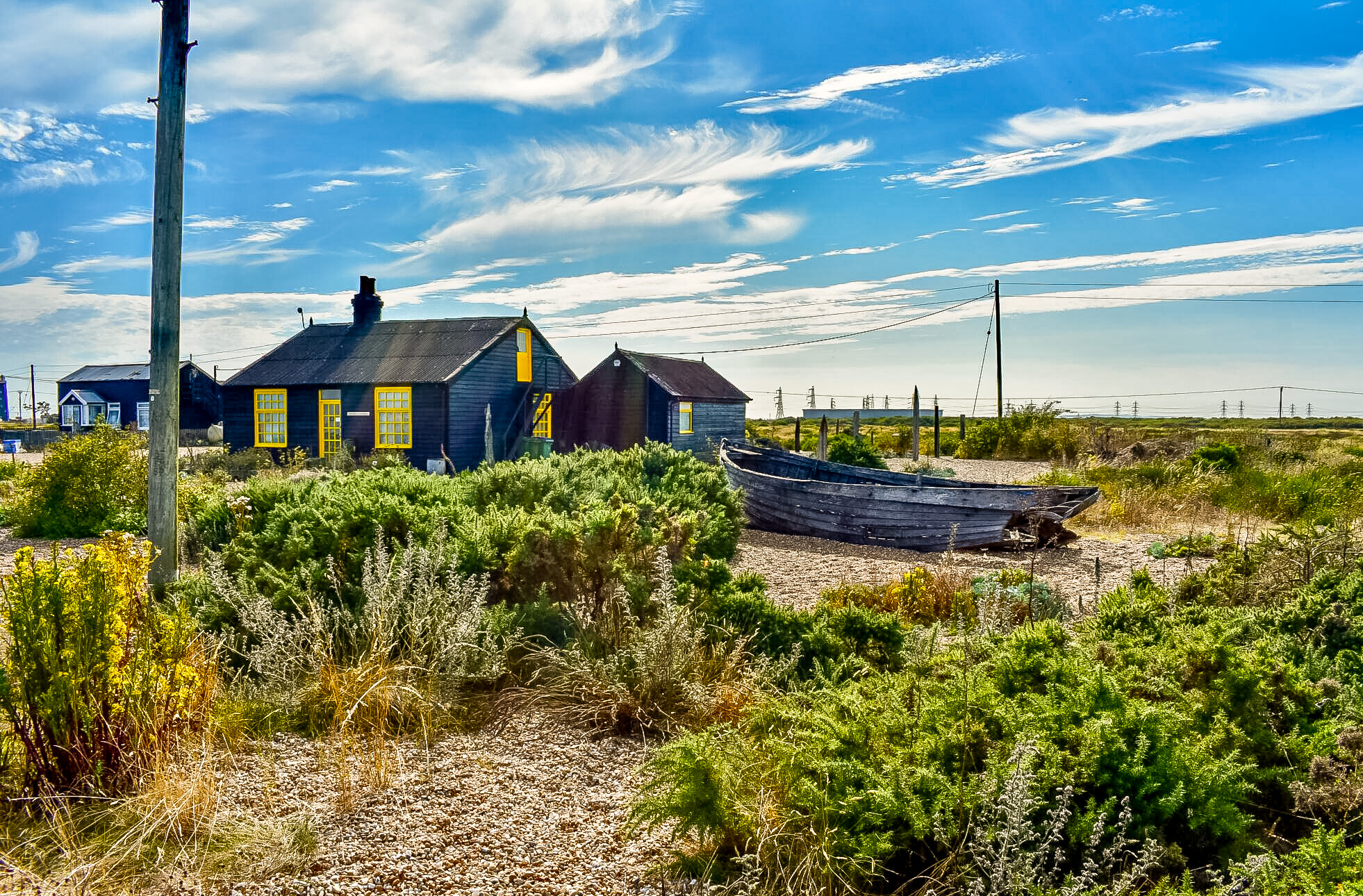
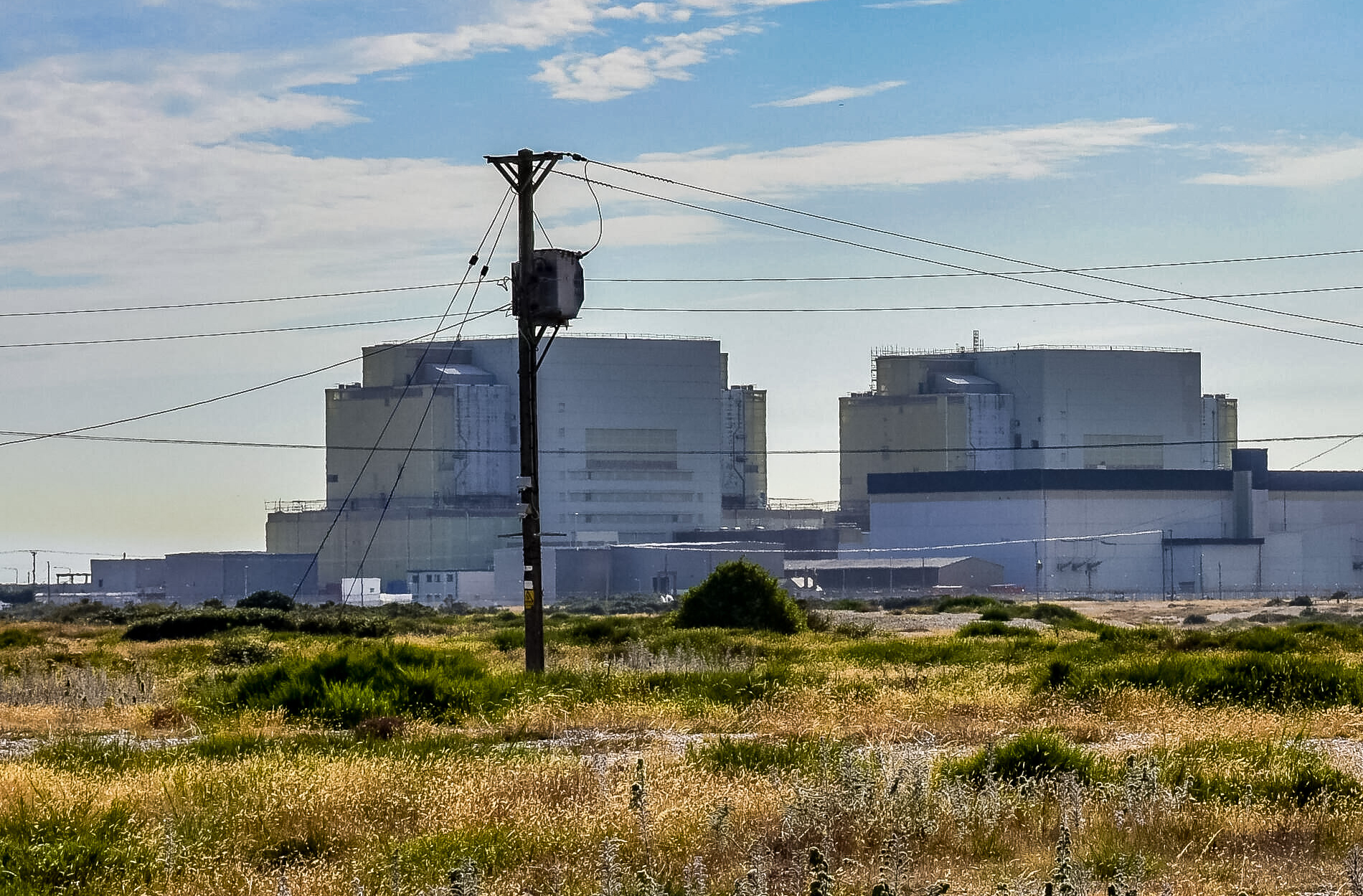
‘Prospect’ is an apt name for the cottage. To the south is the beach and the sea, to the east and north, the shingle desert, but to the west something quite different – the enormous concrete mass of Dungeness nuclear power station. Construction began in 1966 but is now in the process of being ‘de-fueled’ and shut down.
Another seeming anomaly for a desert is a railway, in this case not just a railway but a miniature one powered by 30% scale steam locomotives. First opened in 1927 on a shorter route, it now runs 18 miles from New Romney to Dungeness Station, close to the power station, and is a popular tourist attraction. Although intended solely as a plaything for a couple of wealthy landowners and to be used by tourists and holidaymakers, it served a valuable purpose during WW2, providing transport for the construction and maintenance of PLUTO (pipeline under the ocean) that provided fuel for the allied forces in France following D-Day).
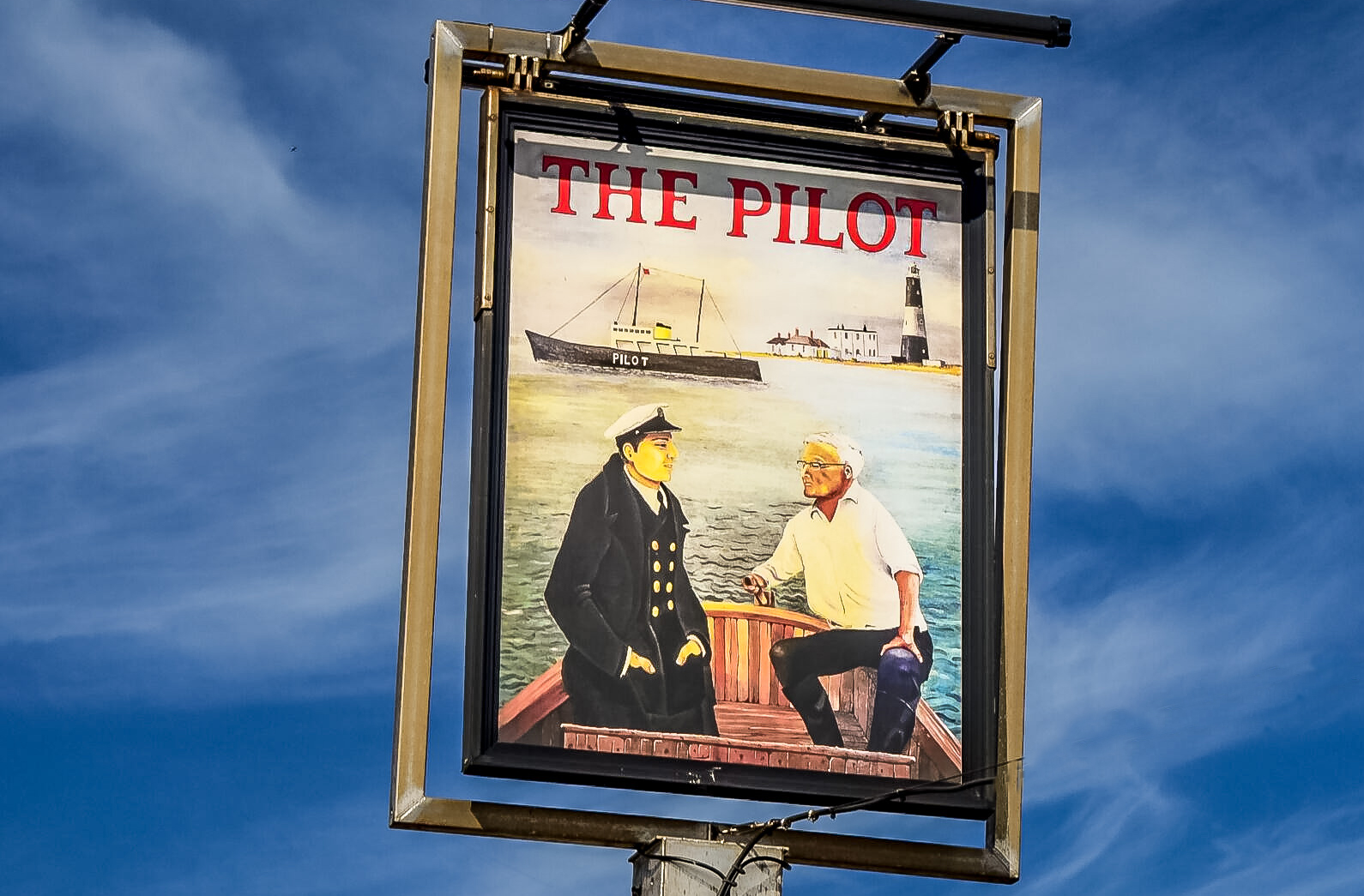
It was an interesting, but tiring day, walking across just a couple of miles of moving shingle, but at the end of it was a welcoming desert oasis. Not the sort one sees in films – a pool of clear water surrounded by palm trees and Bedouin tents – but rather more welcoming – a brick building with a large sign, ‘The Pilot’, hanging outside. In the most unlikely of places, a good British pub with a pint of locally-brewed beer served at room temperature (none of this so-cold-you-can’t-taste-it lager nonsense) and a plate of excellent fish and chips, for which the pub is renowned, provided a suitable reward.
All pictures by John Minter / Travel with Spirit