
Between Worlds: Malta’s Layered Islands
A graduate’s escape to the crossroads of the sea
Every May, after the last exam paper is handed in, there is a ritual: pack light, head south, and leave the grey British spring behind. Last year it was Sicily. This year our compass swung deeper into the Mediterranean, to Malta and its sister islands of Gozo and Comino, on a student’s budget and with a student’s appetite.
A Crossroads of Cultures
Malta sits in the middle of the Mediterranean, between Europe, Africa and the Middle East, and between the Christian and Muslim worlds. Ships have passed its shores for millennia, and almost everyone who passed has left something behind. Phoenicians, Romans, Arabs, Sicilians, the Knights of St John, the French and the British all came for trade, faith or war, and the islands carry the traces of each.
You hear it in the Maltese language, a mix of Arabic and Sicilian with echoes of far older tongues. You see it in the flag, which carries the George Cross, awarded by King George VI to honour the “heroism and devotion” of a people who endured the great siege of the Second World War. The British years linger more lightly in the plug sockets, the road signs and the left-hand driving.
St Paul’s Bay and the Pilgrimage to the Sea
Those familiar roads led us first to St Paul’s Bay. It is a handy base for the north of the island, though honesty compels me to say it was our least enchanting stop. Chain restaurants and high-rise hotels crowd the waterfront, alongside British pubs, two of them named for Princess Diana. It is a small reminder of how warmly the monarchy is still regarded here.

So we postponed our cultural education and went to the sea, as the British always have. Paradise Bay lived up to its name. A small sandy cove sits at the foot of a hundred steps, and the water was a blue that made the sky look pale. After weeks in the library, it was the finest possible recovery. (Readers should note the staircase: the climb back is as memorable as the swim.)
Back in town, we found lunch at a food truck, I Love Pasta, run by a local man, Albert Fenech. The pasta was fresh, the sauces generous, and the prices kind to a student wallet. Locals and visitors queue at the same window, which is usually a good sign.
Comino: A Lagoon and a Little Silence
A short boat ride away, Comino is the smallest of Malta’s inhabited islands and the home of the famous Blue Lagoon. Turquoise water runs between jagged limestone cliffs, and there are almost no cars. The lagoon is no secret, and in high summer it is busy. Even so, the island’s rocky paths and quiet coves reward anyone who walks a little further, and it feels a world away from the bustle of Valletta.

Gozo: The Slower Island
Another day, another ferry, another island. Gozo is greener, quieter and more rural than Malta, and it has been inhabited for thousands of years. It is known for its beaches, its diving and its walking routes. It is also home to the Ġgantija temples, a UNESCO World Heritage Site often described as among the oldest free-standing monuments on Earth. Standing among their great stones, you feel the span of human time.
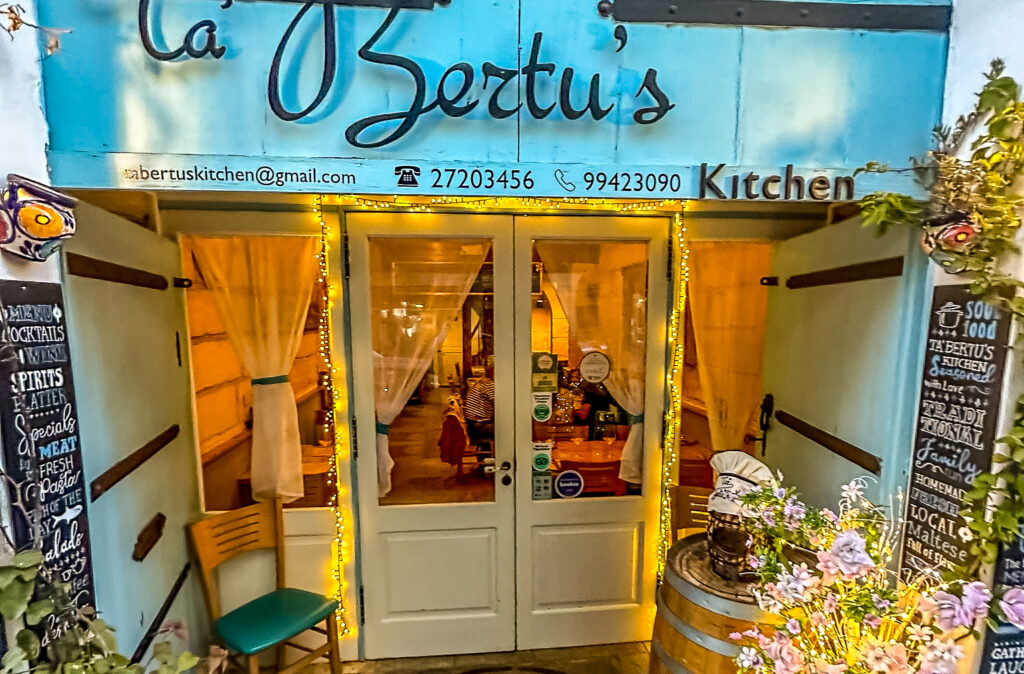
The capital, Victoria, still goes by its old name, Rabat, among locals. Its open squares and narrow lanes are full of market stalls and café tables, and it has the unhurried air that Europeans do so well. We dined at Ta’ Bertu’s, where traditional Maltese dishes came with a bottle of local wine. It was the sort of meal that makes you wonder why you ever rush.
Marsaxlokk: Sunday at the Water’s Edge
If you visit Malta on a Sunday, go to Marsaxlokk. This fishing village on the south-east coast was settled by the Phoenicians, and fishermen have worked its harbour for centuries. The waterfront market runs daily, selling jewellery, scarves, paintings and souvenirs. On Sundays it swells, and the fishermen sell the morning’s catch, so that the whole quay smells of salt and fish.
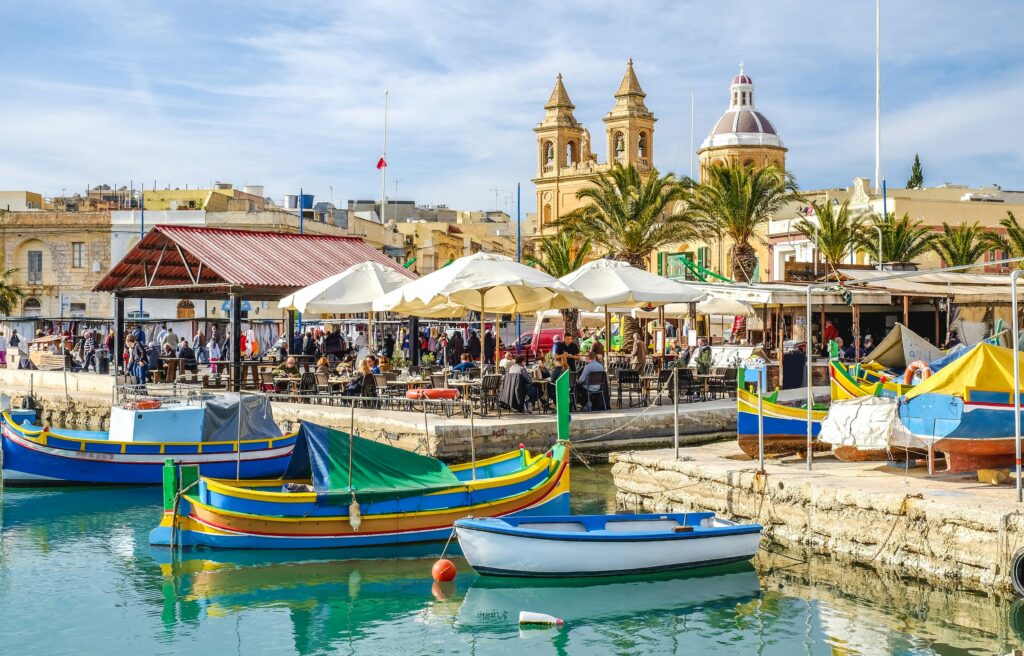
The real glory is the harbour itself, crowded with luzzu, the traditional painted fishing boats. Each has a pair of eyes at the prow, a tradition said to reach back to the Phoenicians and the protective Eye of Horus. They have watched over Maltese fishermen for generations, and they watched us too.

St Peter’s Pool and the Diving Dogs
Nearby is St Peter’s Pool, a natural swimming hole in a broad slab of flat rock. It is not easy to reach. There is a rough track, then a ladder into the water, or you can simply leap from the rock. But the swimming and snorkelling are superb.
The pool has an unlikely claim to fame. In 2017, Titti, a small Jack Russell, became a global sensation after videos showed him diving from the rocks beside his owner, Carmelo Abela. He went on to feature in a television series, The Secret Life of Dogs. Now there is Tina, another fearless terrier with her own devoted following. While she fished quietly in a shallow pool, we swam over to talk to Carmelo.
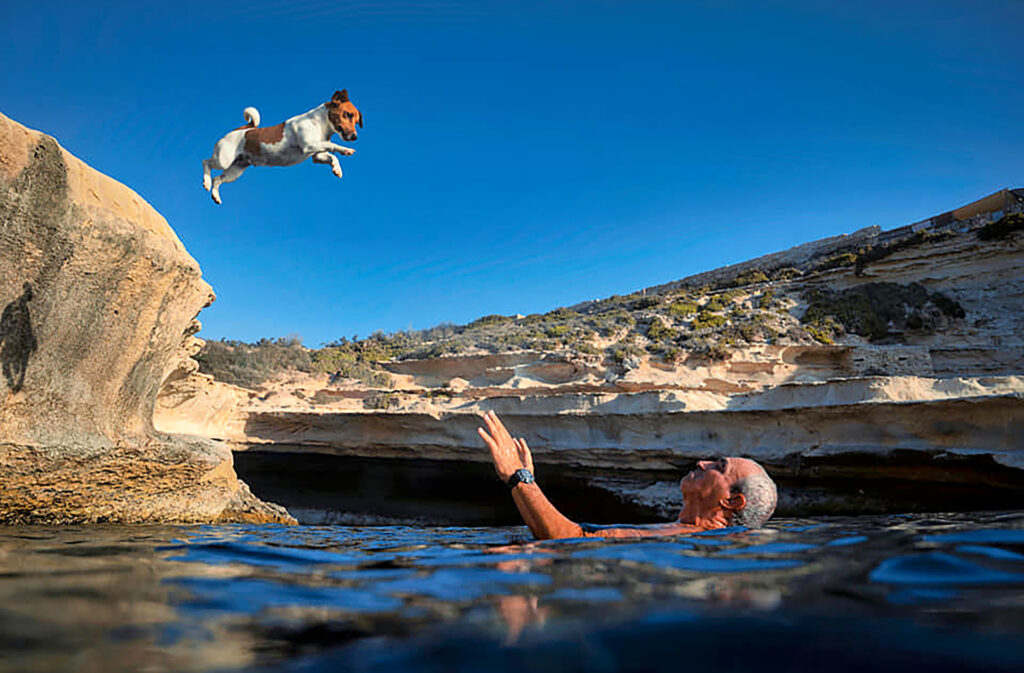
“It’s all about trust,” he told us. “She trusts me, and whatever I do, she does. When I tell her to jump, she jumps.”
Anyone who has ever followed someone else off a cliff, literally or otherwise, will understand.
Valletta: The Last Word
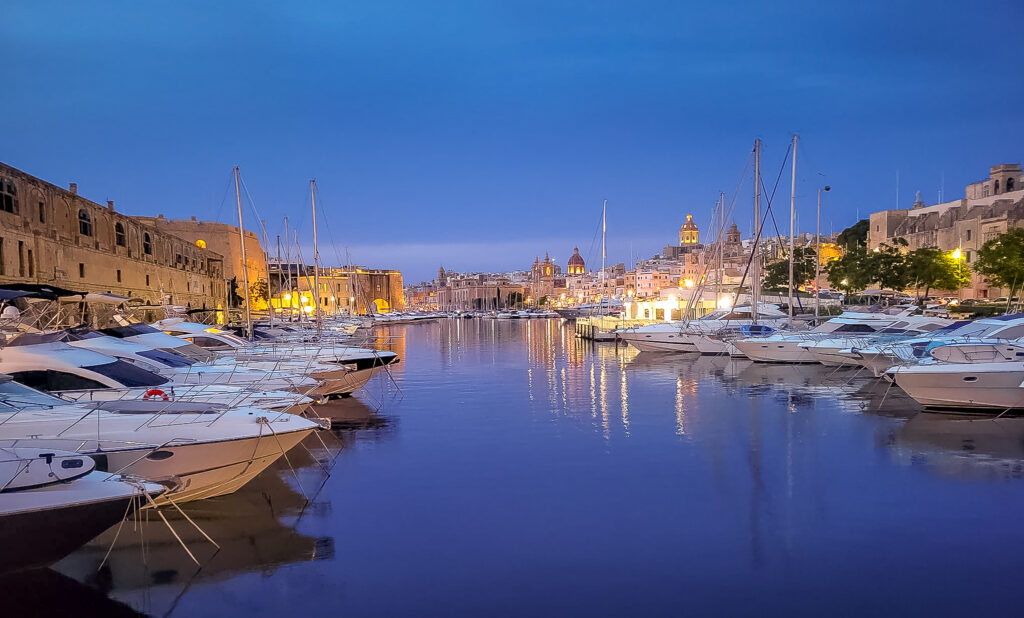
Valletta is one of Europe’s smallest capitals, and best explored on foot. Built by the Knights of St John, it is a city of 17th-century fortifications, ornate churches, museums and steep cobbled streets, where Baroque grandeur meets a modern, easy elegance. Every corner offers another gallery, café or courtyard, and you quickly succumb to what I came to call decision paralysis. The harbour and its great honey-coloured bastions say it all: this is a place that has always stood between worlds.
So thank you, Malta. You offered quiet beaches, lively streets and a layered, generous culture. Now it is time to open a bottle of your local wine, twirl a forkful of pasta, and watch the world go by.

Traveller’s Notes
When to go: May and early June offer warm sunshine with fewer crowds than July and August.
Getting around: Driving is on the left. Ferries link Malta with Gozo and Comino, and boat trips to the Blue Lagoon run frequently in season.
Mobility: Paradise Bay involves around 100 steps each way. St Peter’s Pool has a rough approach and a ladder into the water. Valletta’s streets are steep and cobbled, so comfortable shoes are essential.
Don’t miss: Marsaxlokk on a Sunday for the fish market, and Ġgantija on Gozo.
Eat: I Love Pasta (St Paul’s Bay); Ta’ Bertu’s (Gozo).