A Jewel in Europe’s Crown
The old town of Salzburg is a musical box of delights
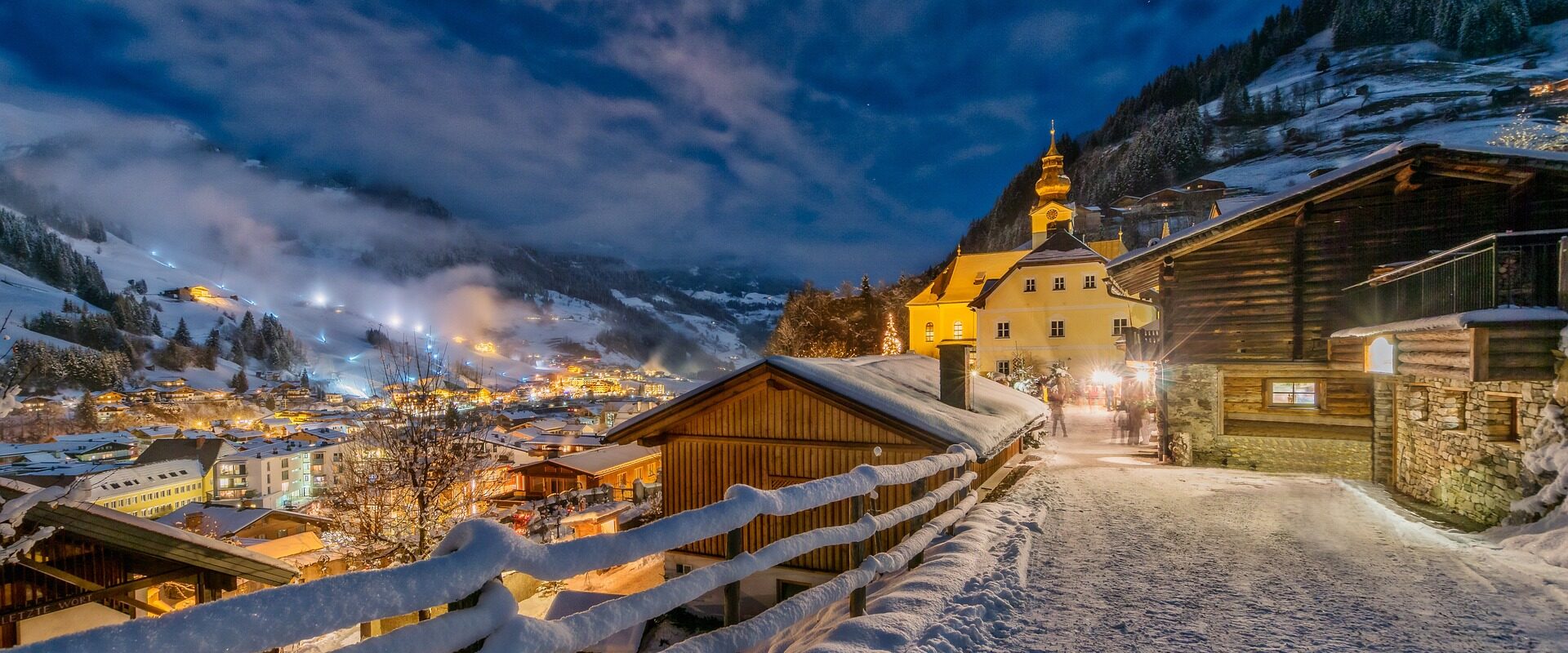
If you were to capture a winter wonderland in a snow globe it would probably look like Salzburg with its sparkling year-round attractions for weekenders and holidaymakers. The old town south of the river is full of enchantment, especially at Christmas when markets abound in the traffic-free squares and streets.

This fine city, once the property of prince-archbishops, reflects centuries of prosperity in the baroque spendour of its private and civic architecture, its churches and cathedral. The city burghers still protect this Alpine charm.
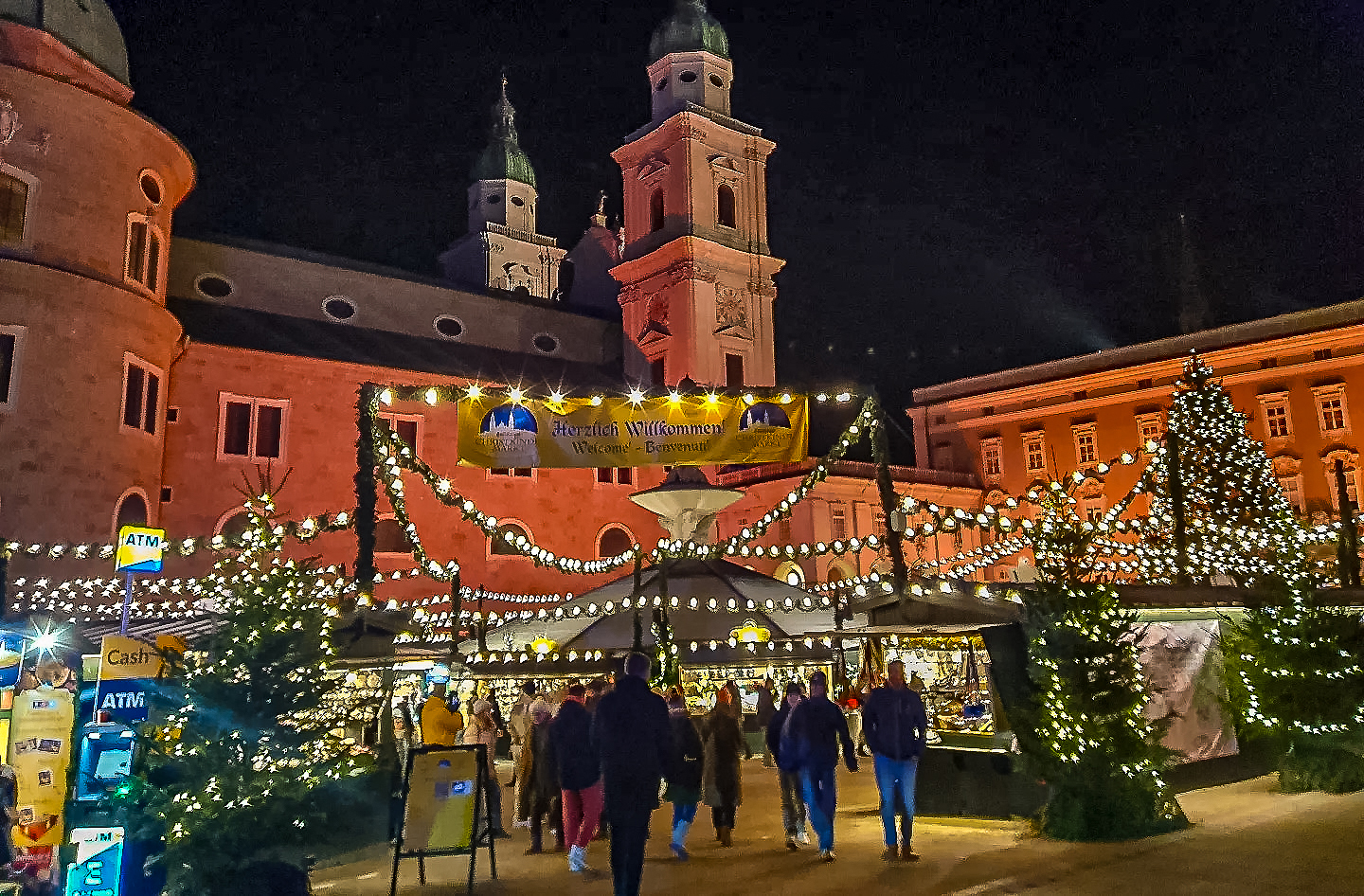
The Christkindlmarkt at the Dom and Residenzplatz celebrated its 50th anniversary this winter. This traditional market’s long history makes it one of the oldest and most beautiful Advent markets in the world. Here everyone seems to be mulling the handicrafts or sampling a warming white wine with cider apples and orange liqueur.
Then there are the traditional mahogany-panelled cafes, such as Café Tomaselli, offering sachertorte and Biedermeier coffee (with whipped cream and apricot liqueur – schnapps). In this bustling two-storey café today the black and white uniformed staff look smarter than the visitors, and the service is uniformly fast and efficient.
The twinkling pedestrianised shopping streets, which include traditional stores selling Alpine clothing and hats as well as outdoor pursuits, are in the shadow of the city’s mighty early medieval fortress. The 11th century fortress, or Festung Hohensalzburg, dominates the mountain next to the city, at a magestic 506m above sea level. One of the largest medieval castles in Europe, it was built for prince-archbishops and has never been conquered.

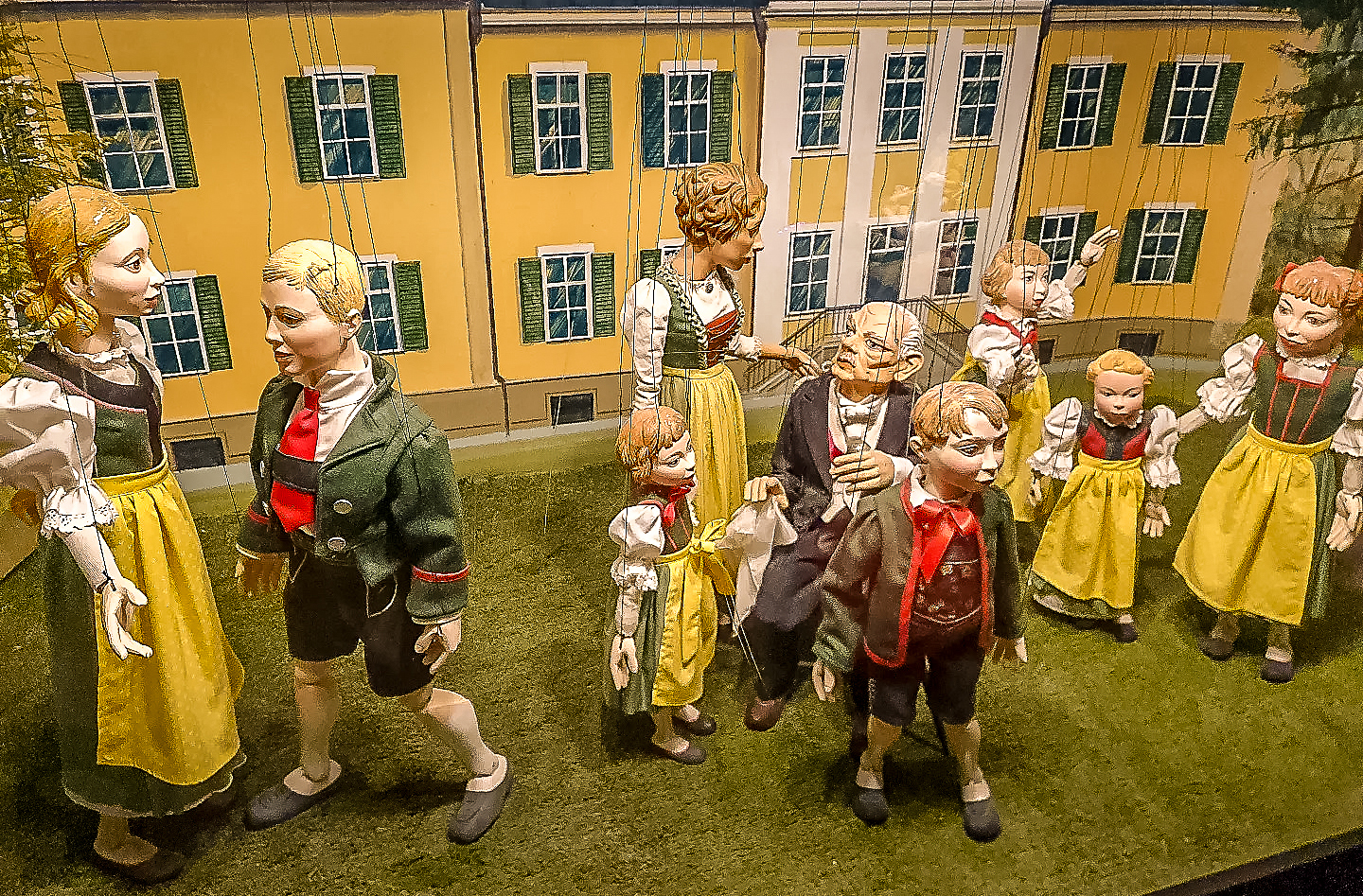
A distinctive feature, apart from the puppet gallery and magnificent early medieval state rooms and 13 themed displays, is its military museum which traces the history of Alpine warfare from Roman days when Hannibal and his 38 elephants faced them down and invaded Italy across the Alps around 200 BC, to the two world wars, emphasising the harshness of the climate and mountain warfare landscape that has challenged armies throughout the centuries while Austria has remained at the strategic centre of Europe.
Hohensalzburg Fortress has been home to the local Rainer Regiment since 1924, memorialising a regiment that was one of Austria’s most steadfast, even taking the field against Turks in 1682. The name derives from Archduke Rainer Ferdinand, a nephew twice-removed of Emperor Franz Jozeph I. Weapons, uniforms, photographs, spoils of war and much more recall the service and successes of this regiment, especially during world war one when it saw around 5,000 soldiers fall in battle.

Other galleries put the origins of more recent wars firmly in historical perspective, focusing on the earlier exploits of the Austro-Hungarian Empire and its last ruler Franz Jozeph, a multi-national empire and constitutional monarchy led by the Hapsburgs between 1867-1918.
Before taking the funicular to the fortress visitors can walk the cliff-face corridors of the catacombs with their narrow walkways and hidden altars used by Benedictine monks. It forms the cliff-face part of St Peter’s Abbey and its cemetery which was founded in the 7th century and is considered the oldest monastery still in existence in the German-speaking world.
The cemetery’s beautiful stone and steel monuments have been erected since the first Abbey Church of Saint Peter was built in 696 by Rupert, Bishop of Worms. Today’s Abbey Church was built in the 12th century and remodelled several times over the centuries, and combines elements of Romanesque, Gothic, Renaissance, Baroque, and Rococo styles. It is also one of the film locations from the classic movie The Sound of Music.
Mozart and Haydn are closely associated with St Peter’s Abbey. In 1769, 13-year-old Mozart composed the Dominicus mass for the abbot and a few years later Michael Haydn wrote the Rupertus mass commissioned by the abbey. Aside from these well-known connections, Salzburg also boasts the Silent Night Museum at Hallein featuring the works of Franz Xaver Gruber – composer of the Christmas carol ‘Silent Night’. Working as a choir master and organist, Gruber lived for 28 years in the rooms now housing the museum. The display includes original furnishings from his apartment, artworks by the composer, and the guitar Joseph Mohr played in 1818 at the first carol performance in Oberndorf.
Mozart was born in 1756 in the Hagenauer Haus at No. 9 Getreidegasse in Salzburg. Today, his birthplace is one of the most visited museums in Austria and contains his own violin and clavichord. Believing that ‘Travel shapes you’ he was well travelled, making it as far as to London by horse-drawn carriage – a journey that then took a week. He made 17 major trips abroad, equivalent to 10 years of his short 35-years life.
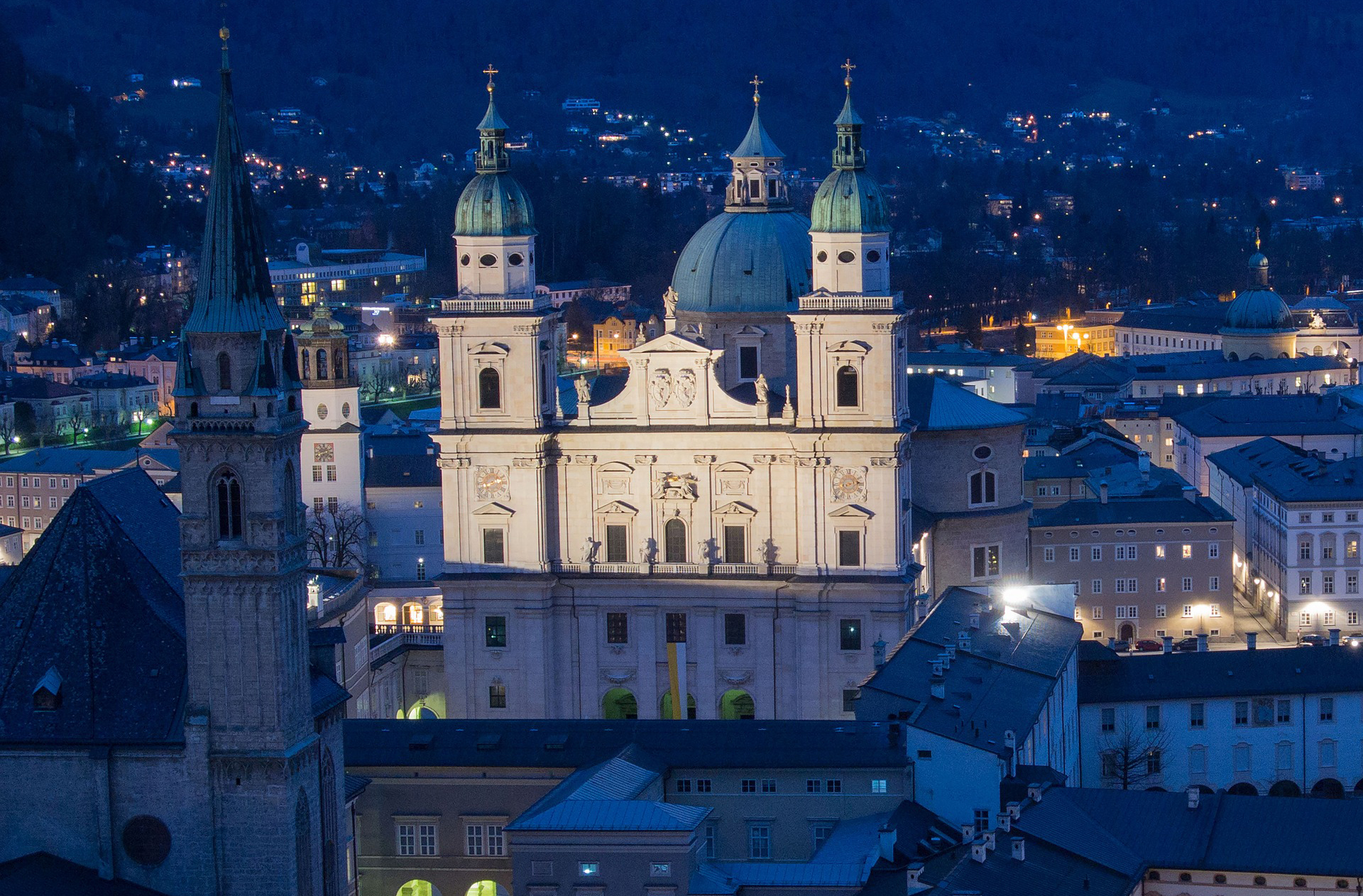
Sights to take in include Salzburger Dom, or cathedral, the largest early baroque church north of the Alps and the oldest episcopal church in Austria, which is known for its five organs, four around the main nave crossing (Mozart played one) and the processional organ above the west door currently under restoration. Kollegienkirche, the ‘white’ baroque church of the university in the college square is a lesser-known gem.

The equivalent of an open-top bus ride round the old town is a carriage ride. Carriages and pairs along with taxis are the only transport allowed in the old streets, though trams run on fringe roads.
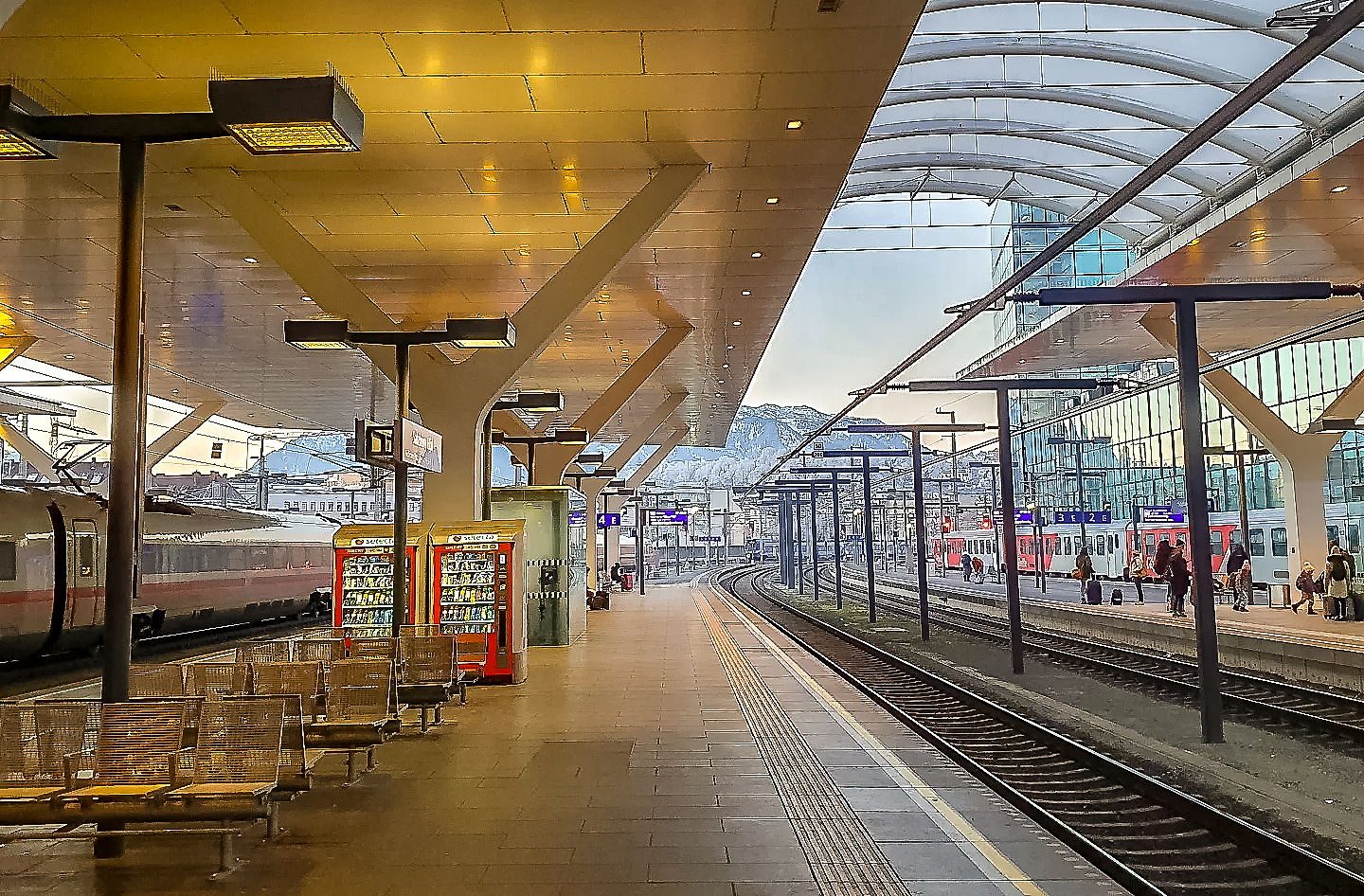
As well as the dominant mountain, the winding river, and a fairy-light-lit market, I think my snow globe must also contain a red and white Austrian train. Our three-day visit to Salzberg was cut to two because of persistent fog at Krakow airport but the sharp efficiency of the spotless Austrian rail network ensured that a proper break was still possible.
Simon Greaves is a Financial Times/FT.com journalist