
Return to Tuscany
Financial Times journalist Simon Greaves returns to Tuscany after thirty years — and finds a region that has lost none of its power to astonish.
There is a cliche I’ve always liked: ‘That God created the world, and when he wanted to show off, he made Italy’. More than thirty years ago, I first came to Tuscany, with its terraced vineyards, olive groves clinging to sun-bleached hillsides, the medieval chess-piece towers of San Gimignano rising against a cloudless sky. It was the kind of landscape that brands itself in the memory. Now, three decades on, I was back. And Italy, I am relieved to report, still shows off magnificently.
Back then, I travelled by Citroen with my sister via France and Switzerland on what was a two-week driving and camping holiday. This return was shorter and sharper. Three nights centred on Pisa, with days out to the walled city of Lucca and, further north along the coast, to the extraordinary five villages of the Cinque Terre. We travelled in March, the sweet spot of low season, cool enough for walking, quiet enough to think, and blissfully free of the summer hordes.
The Leaning Tower and its neighbours
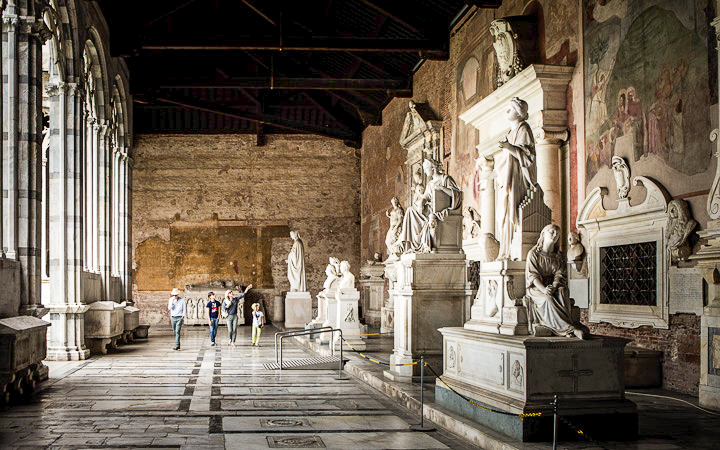
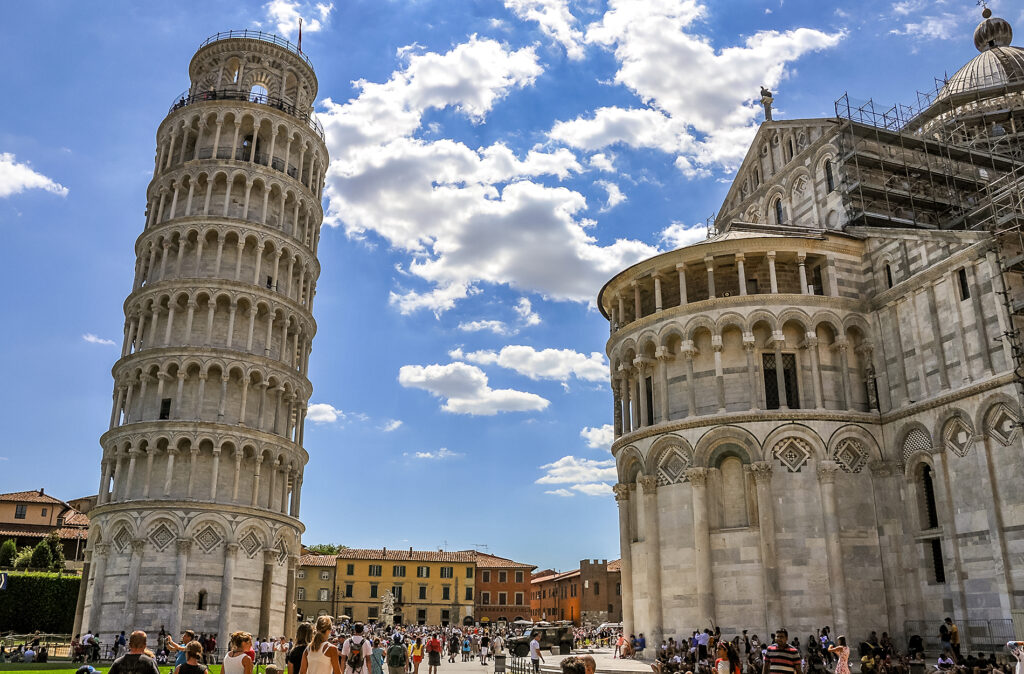
Pisa is not only its tower, though the tower is, admittedly, something special. Two hundred and ninety-four steps, a five-degree lean, and a view that makes the climb worthwhile. But it is the ensemble around it that truly impresses. The Baptistry and Duomo together form one of the great architectural set-pieces of medieval Europe. My real discovery, though, was the Camposanto, the monumental cemetery that few visitors linger in long enough. Its frescoed corridors depict heaven and hell with a raw, unsparing vividness, a vision of the cosmos conceived by early Christians long before Galileo formalised what they had begun to imagine.
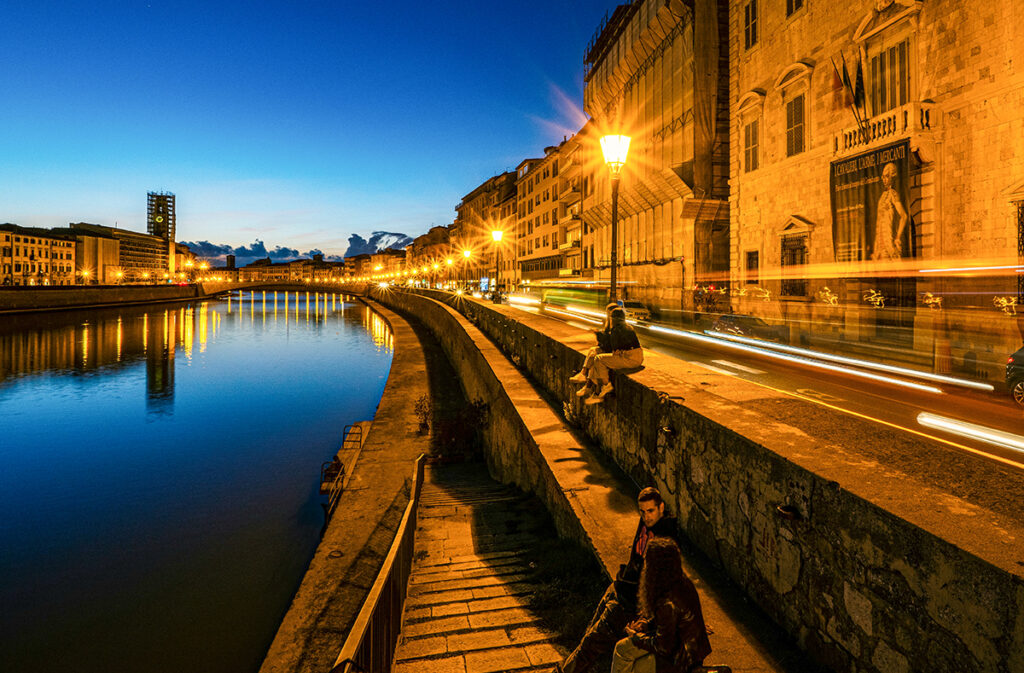
The city beyond the Campo dei Miracoli rewarded a slower walk. I couldn’t help observing how quietly the River Arno flowed through it. Its banks are unhurried in a way that Florence, upstream, never quite manages. Not a single boat on the water. In low season, at least, the river felt underused, its surface still, the reflections steady.
The Cinque Terre is not for the hurried or the faint-footed
We saved the Cinque Terre for our last day, arriving by coastal train from La Spezia, a line that passes the great white gash of the Carrara marble quarry, before curving down towards the sea. The five villages, Monterosso, Vernazza, Corniglia, Manarola, and Riomaggiore, are each distinct. In Monterosso, the information guides spoke plainly. The coastal paths were uneven, prone to landslides, and not to be attempted without proper footwear and, ideally, a clear sky. Someone had recently come to grief on the trail. The warning deserved respect.
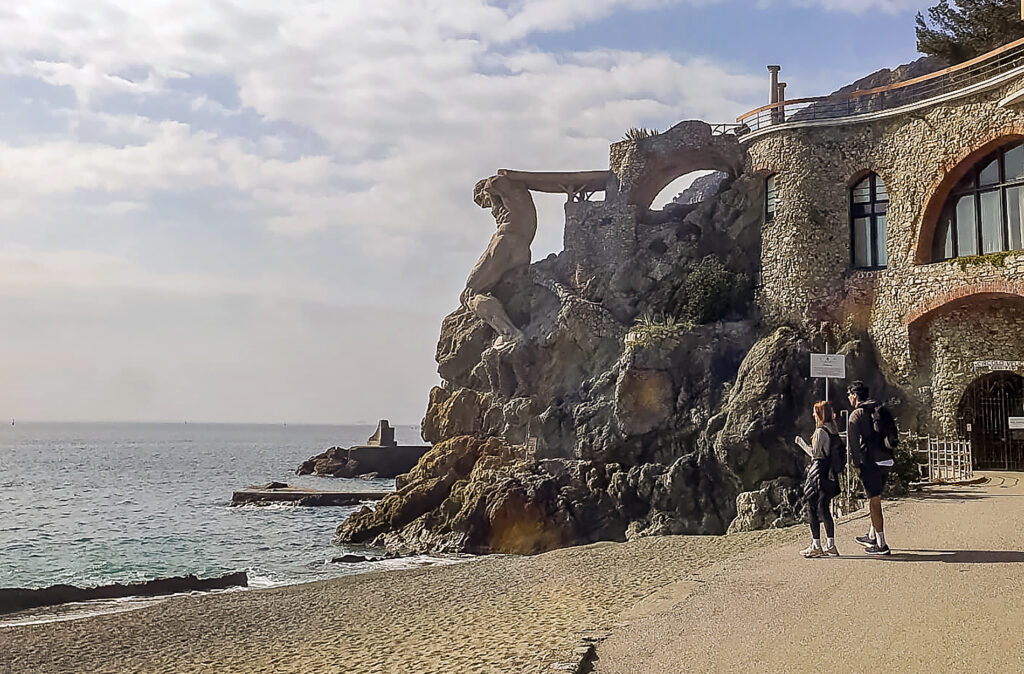
Monterosso, the most northerly and most resort-like of the five, has Riviera-style beaches, water sports, and a giant concrete figure of Neptune, the vision of a sculptor and engineer from the turn of the 20th century, keeping a watchful eye over this seascape as he has done since before the last war.
It was Vernazza, though, that stopped me in my tracks. The harbour is steep and small, its pastel-fronted villas tumbling to a walled waterfront that reminded me, unexpectedly, of Robin Hood’s Bay on the Yorkshire coast. The village recovered from a devastating mudslide in 2011 that killed three people, and there remains a quiet resilience about it.
Here, more than anywhere along the five villages, I sensed the self-sufficiency of what this place once was: a fishing community largely cut off from the wider country, dependent on sea and land, on olive oil and wine and a life that asked little and offered much.

Manarola is almost as beautiful, its station is connected to the village by a pedestrian tunnel. From here, the Via dell’Amore, ‘Lovers’ Path’, threads its way to Riomaggiore, an easy twenty-minute coastal stroll. The railings are thick with padlocks left by passing couples, and in the quiet of March, with pale sunshine catching the metal, the effect is oddly affecting. Love, it seems, is most convincing when it asks for nothing more than a padlock and a view of the sea.
Lucca and the ghost of Puccini
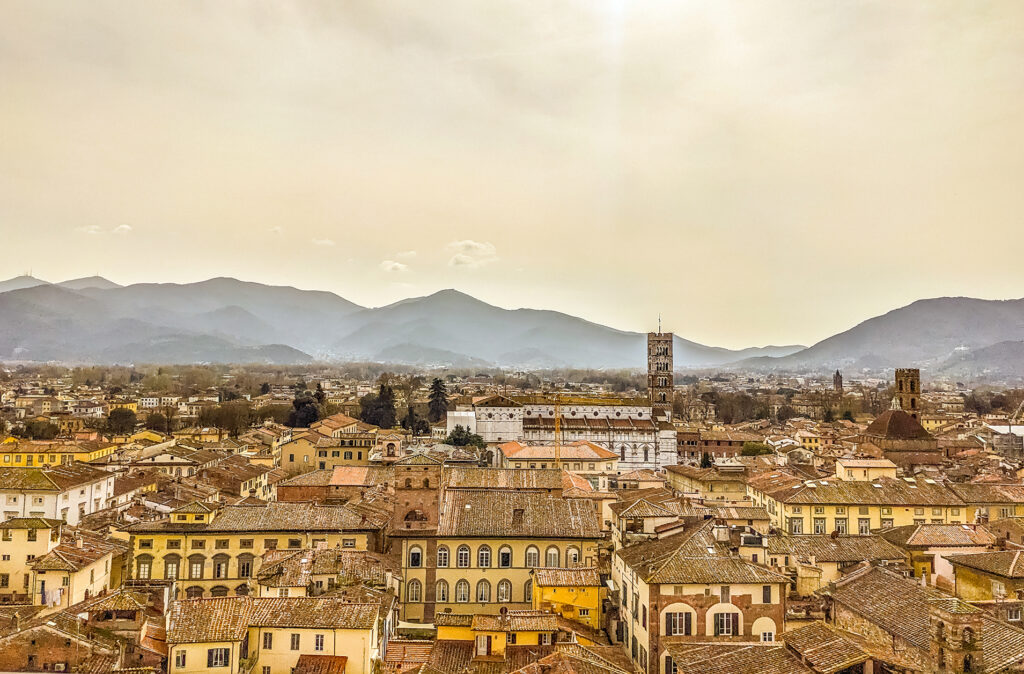
Seventeen kilometres north of Pisa, ringed by its Renaissance walls, the city of Lucca wears its history like a perfectly cut jacket…always elegant, never ostentatious. The ancient Roman walls, four and a half kilometres of them, broad enough to walk or cycle in comfort, give a perspective on the city that no street map can match. Within them, a hundred Romanesque churches compete for attention alongside quieter pleasures…a tower with oak trees growing improbably from its roof, an oval piazza, built on the footprint of a Roman amphitheatre. I found myself reaching back to eight years of school Latin: ‘Ave Imperator, morituri te salutant’ (Hail, Emperor, those who are about to die, salute you). Some things, it turns out, stay with you.
The highlight was Puccini’s birthplace, a museum that opens a window on the composer’s family across generations of musicians. His world is preserved with an intimacy that surprised me. Handwritten scores, librettos, a writing garret where light falls through old windows, and a lavishly embroidered velvet gown from a 1926 production of Turandot, the opera Puccini did not live to complete.
Italy is still struggling. The political graffiti in the side streets makes no secret of it. But it has never stopped being beautiful.
Italy has a way of calling you back. Not with a gentle nudge, but with the insistence of somewhere that knows, with absolute confidence, that it has something you cannot find anywhere else. Thirty years on from that first encounter with Tuscany’s terraced hillsides and medieval skylines, the pull is undiminished. The leaning tower still defies reason, the clifftop villages still stop you in your tracks, and the country wears its beauty with the same effortless ease. If anything, returning only deepens the attachment. Italy hasn’t just held its ground. It’s got better. And if you need final proof that this is a country that takes the important things seriously, in Pisa, there was a café selling twenty different tiramisus. Some countries know exactly what they are doing.
Traveller’s Notes
Pisa and the Cinque Terre are well suited to a long weekend or short break, particularly in the shoulder seasons of March–April or October. Crowds are manageable, prices are kinder, and the light, especially along the coast, has a quality that high summer rarely matches.
Getting There
Direct flights to Pisa International Airport (PSA) operate from several UK airports, with journey times from London of around two hours. The airport sits just outside the city centre and is well connected by bus and taxi. Alternatively, fly into Florence and travel to Pisa by train in under an hour — a scenic option that opens up the wider region.
Where to Stay
Hotel Verdi, close to Pisa’s beautiful Teatro Verdi, is central enough that most of the city is walkable. hotelverdipisa.com
The Cinque Terre
Trains from La Spezia connect all five villages; a day pass is the most flexible option. Take your passport to Pisa station to book a named round-trip ticket — security checks are in place to deter theft and are taken seriously. The coastal walking trails vary significantly in difficulty; check conditions locally before setting out, and wear proper footwear regardless of what the weather looks like at the harbour. Full information, including trail status updates: cinqueterre.eu.com
Lucca
A day trip from Pisa by train takes under half an hour. The Puccini Museum is on Corte San Lorenzo; the city walls are free to walk and cycle. Bike hire is available at several points around the walls.
Pisa City Guide