
Spain’s Seaside Secret – Worth Getting Lost In
Legend has it, Cudillero was founded by Vikings. Whether true or not, this fishing village on Spain’s northern coast feels like a place carved out of time, an open secret for Madrileños, but still blissfully hidden from the mainstream tourist trail.

Tucked among steep cliffs and the deep blue inlets of the Cantabrian Sea, Cudillero may just be the prettiest seaside village in Spain. The beauty begins even before you arrive. Less than an hour from Asturias Airport, and only forty minutes northwest of Oviedo, Cudillero somehow remains wonderfully untouched. That’s the secret: it’s on the way to nowhere. You don’t stumble upon Cudillero. You choose it.

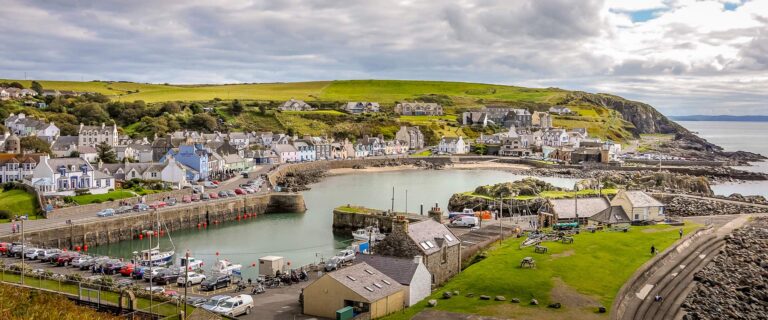
And what a choice it is. From the moment you set eyes on the village, its charm is undeniable. Rows of shuttered houses, each painted in the same bright colors as their owner’s fishing boats, spill down the hillside toward a small harbor where life moves to the rhythm of the sea. Gulls swoop overhead as fishermen unload the day’s catch, gleaming hake, pixin, sea bream, and baskets of spider crabs, lobsters, and barnacles. Some go straight to auction on the docks, others directly into vans bound for local kitchens, where you’ll taste seafood fresher than anywhere else in Spain.

This is one of the last places in the country still holding onto small-scale hand fishing, and the people here guard it fiercely. It’s not just work; it’s identity. Standing on the harbor wall, you might spot old fishermen, caps tilted against the sun, sipping cider in La Rula while watching today’s crews bring in the sea’s offering. It’s a scene straight out of Hemingway.

From the plaza by the harbor, cobbled, cozy, and ringed with bustling cafés and restaurants, the village climbs upwards in a maze of narrow alleys, steep stairways, and winding lanes. But don’t worry about losing your way; even the streets guide you home. Pavement tiles, each decorated with patterns of fish, shells, or boats, lead wanderers back to the heart of Cudillero. And when you return, reward yourself the Asturian way: with a glass of cider, escanciada, poured dramatically from shoulder height to glass, aerating as it falls. Locals down it in a single gulp, and somehow it tastes crisper, fresher, more alive.
Beyond the village, the Cantabrian coast stretches wild and untamed. Sandy beaches hide between jagged cliffs where Atlantic waves crash with untamed power. With only a handful of locals speaking English, Cudillero isn’t just a pretty postcard. It’s an invitation to slow down, savor the sea, and immerse yourself in Asturian tradition.
Come here not because it’s on your way. Come because it isn’t.
Traveller’s Notes
Chris Lawson stayed at a small boutique hotel, a 20-minute walk above the harbour: https://casonadelapaca.com/web/index.php/en/home/
A car is essential to visit Cudillero. We recommend www.discovercars.com
 Bars and restaurants clutter the plaza in Cudillero, the prettiest village in Spain. Picture: Chris Lawson
 Fishing boats crowd the little harbour of Cudillero. Picture: Chris Lawson
 Pastel coloured houses, scattered across the steep valley sides, characterise the pretty fishing village of Cudillero. Picture: Chris Lawson
 Brightly painted fishing boats ply their trade from the tiny working harbour of Cudillero. Picture: Chris Lawson
 Freshly caught fish, most of it bound for the local restaurants, is landed on the quayside in Cudillero. Picture: Chris Lawson
 Colourful terraced gardens and neat houses cluster together along the hillsides of Cudillero. Picture: Chris Lawson
 Fishing boats crowd the small working harbour of Cudillero. Picture: Chris Lawson
 Cape Vidio lighthouse above the harbour at Cudillero. Picture: Chris Lawson
 The rugged Atlantic coastline of northern Spain near Cudillero. Picture: Chris Lawson
 The rugged Atlantic coastline of northern Spain near Cudillero. Picture: Chris Lawson
 Cudillero, a traditional fishing port on the Cantabrian coastline of northern Spain. Picture: Chris Lawson