
Amsterdam – City of Light and Water
Where 17th-century canal houses glow amber in the spring sunshine, masterpieces hang in golden rooms, and a city of barely a million people feels like the whole world – in miniature.
There is a particular quality of light in Amsterdam that painters have been chasing for four centuries. It comes off the canals, refracted and soft, catching the brick facades of the canal houses and turning their gabled rooftops into something approaching theatre. Step off the plane at Schiphol, just 90 minutes from London, and within the hour, you can be standing on a canal bridge watching that light do what it has always done, making the ordinary look quietly extraordinary.

Picture by Lara Samme
The city rewards those who resist the temptation to rush. Walk, if you can. Not the tourist shuffle, head down and map in hand, but the kind of walking that lets a city reveal itself at its own pace. The canal ring, a UNESCO-listed maze of waterways, arched bridges, and leaning facades, offers a different composition around every corner. In spring, when cherry blossom lines the pavements and the warmth brings out the deep red and gold of the brickwork, the whole city seems to be performing an encore of the Dutch Golden Age. It is, simply, beautiful.
Those who prefer two wheels to two feet will find themselves equally rewarded. Cycling is not merely transport in Amsterdam, it’s a way of life. It is identity, ritual, a declaration of belonging. Hop on a bike, join the flow of locals heading to and from their working day, and you will feel, briefly, less like a visitor and more like someone who lives here. The city is small enough for this illusion to hold.

Picture by Mana5280 on Unsplash
“In art, one must give heart and soul”
To visit Amsterdam and sidestep the Van Gogh Museum is, as someone once put it, a crime in itself. And they were right. The world of Vincent Van Gogh reveals itself here with an intimacy that reproductions can never replicate. Stand before Almond Blossom, all fragile white branches against an impossible blue sky, painted for his newborn nephew, and you understand something about hope that no caption can adequately explain. Move through to The Potato Eaters, with its harsh, unsparing humanity, and you understand something about suffering. In an age of endless digital noise, standing before an oil painting in a quiet room can feel like an act of resistance. Van Gogh, who knew something about that, would have understood.
The Van Gogh Museum anchors the Museumplein, Amsterdam’s great cultural square, alongside the Rijksmuseum, where Rembrandt and Vermeer wait in stately, magnificent rooms, and the Stedelijk, for those whose tastes run toward the contemporary. On a clear spring evening, when the sky over the square turns pink, and the light catches the museum facades, the Museumplein becomes something else entirely. Chase that sunset. Race alongside the canals. The result is worth running for.
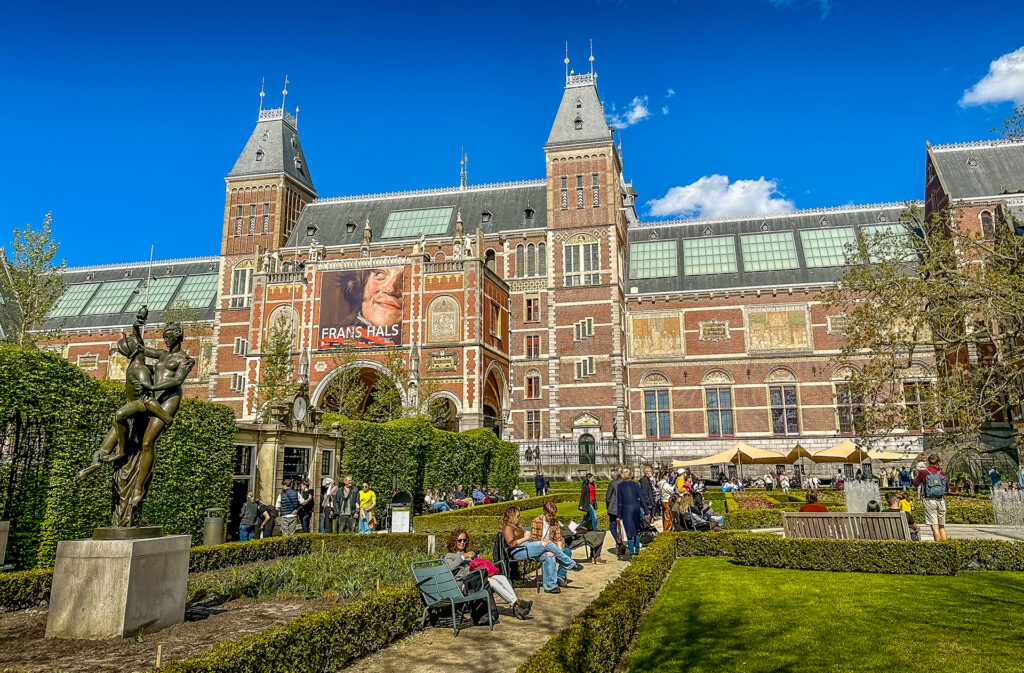 The Rijksmuseum, the epicentre of Museumplein, Amsterdam’s cultural square. Picture by Lara Samme
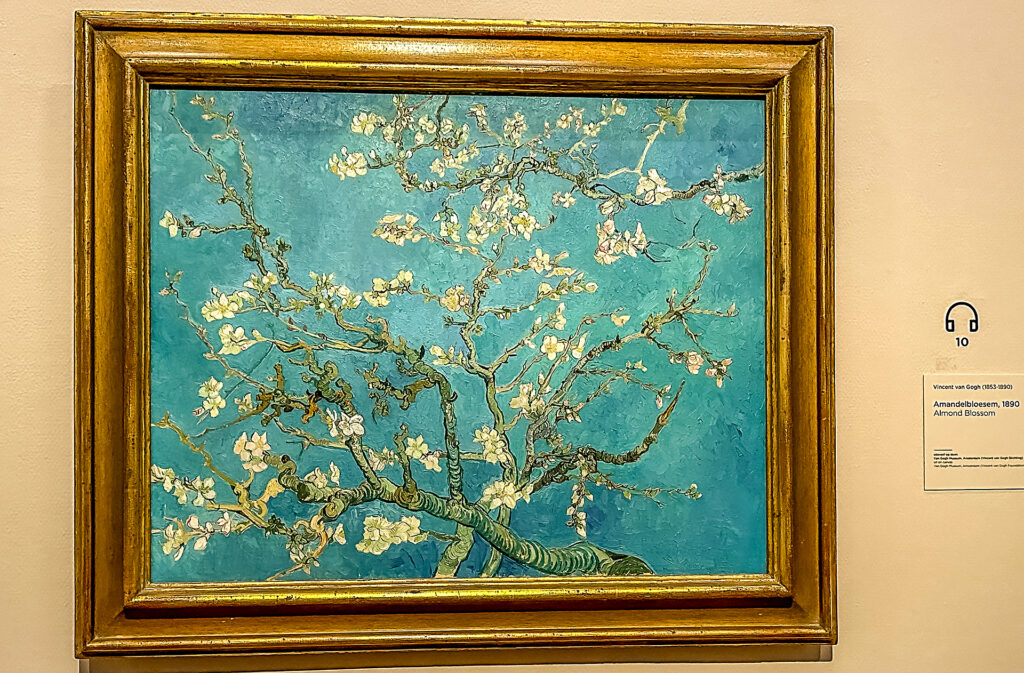 Created through hope – Van Gogh’s ‘Almond Blossom’ on display in the Van Gogh Museum.
Picture by Lara Samme
For those who wish to understand the city’s darker history, the Anne Frank House on the Prinsengracht offers a visit that is quietly devastating. The Secret Annex, preserved largely as it was, tells the extraordinary existence of a young girl, in hiding for two years during the Nazi occupation of the Netherlands. Its sombre reminders ask nothing of you except your full attention. It receives everything you have to give.
“The kind of cafés that make you want to cancel your flight home.”
Dutch cuisine has a reputation, not always fairly earned, for simplicity. But eat as the locals eat, and the picture changes quickly. Begin with a stroopwafel, that perfect union of thin waffle and caramel syrup, best enjoyed fresh and warm from Pluk, a bakery of quiet genius with two locations in the Nine Streets. The Nine Streets themselves, known locally as De 9 Straatjes, deserve an afternoon of their own. A grid of narrow lanes lined with independent boutiques, art galleries, and the kind of cafés that make you want to cancel your flight home. Het Koekemannetje, tucked among them, sells just the best biscuits, ‘handmade and baked fresh every day’.

Picture by Dmitri E. on Unsplash
The transition from sweets to savouries begins at the Bloemenmarkt, the only floating flower market in the world, moored along the Singel canal. Stand among an avalanche of flowers and tulip bulbs, and you’ll be in touching distance of shops selling Dutch cheeses, a juxtaposition which feels quite unique, yet perfectly Amsterdam. The cheeses alone warrant investigation, from traditional Gouda to more innovative varieties, infused with cumin, truffle, and improbably, beer. To finish your gastronomic tour, the Heineken brewery nearby offers its own particular form of Dutch cultural education.
Come evening, the restaurants and brasseries around Vondelpark, the city’s largest green space, come into their own. From Van Dam Brasserie to George WPA, one of the most fashionable terraces in town, the tables fill and the park beyond glows green in the evening light. There can be few better places to just sit and watch the world go by.
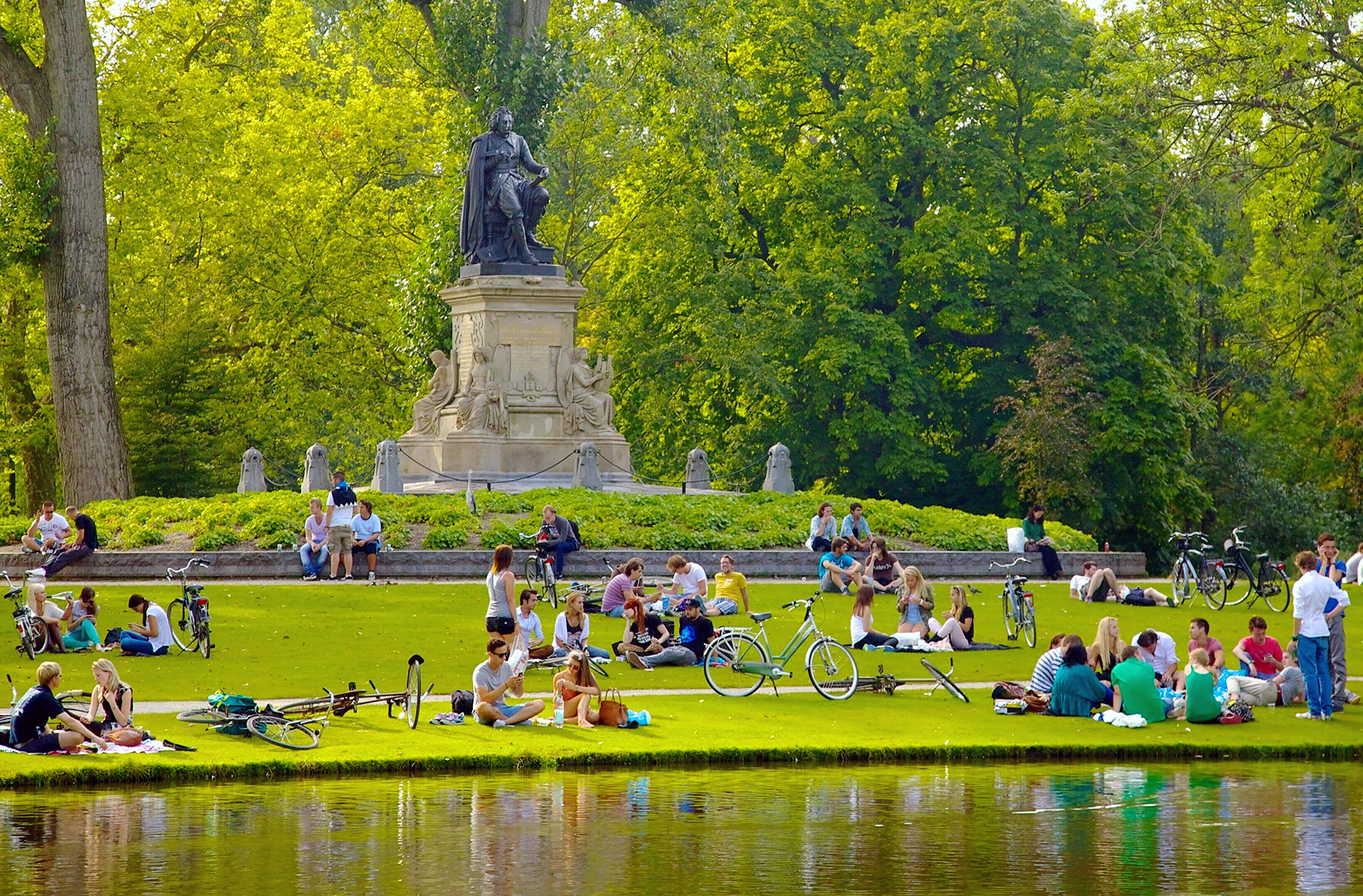
Vondelpark itself is Amsterdam at its most unhurried. Locals read on the grass, cyclists lean their bikes against trees, children run in the loose, aimless way children do when no one is watching the clock. The park’s open-air theatre hosts free concerts through the summer, and the birdsong, as spring arrives, is its own kind of performance. Bring a book, Tulip Fever, perhaps, or The Miniaturist, both set in this very city in centuries past, and let the afternoon drift along.
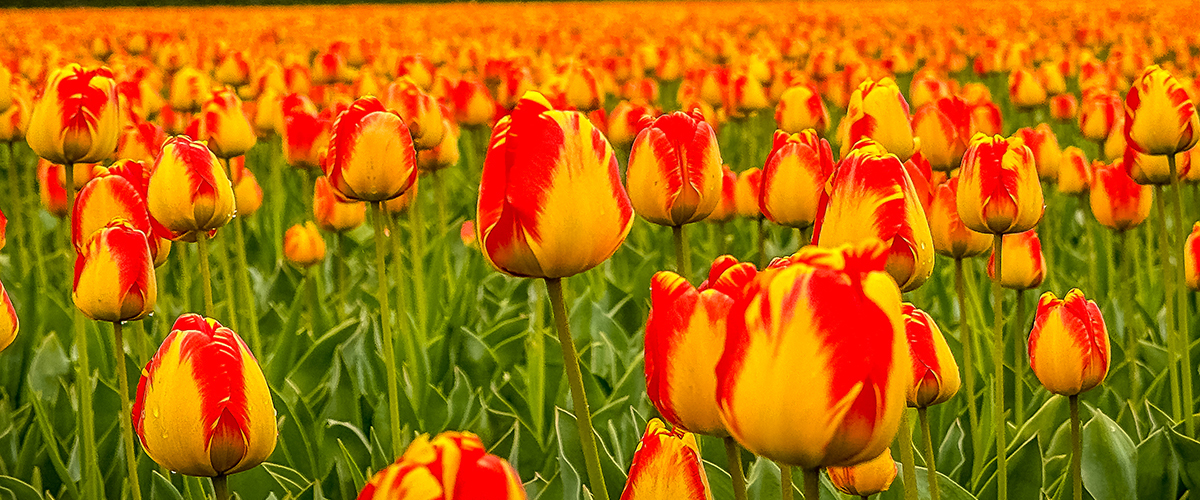
A little further afield, the Bollenstreek, the great bulb fields to the south-west of the city, bloom each spring into something almost surreal, hectares of tulips in colours that seem to have been invented for the purpose. It is less than an hour by car. But don’t stray from the city for too long. Amsterdam, as anyone who has fallen under its spell will tell you, has a habit of calling you back.
Traveller’s Notes
Amsterdam rewards the unhurried visitor. Spring — April and May in particular — is the finest time to go: the tulips are out, the light is extraordinary, and the city feels alive in a way that justifies every cliché ever written about it.
Getting There
Direct flights to Amsterdam Schiphol Airport (AMS) run from most major UK airports, with journey times from London of around 90 minutes. Eurostar also operates a direct service from London St Pancras to Amsterdam Centraal in just under four hours — a relaxed and scenic alternative, and it deposits you right in the heart of the city. Amsterdam’s compact canal ring is easily walkable from the centre, and the tram network is excellent for longer journeys.
Where to Stay
Amsterdam offers accommodation to suit most tastes and budgets, from boutique canal-house hotels to larger properties near the Museumplein. For those who want to be close to the museums and Vondelpark, the Museum Quarter is an ideal base. The I amsterdam website is a reliable starting point for finding and comparing options across the city.
Hiring a Bike
Cycling in Amsterdam is less a leisure activity than a way of life, and visitors who embrace it are richly rewarded. Several well-established hire companies operate across the city:
MacBike (macbike.nl) is the largest rental chain, with five locations, including one at Amsterdam Centraal station — ideal if you want to get pedalling from the moment you arrive. Open seven days a week.
Rent a Bike (rentabike.nl) has been operating for nearly 40 years, with a central location beside Dam Square. City bikes, e-bikes, and family options are all available, with free helmets, locks, and maps included.
Black Bikes (black-bikes.com) operates 20 locations across the city, making it easy to pick up and drop off at your convenience.
Star Bikes Rental (starbikesrental.com) is situated just behind Amsterdam Centraal and is particularly well regarded for its friendly staff and competitive prices. A traditional Dutch ‘granny bike’ here costs from around €7 per day.
A note for the uninitiated: Amsterdam’s cycling rules are taken seriously. Keep to the dedicated bike lanes, signal your turns, and, above all, watch for trams.
The Museums
Van Gogh Museum — vangoghmuseum.nl — Booking in advance is strongly recommended; timed entry tickets sell out quickly, particularly in spring and summer.
Rijksmuseum — rijksmuseum.nl — Home to Rembrandt’s Night Watch and Vermeer’s finest work. Tickets can be booked online; early morning visits are quietest.
Stedelijk Museum — stedelijk.nl — Amsterdam’s museum of modern and contemporary art, housed in a striking building adjacent to the Van Gogh Museum.
Anne Frank House — annefrank.org — One of the most visited sites in the Netherlands. Tickets must be booked well in advance online; walk-up entry is rarely available.
The I amsterdam City Card (iamsterdam.com) offers free or discounted entry to many museums, unlimited public transport, and a free 24-hour bike rental — a worthwhile investment for a long weekend.