
Hemi Hideout – A mancave on steroids
Somewhere between a museum, a fever dream, and a love letter to the open road, lies the most gloriously excessive private collection in America.
Just west of Houston, Texas, I turned onto a small country lane. The place looked downright sedate. Even the old windmill seemed sleepy, turning languidly despite an impending storm. I lurched up the pull-through driveway in my modest, gray, manual-transmission Hyundai as owner John Hovas greeted me at the door.
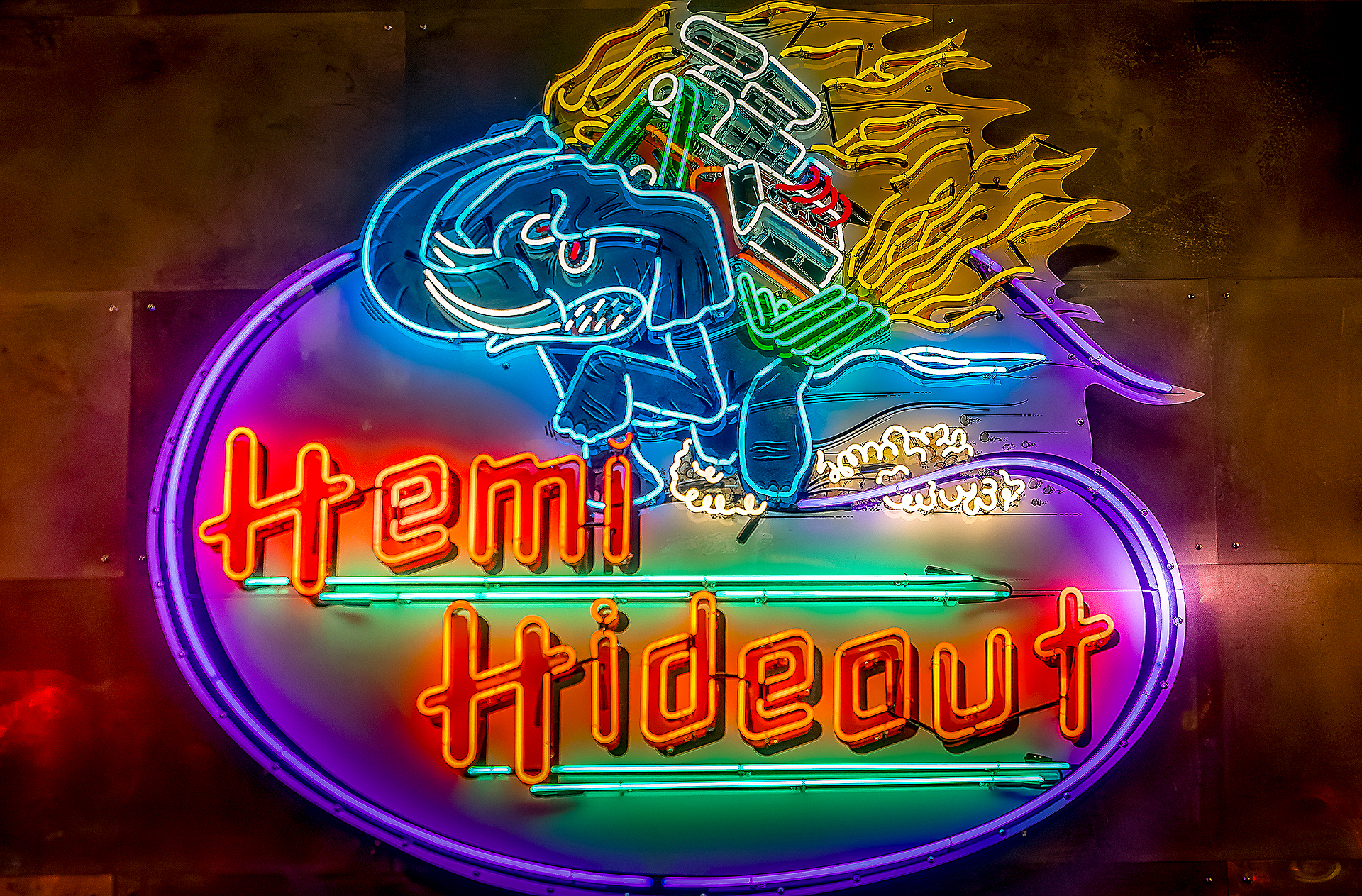
I’m not really sure how to express my first impression after crossing the threshold, but suffice to say, I was speechless.
Neon signs dominated the scene, delivering a technicolor wash over the interior. Overhead, a giant 1930s neon spur from Jackson Hole, Wyoming, made me feel like a Lilliputian. In fact, the whole building did. Sixteen-inch square Douglas fir posts and exposed scissor-arched beams worked their way up to a 5.5-story-high cupola, while thousands of vintage porcelain and neon signs filled the 21,700-square-foot space.
“I wanted to do something ridiculous before I got too old… build a man cave.”— John Hovas, owner of Hemi Hideout

The sign collection started innocently enough when Hovas bought a Dodge Plymouth sign. “I had seen a couple of garages that were decorated with neon signs,” he said with a grin. That was the spark. With the help of artist Bill Seitz and interior designer Shelly Gates, Hovas’s man cave became a place of beauty, not just brawn.
I called a time-out. “Why is it named Hemi Hideout?” If Hovas was shocked by my rookie question, he didn’t show it. “Hemi,” he explained, was short for the hemispherical-shaped combustion chambers that gave high-performance V8s their umph. While the neon signs demanded immediate attention, 22 Skittle-colored Dodges and Plymouths from the ’60s and ’70s added to the riot of color.
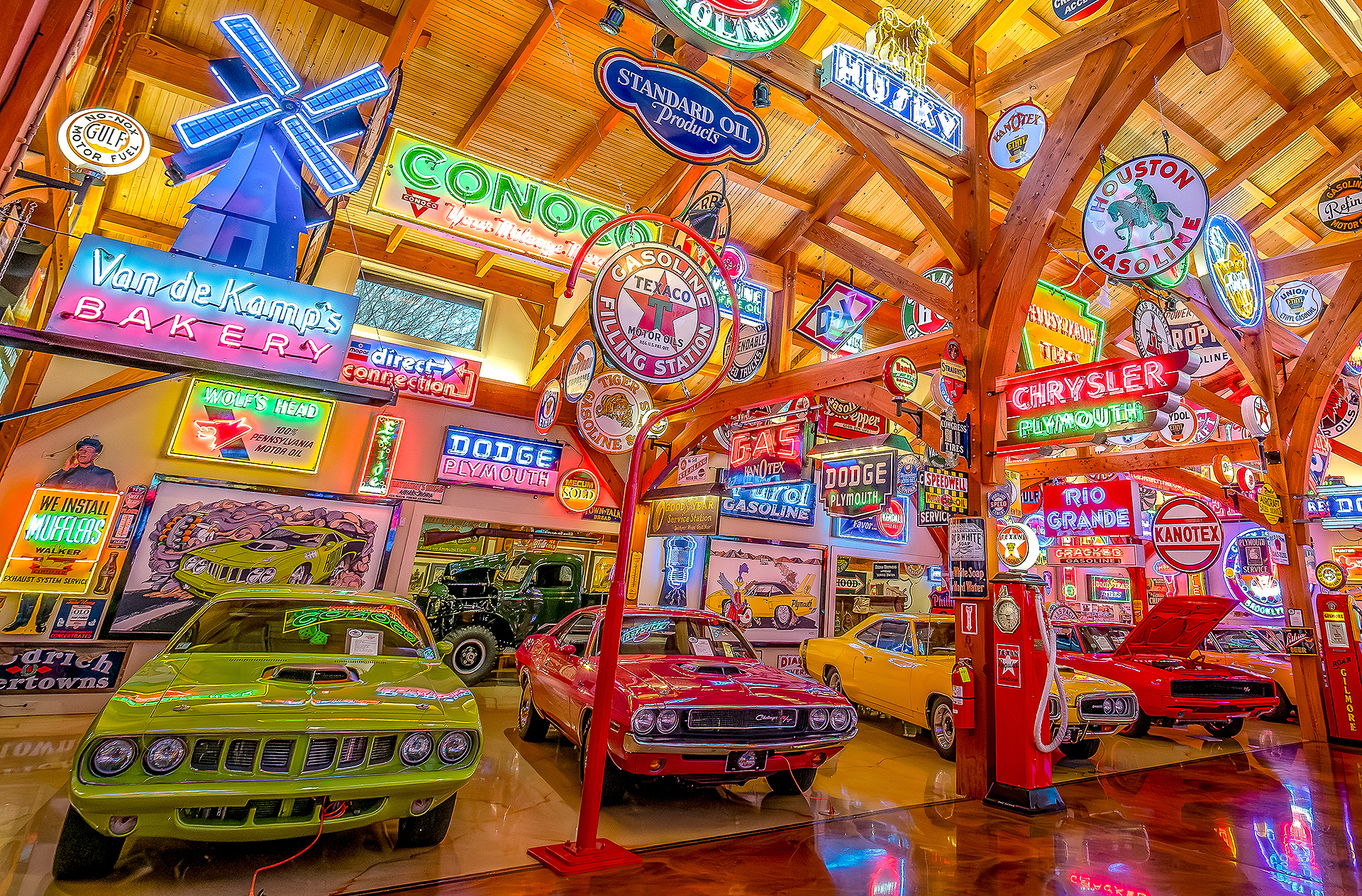

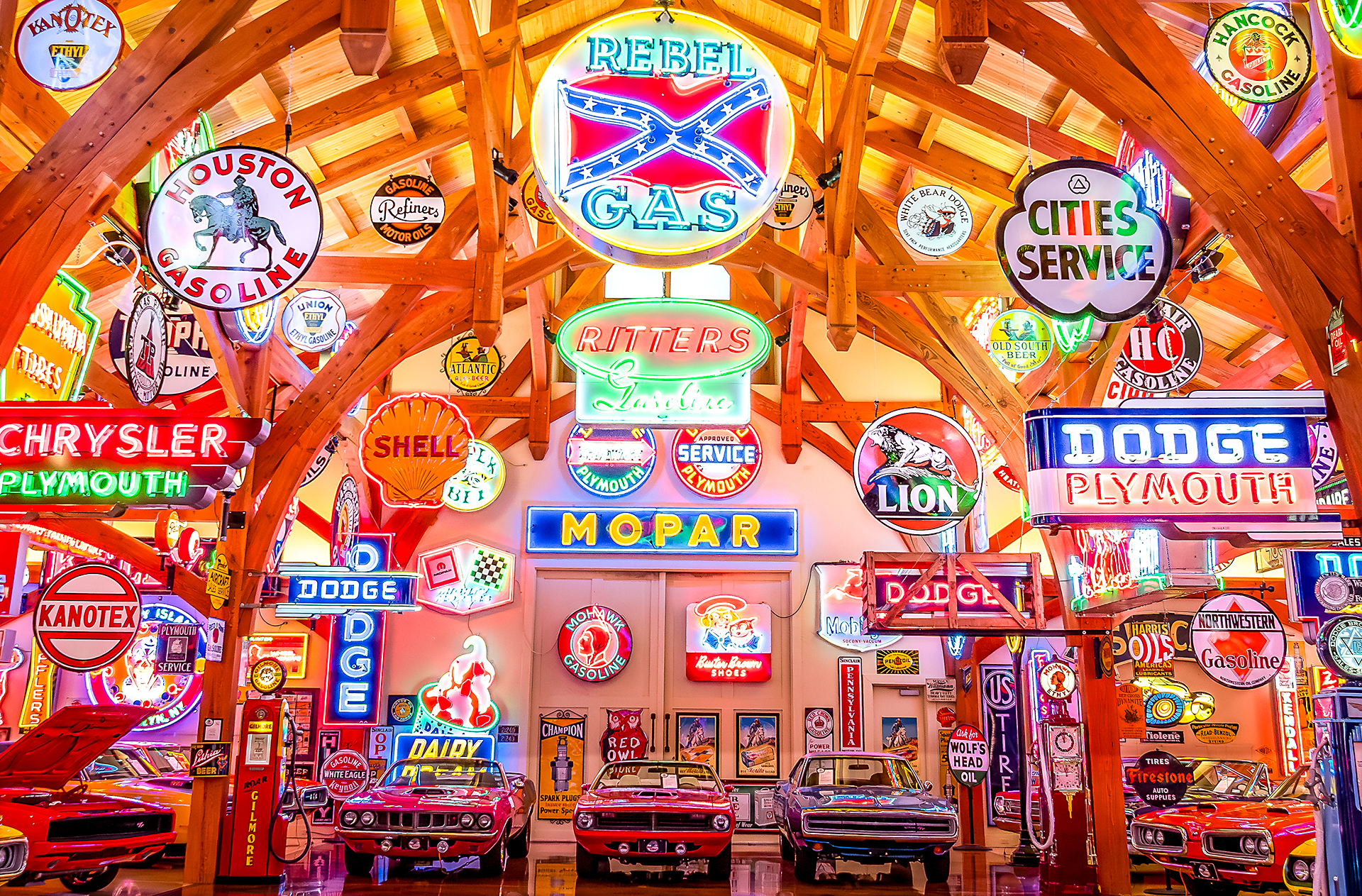

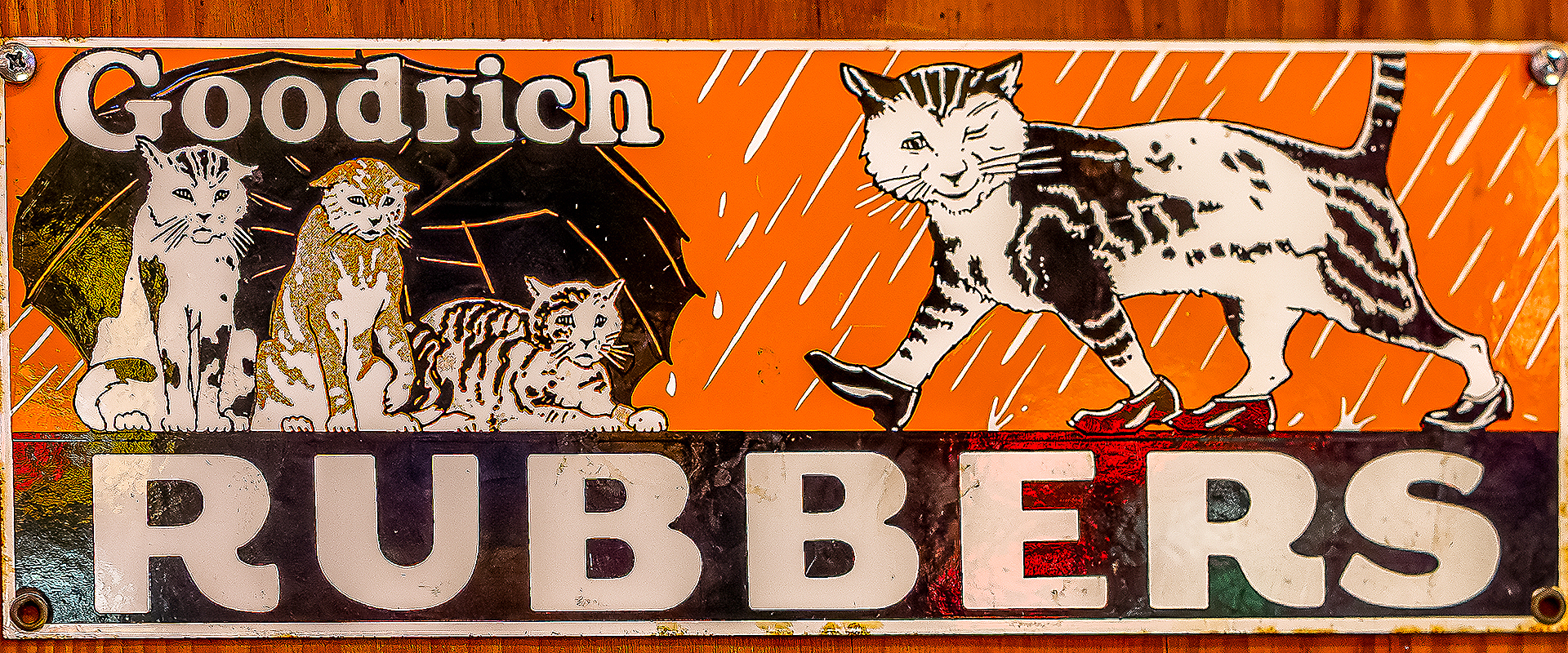
Hemi Hideout opened with 280 signs, mostly advertising Dodge, Plymouth, and oil and gas companies. The collection has blossomed to over 4,500 signs that Hovas found locally and on road trips across the U.S. and Canada. “We’ve gone as far as Prince Edward Island,” he said. “We turned it upside down and found one sign.” On this tiny but detailed piece, a galosh-wearing cat advertises Goodyear rubber boots.
About two hours from home, Hovas found the “Dick’s Elbow Room” sign, the relic of a beer joint in Lockhart, Texas, buried in what he cheerfully called a snake pit. The adventure yielded three reptilian co-inhabitants. As I said, true devotion.
His collection includes not only signs prized for the challenges they presented, but also rare pieces that belong in a museum, and arguably are in one. A circular 1918 sign was the first version of an electric Texaco sign and the only one of its kind still in existence. A 1933 Dr. Pepper sign showing a bespectacled doctor is one of only four left. And a large round porcelain sign for Musgo gas, a company in business from 1927 to 1931, is one of only 27 ever made. Seven of them were repurposed as septic tank lids and, not surprisingly, lost their paint on the downside. This one is in mint condition. Nearby, Reddy Kilowatt grins. This volt-shaped mascot, used by electric companies beginning in the 1920s, made me wonder, not for the last time, what the electricity bill for this place must look like.
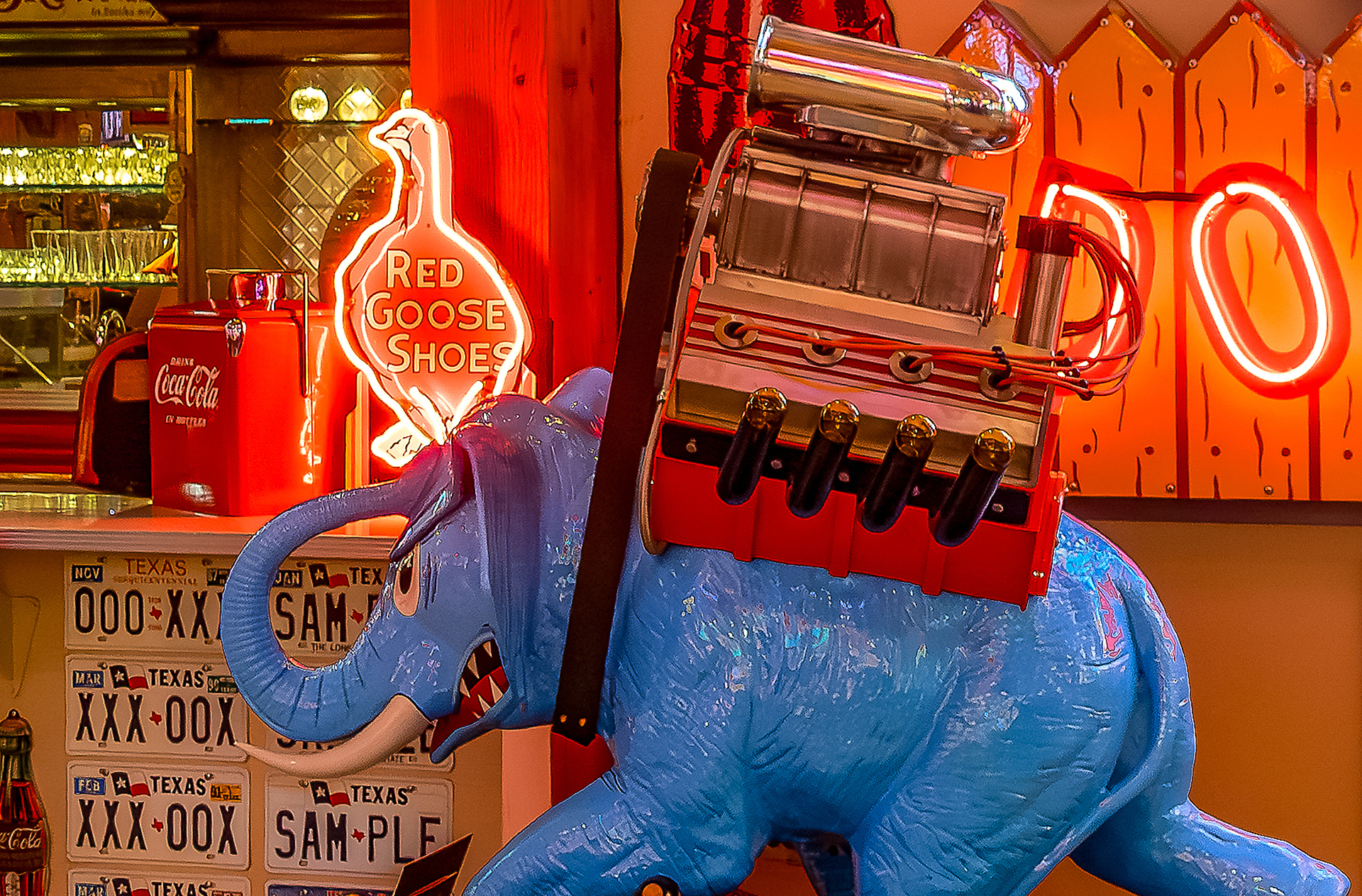
“We welded on a furrowed brow, made him carnivorous, gave him bloodshot eyes, cut off the saddle, and put a hemi engine on him. Then we electrified it.”— John Hovas, on the reimagined kiddie elephant ride.
The V8s and signs aren’t the only collectibles on display. Vintage gas pumps and cigar boxes, old musical instruments, and an antique-store arrangement of Remington shells add broad appeal. In fact, a bullet-hole portrait by Adolf Topperwein, one of Remington’s expert exhibition shooters, hangs on the wall. The prologue to the story makes it even more impressive: Topperwein’s wife, “Plinky,” would shoot buttons off his vest or the cigarette from his mouth earlier in their act. If that’s not a display of marital trust, I don’t know what is.

Hovas’s collections extend into the natural world, too. A massive amethyst-encrusted geode, a woolly mammoth tusk, and a dining table made from 265,000-year-old petrified wood mingle with vintage motorcycles, old John Deere tractors, and a 1900s shock-less “bone shaker” tricycle.
Everything works, thanks to Hovas and his collaborator Bill Prokopuk, who shifted gears in retirement to repair and refurbish the collection. On cue, a souped-up, reimagined kiddie elephant ride in the ’50s diner belted out Johnny Cash’s One Piece at a Time. I’d have been disappointed if it hadn’t.
Traveller’s Notes
Getting There
Hemi Hideout sits just west of Houston, Texas, accessible by car via I-10. Houston’s George Bush Intercontinental Airport (IAH) is the closest major hub, approximately 45 minutes away. A rental car is strongly recommended — this is quintessential road-trip country.
Admission & Tours
Open houses are held several times a year; private tours are available by reservation. The $10 entrance fee is matched by Hemi Hideout and donated in full to local charities — one of the more agreeable ticket prices you’ll encounter. Check the Hemi Hideout website for current dates.
When to Go
Spring and autumn are the most comfortable seasons in the Houston area, with temperatures ranging from the mid-60s to low 80s°F (18–28°C). Summer brings intense heat and humidity, so pack accordingly. Open-house dates often fall in cooler months — worth planning around.
Where to Stay
Katy, the nearest town, offers a full range of chain hotels at reasonable rates. For more character, the Houston Heights neighbourhood, around 30 minutes east, has independent boutique options and excellent dining. Consider building a broader Texas road trip: San Antonio, Austin, and the Hill Country are all within striking distance.