The Calvados Club Goes to Normandy
There are friendships forged in the usual ways: school ties, shared offices, chance encounters. And then there are the bonds sealed over a glass of something magnificent.
For six like-minded gentlemen from East Sussex, it was Calvados.
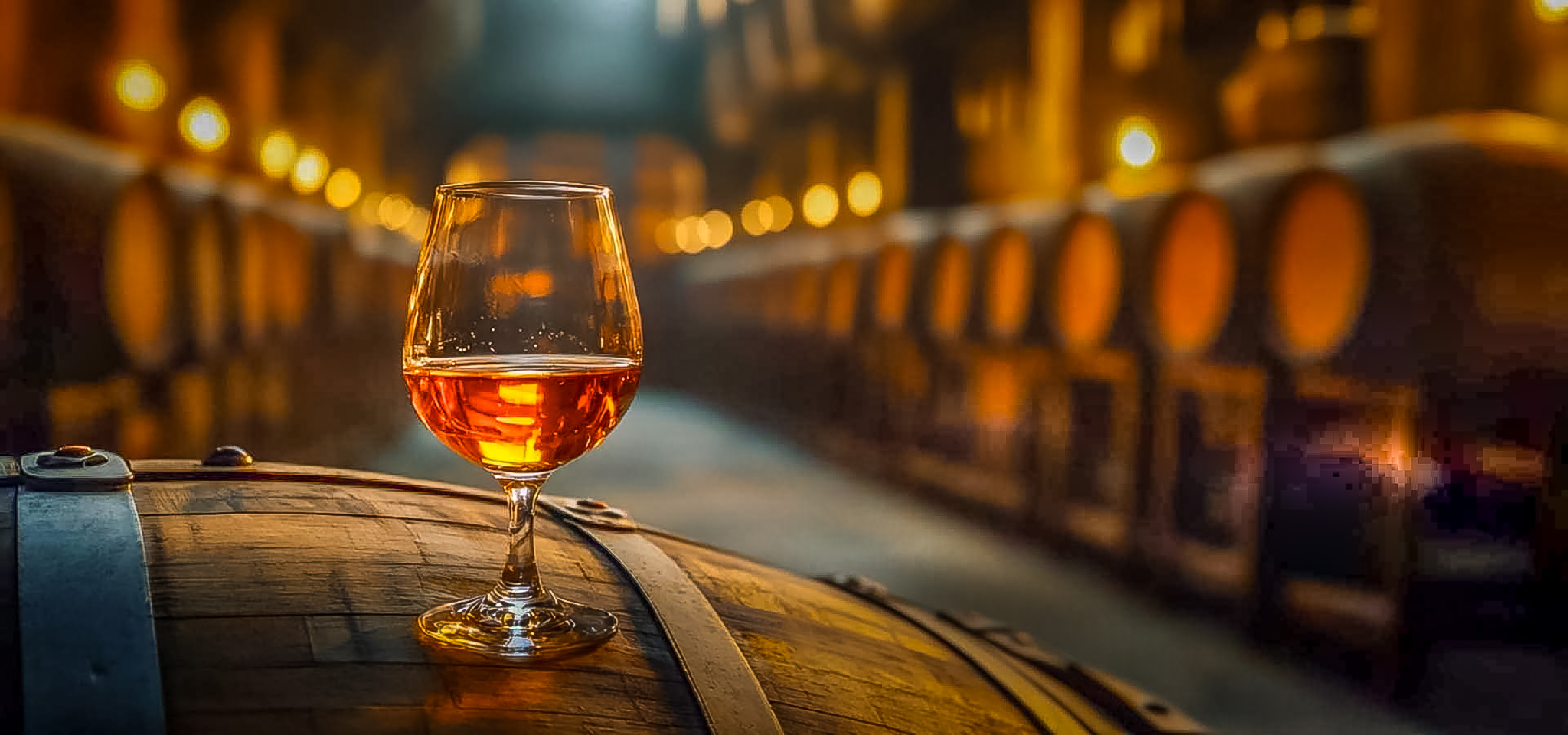
That burnished, aromatic spirit, born of Norman orchards and patient oak, that did the honours. Rich, complex, and demanding of proper appreciation, this most distinguished of apple brandies had quietly become our common language. So when the question arose of how best to honour our mutual obsession, the answer presented itself with almost suspicious ease: pack the tent, pool the kitty, point the car toward France, and make for Normandy.
Thus was born the unofficial Calvados Club. Our pilgrimage had one objective: to sample as much of the devil’s brew as we could afford or manage over the course of a weekend under canvas. We are not apologetic about this.
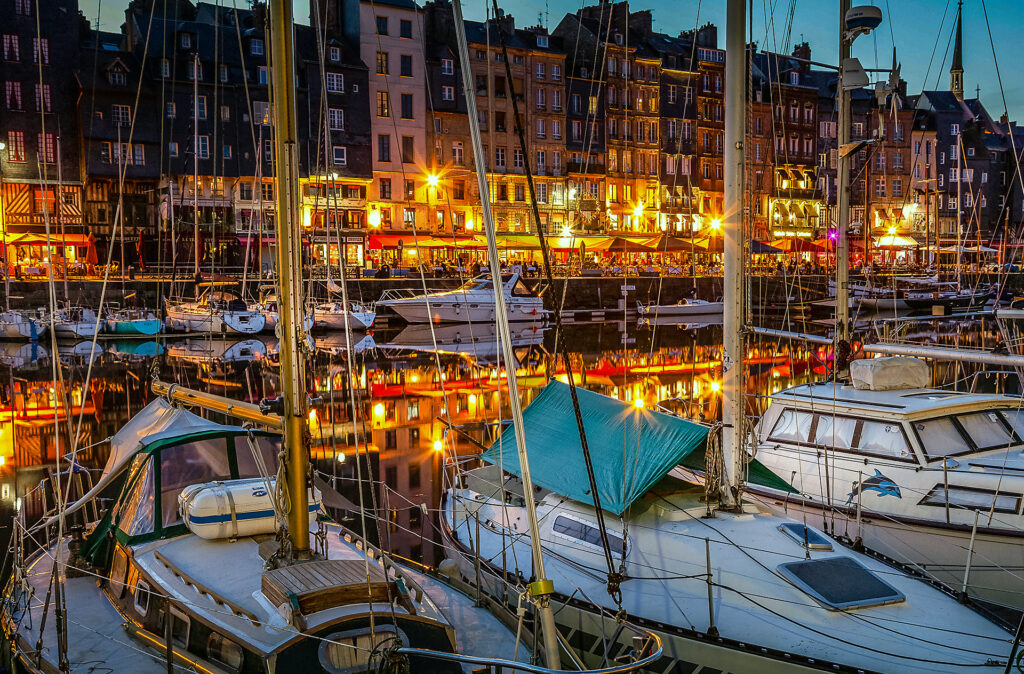
Picture by Phillipe Serrand / Pexels
Our destination was Honfleur, that jewel of a coastal commune in the Calvados département, where the Seine finally surrenders to the English Channel. A four-hour easy drive from East Sussex, and the world shifts. This is not a city you have arrived in. It’s a painting you’ve stepped into.
We pitched our tents at a campsite within what one might charitably describe as staggering distance of the town, and set off into Honfleur’s medieval heart with high hopes and a communal wallet.
No port I have ever visited comes close to this one for sheer, unapologetic prettiness. Honfleur is the kind of place that makes you reach instinctively for a camera. Or at least wish you could paint. Tall, narrow, colour-washed houses from the 16th and 17th centuries jostle for position along the Vieux Bassin harbour, their reflections pooling in the still water after dark like something from a dream. It is, quite simply, one of the most romantic settings in France.
The old port has always attracted artists, and with good reason. Claude Monet’s great mentor, Eugène Boudin, was born here; Monet and his contemporaries would carry their easels up the hill to the Ferme Saint-Siméon to capture the extraordinary quality of light over the Seine estuary. A light that still, on certain evenings, stops you in your tracks. The town wears its Impressionist heritage with understated pride.
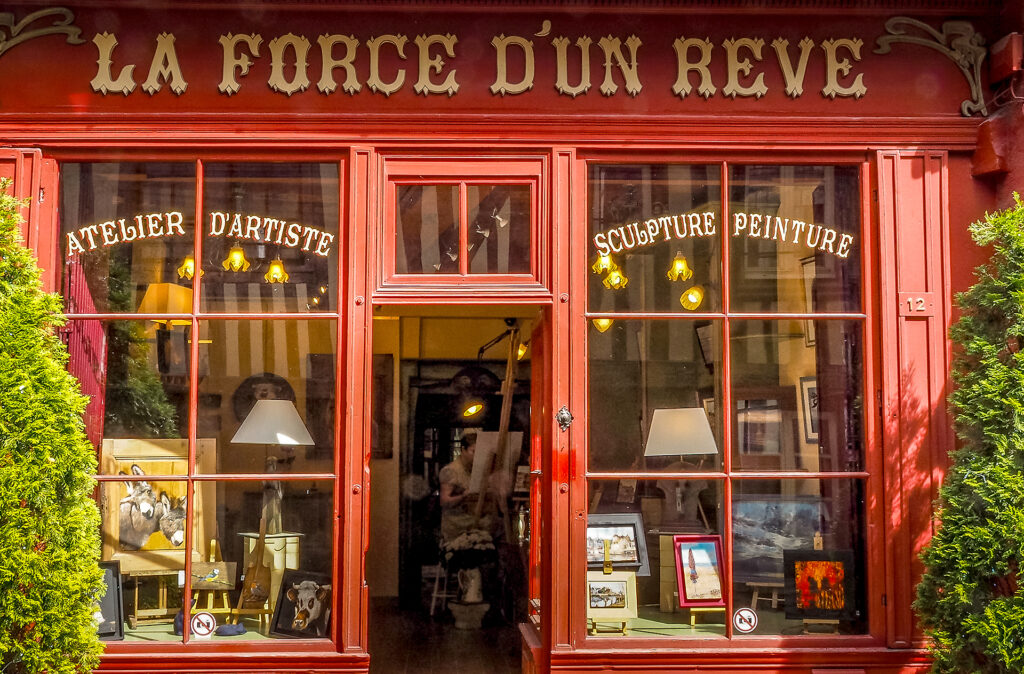
Picture by Theo Felten / Pexel
Walking the cobbled quays of the Vieux Bassin, the air thick with the scent of moules marinières and freshly landed fish, it is almost impossible to remain unmoved. Restaurants spill out onto the cobbles, many of them tucked into barrel-vaulted cellars built from the timbers of old ships, which seems, in Honfleur, entirely appropriate. The whole place hums with an effortless, unpretentious elegance.
Having by now invested ourselves wholeheartedly in the local Calvados, working our way through vintages with the sort of seriousness that would impress any sommelier, our thoughts turned, as they inevitably do, to food. Normandy’s culinary heritage is formidable: cream, cider, seafood, and cheese of extraordinary character all vie for attention on menus of considerable ambition.
Given the musical tastes of our party, the final vote was never really in doubt. We gravitated toward Le V’uitage, a lively café bar perched above the harbour as part of Le Cheval Blanc hotel, where live jazz threaded through the evening air. The menu, seafood, local cheeses, generous meat dishes, and cocktails of creative invention honoured the region beautifully. Outside seating meant we could savour both our food and the harbour spectacle simultaneously: the passing parade of Honfleur at evening, the lamplight catching the water, the music rising and falling on the salt breeze. It was, to deploy a word that the occasion fully warranted, magnificent.
A word on the Calvados ice cream: yes, it exists. Yes, you should have a double cone. Yes, immediately.
Picture by AXP Photography/Pexel
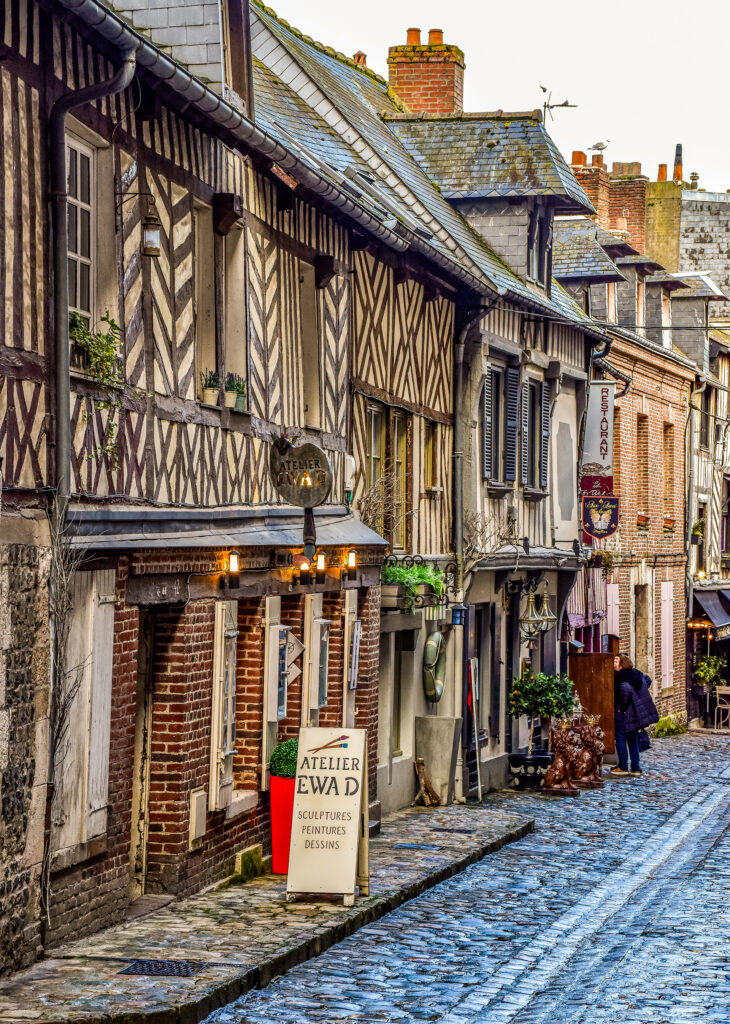
The cobbled streets of Honfleur reward unhurried exploration, though a gentle note of caution: this is not the terrain for heels. Flat shoes, or better still, sturdy trainers. The cobblestones are characterful but unforgiving.
The shopping is a revelation. Wander the medieval lanes, and alongside the inevitable tourist temptations, you’ll discover a genuinely wonderful world of local produce: fresh fish straight from the boats, magnificent Norman cheeses, bottles of cider and Calva (the locals’ affectionate shorthand for their beloved spirit), prints of Boudin and Monet masterpieces, and a delightful range of artisan pieces scaled, mercifully, for a carry-on bag.
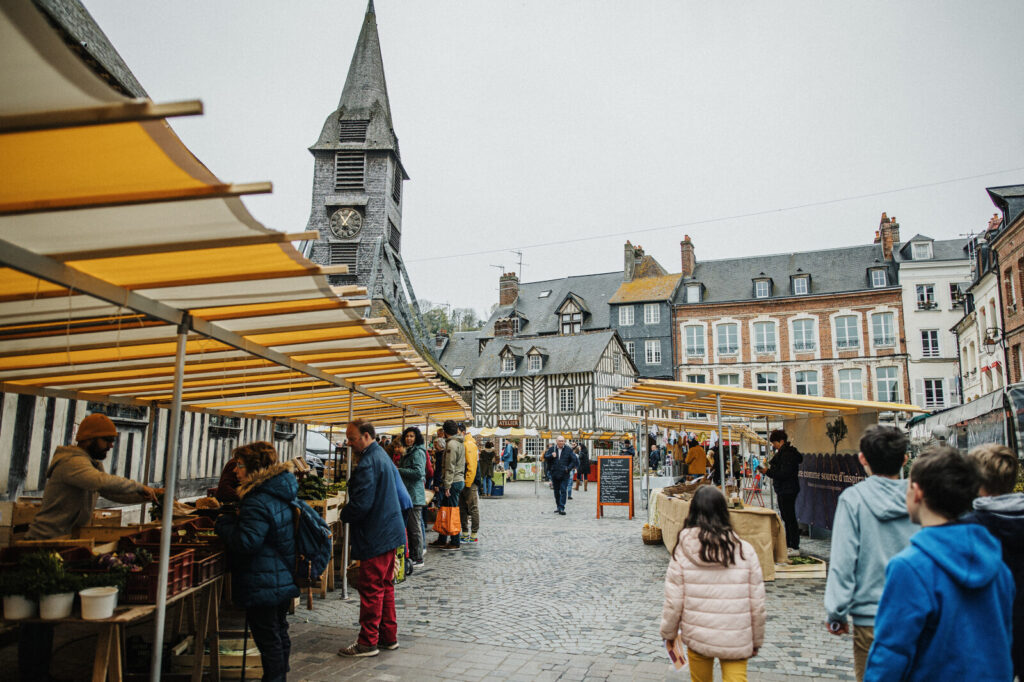
Culture is equally well served. Honfleur’s brocante and produce markets are a joy; its galleries and museums form a circuit that could fill a happy weekend on their own. The former salt granary, La Grenier à Sel, dates to 1670 and now hosts exhibitions, concerts, and conferences with a quiet grandeur that the centuries have only enhanced.
Picture: Normandie Tourism /Coraline et Leo
But the undisputed highlight for the culturally curious is Sainte-Catherine’s Church, the largest timber-framed church in France, set commandingly in the central square. Built by the same shipbuilders whose craft had made Honfleur prosperous, and preserved in extraordinary condition, it is the church of sailors: the beating heart of every blessing of the sea, every ceremony of departure and homecoming. It is moving in a way that is hard to articulate, and unmissable in every sense.
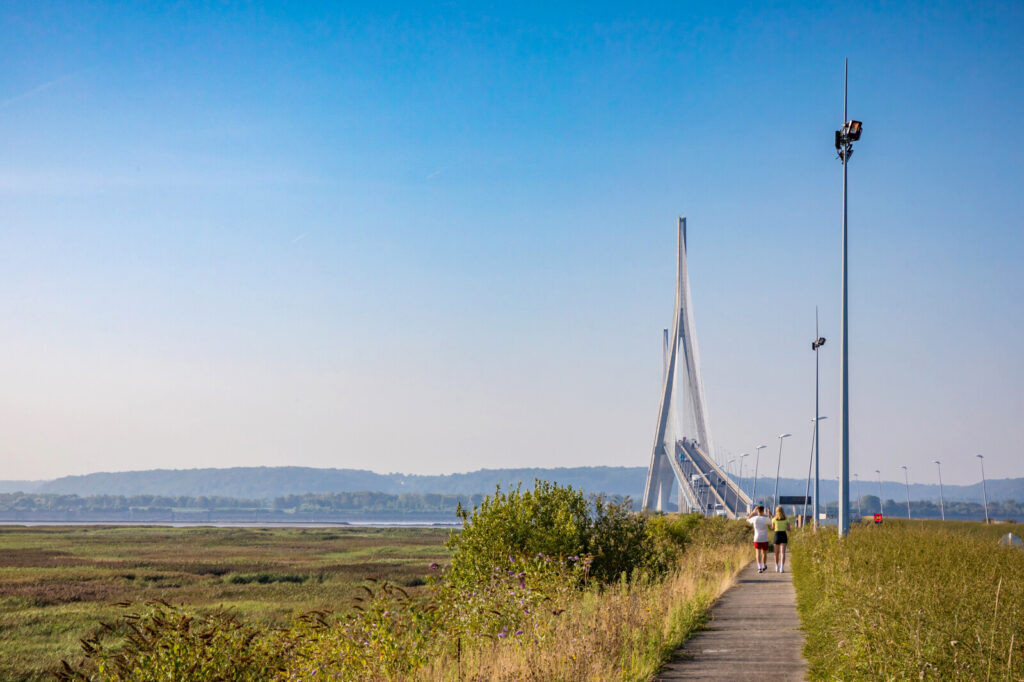
One must not leave Honfleur without at least pausing to acknowledge the Pont de Normandie, that breathtaking feat of engineering that spans the Seine to connect Honfleur with Le Havre. Designed by Michel Virlogeux, on its opening in 1995, it held the title of the world’s longest cable-stayed bridge at just over 7,000 feet. Vehicles pay a toll; pedestrians and cyclists cross free of charge, rewarded with panoramic views over the estuary that are worth every step.
Picture: Normandie Tourism Office / Anibasphotography
So, if the thought of a long-haul flight holds little appeal, and Club 18-30 is a memory too distant to contemplate, let me make a simple case for Normandy. Four hours from East Sussex, a tent in a friendly campsite, a city of extraordinary beauty, and food that does full justice to one of France’s finest culinary regions. And the golden thread running through every moment of it? The warm, mellow, endlessly rewarding company of Calvados.
We have already discussed a return visit. The only debate is whether six is still the right number, or whether the Club might require expansion.
One suspects the spirit itself will decide.
Traveller’s Notes
Getting There
Honfleur is approximately four hours’ drive from East Sussex. Cross the Channel via the Eurotunnel at Folkestone or by ferry from Dover to Calais, or take the longer but scenic Portsmouth–Caen overnight crossing with Brittany Ferries, which deposits you within easy striking distance of Honfleur.
Brittany Ferries: www.brittany-ferries.co.uk
Eurotunnel Le Shuttle: www.eurotunnel.com
Where to Stay
Honfleur offers accommodation to suit most tastes and budgets, from boutique hotels overlooking the Vieux Bassin to good-value chambres d’hôtes in the surrounding countryside. For those of the camping persuasion, several well-appointed sites sit within easy reach of the town.
Camping La Briquerie (Équemauville, just outside Honfleur): www.camping-honfleur.com
Where to Eat and Drink
Le V’uitage café bar, part of Le Cheval Blanc hotel, offers harbour-view dining with live jazz, excellent local seafood, Norman cheeses, and, naturally, Calvados.
Le Cheval Blanc: www.hotel-honfleur.com
What to See
Sainte-Catherine’s Church — the largest timber-framed church in France — sits in the heart of the central square and is free to enter. La Grenier à Sel (the old salt granary, dating to 1670) hosts exhibitions and events throughout the year. The Musée Eugène Boudin houses a fine collection of Impressionist works with strong local connections.
Honfleur Tourist Office: www.ot-honfleur.fr
The Pont de Normandie
Pedestrians and cyclists may cross this spectacular cable-stayed bridge free of charge, with panoramic views over the Seine estuary as their reward.
Pont de Normandie information: www.pontdenormandie.com
Calvados — The Spirit of Normandy
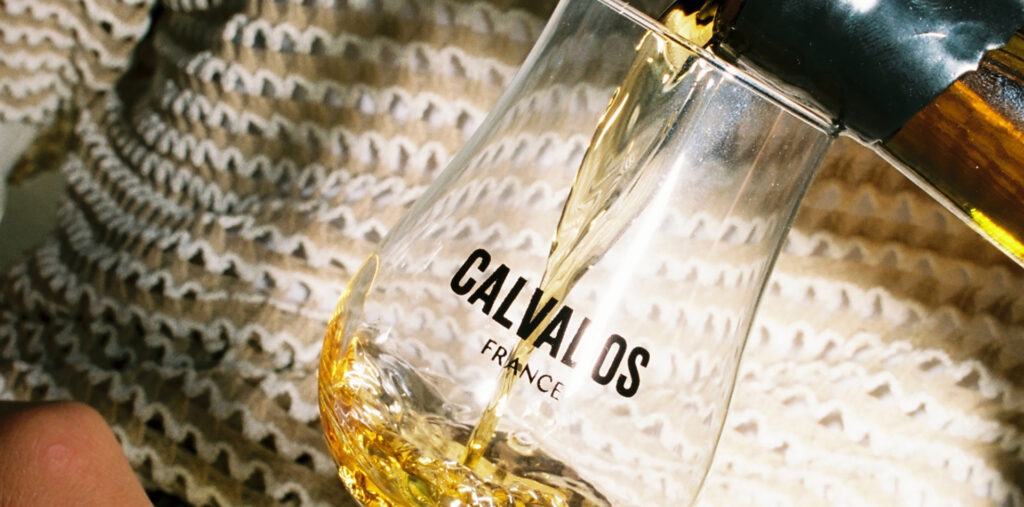
No visit is complete without exploring the Route du Cidre and its Calvados producers. The Maison du Calvados in Honfleur itself is an excellent starting point for tastings and to understand the appellation’s rich history.
Bureau National Interprofessionnel du Calvados: www.calvados.fr
Practical Notes
Cobblestones are a feature of Honfleur’s charm and a hazard for the unwary — flat shoes or sturdy trainers are strongly recommended. The town is busy in high summer; a late spring or early autumn visit rewards with quieter streets and gentler light. Most restaurants in the Vieux Bassin area accept cards, though smaller producers along the Route du Cidre may prefer cash.