The Rebel of the Riviera
The first thing I heard about Marseille was that it is one of the most “dangerous” city breaks in Europe. I’m not convinced.
Marseille has an edge. It’s there in the graffiti climbing the walls, in the noise that never quite settles, in the way the glittering Mediterranean coastline sits shoulder to shoulder with something rougher, older, unpolished. This is a city that was never interested in fitting the generic city-break mould, and it doesn’t start now.
Underneath the reputation is a place with real character. Somewhere you can wake to a harbour view, spend the afternoon hiking dramatic coastal cliffs, and end the night shoulder to shoulder with strangers in a square full of street art and noise.
The Vieux-Port at Every Hour
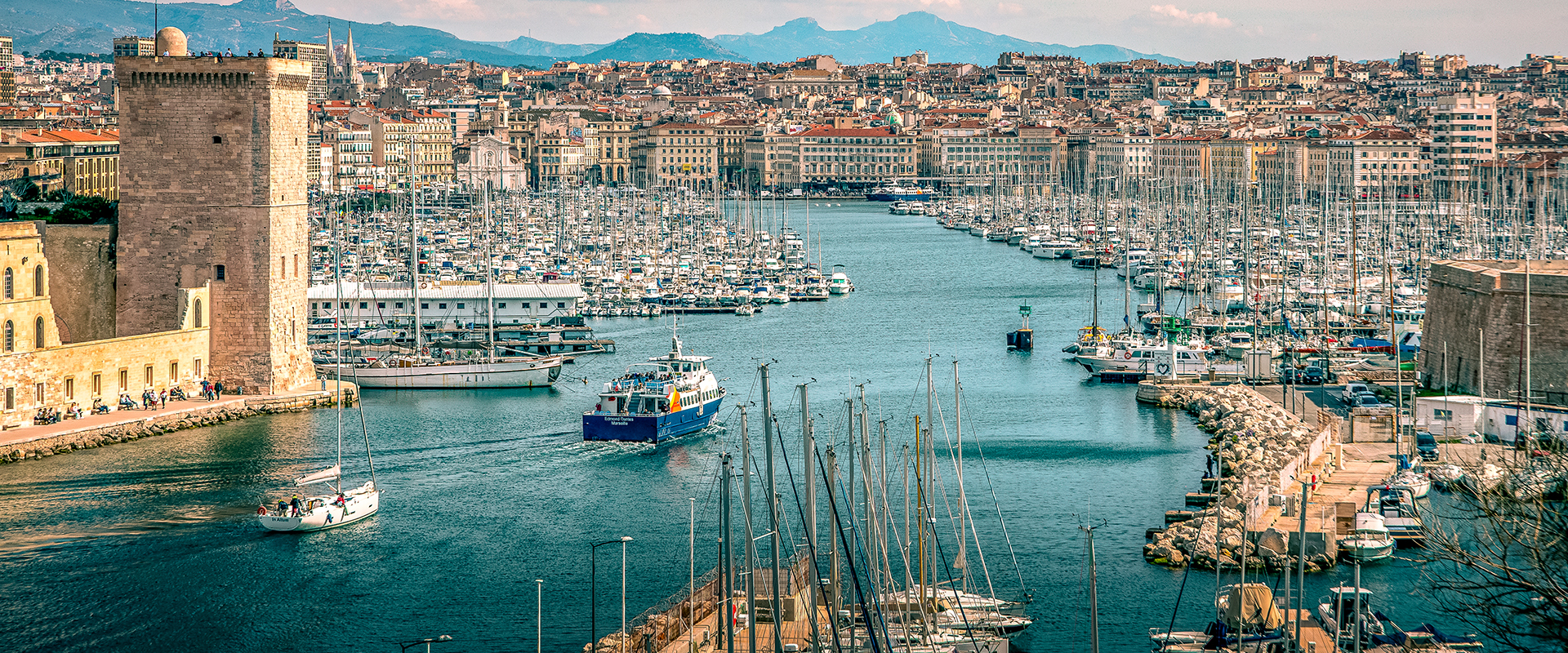
The Vieux-Port is Marseille’s beating heart. Boats line the water as it stretches out towards the Mediterranean, and for the length of our stay, it was the first thing we saw each morning.
The harbour changes its mood with the light. Quiet and still at dawn, then swelling into something busier, louder, more alive as the day wears on. It is beautiful, undeniably. But Marseille’s beauty comes with weathered facades that suit the city’s edge, shaped by all it’s been through.

Cours Julien: A Neighbourhood Painted Loud
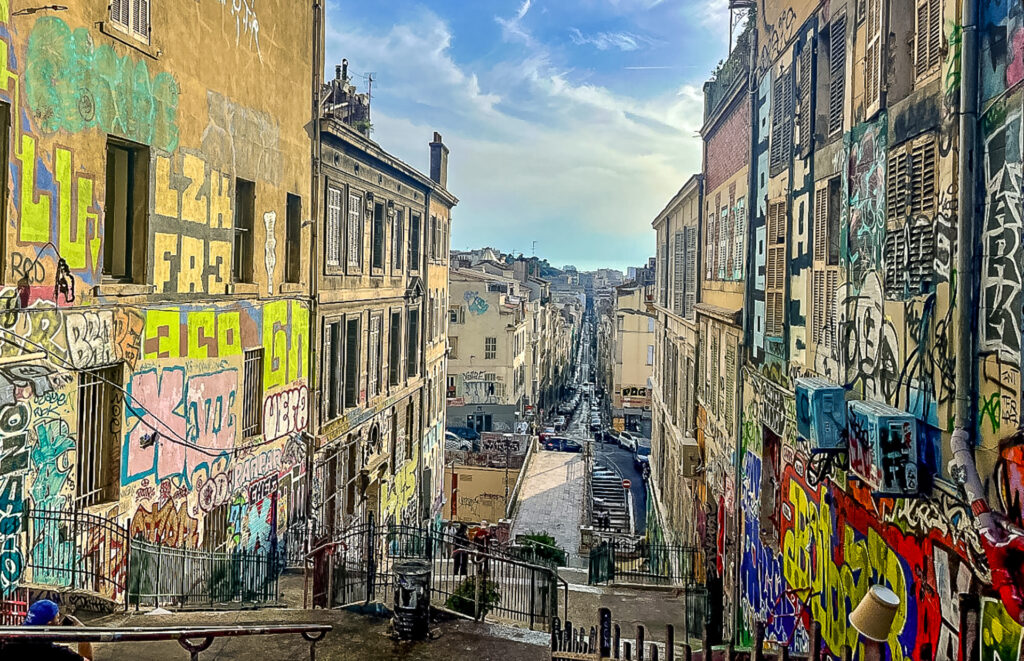
If the Vieux-Port is Marseille’s heart, Cours Julien is its creative soul. Soaked in colour and saturated with street art, almost every available surface has become a canvas. Murals and graffiti transform stairways, shutters, and facades, while independent cafes, restaurants, bars and small shops give the neighbourhood a distinctly bohemian character.
Bars hum with a youthful energy that feels distinctly Marseille; unhurried, unfiltered, unconcerned with anyone watching. I loved the feeling that this place was never designed simply for tourists. It’s designed for living. Tables fill the pavements. Conversations spill into the street. Friends gather in the squares. The colourful walls are less a tourist attraction, more an expression of the people who live here. And as the sun goes down, Cours Julien becomes louder, more animated; Marseille displaying its most sociable, multicultural and creative self.

Where the City Meets the Sea
What surprised me most about Marseille was how effortlessly a city break folded into a beach holiday. Few places let you spend a morning among architecture and street art, then find yourself beside the sea by afternoon, but Marseille does, without ceremony.
Here, the sea is not an escape from the city; it’s part of the city, woven into its identity. People find their own patch of coastline, leaning against rocks, throwing down a towel, perching on the edge before dropping straight into the water. It’s cool, unpolished, entirely social. Less a beach holiday in the traditional sense, more Marseille’s unique and very personal version of one.
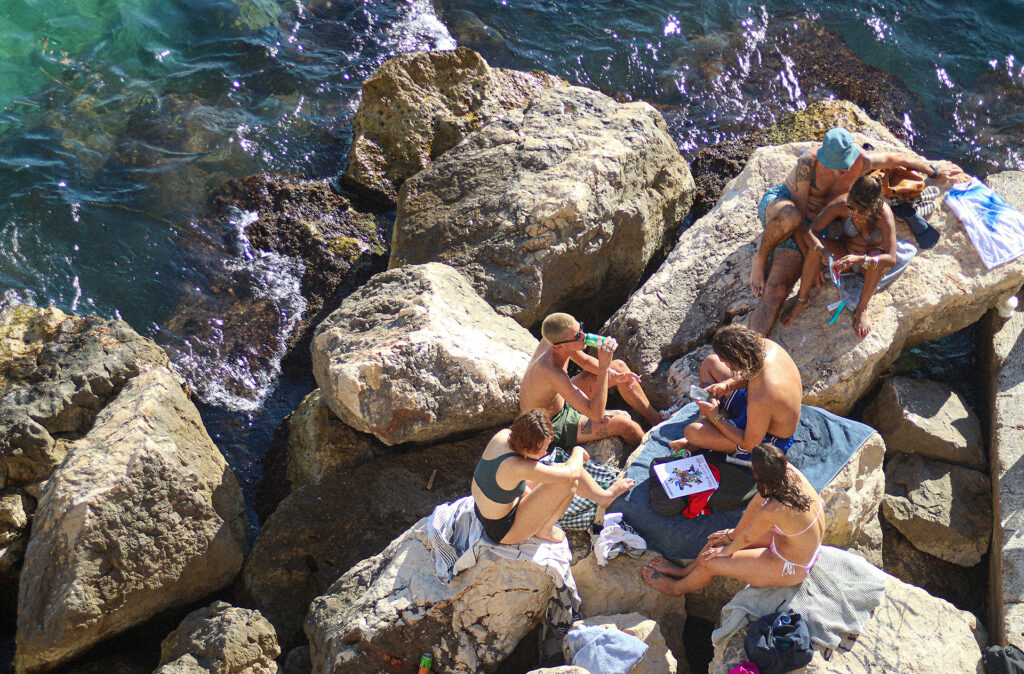
Photo by Jeet Sandhu on Unsplash
Into the Calanques
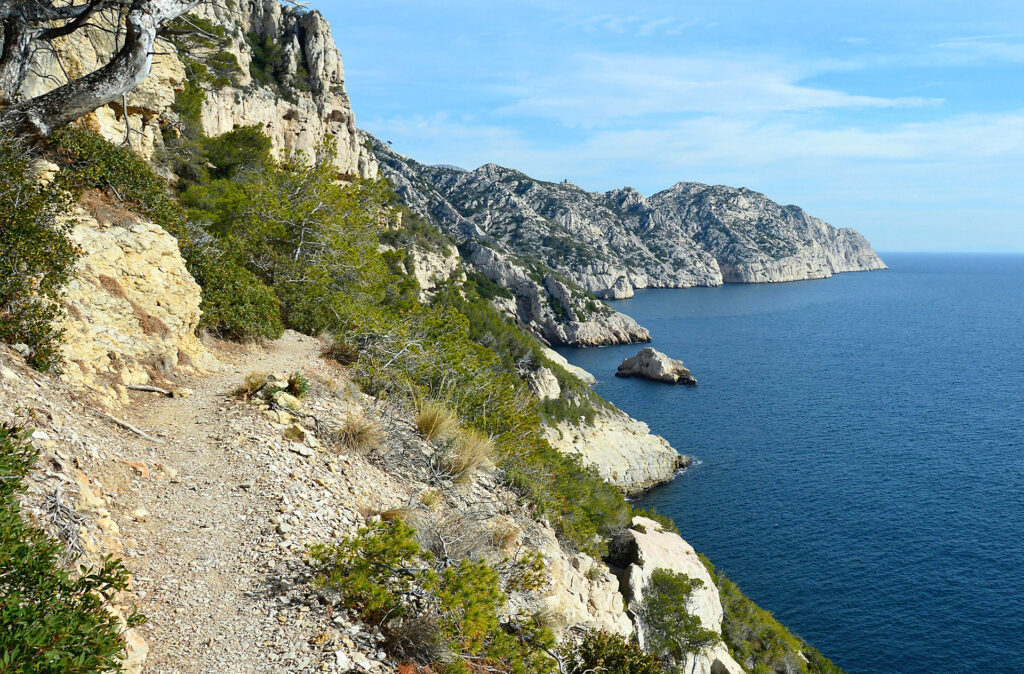
It is easy to forget, while walking through the crowded streets of Marseille, just how quickly the city gives way to wilderness. The Calanques National Park stretches along the coast between Marseille and Cassis, where towering limestone cliffs fall to the intensely blue Mediterranean. The landscape feels a world away from the traffic and noise of the city.
We caught the train from Marseille Saint-Charles to Cassis and headed into the landscape on foot. The change was remarkable. Rocky paths wound between pale limestone cliffs and scrubby Mediterranean vegetation, with glimpses of brilliant blue water appearing between the rocks. As the cliffs plunge towards hidden coves and the city recedes further with every step, what stays with me isn’t a single view, but how closely Marseille’s urban and natural worlds coexist.
The Bonne Mère and a City in Celebration
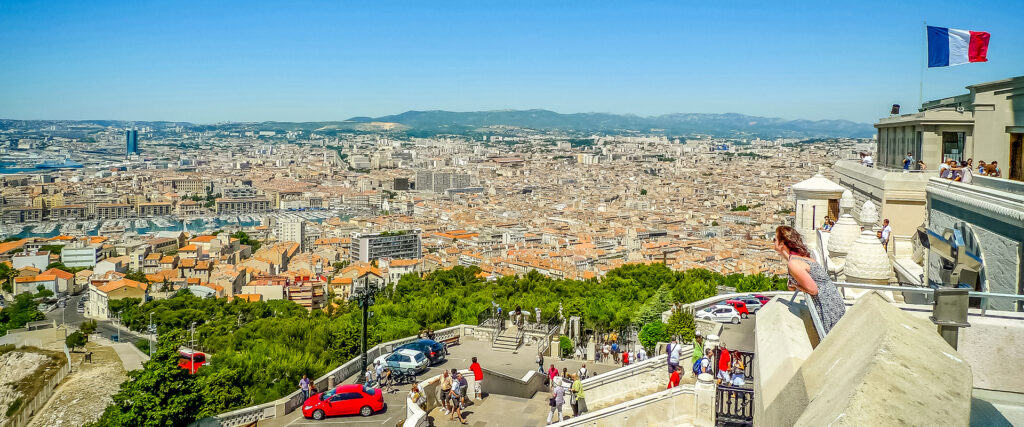
Back in the city, we climbed again, this time to the Basilique Notre-Dame de la Garde. Known affectionately by locals as the Bonne Mère, the Good Mother, the basilica sits high above Marseille, watching over the city and the Mediterranean beyond.
Seen from street level, Marseille can feel like a city of fragments, chaotic, sprawling, disconnected. From the Bonne Mère, those fragments resolve into a single, coherent shape: harbour, rooftops, coastline, and hills; a city built entirely around its relationship with the sea.
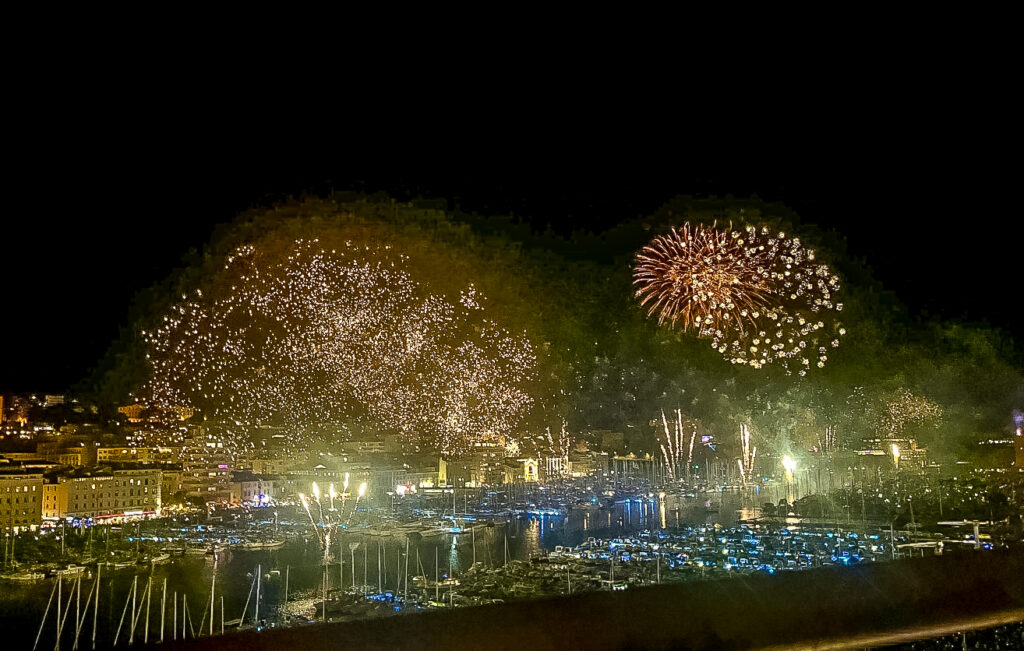
Our visit coincided with Bastille Day, and Marseille showed us its most celebratory face. As night came down, people gathered across the city to wait for the fireworks, and when the sky finally lit up over the harbour, strangers stood shoulder to shoulder, sharing the same moment, the same sky. It felt like the perfect conclusion to our time in Marseille.
Marseille is loud. It’s colourful. It’s multicultural and gritty. But these rough edges are not flaws to be polished away. They are part of the city’s personality. Leave the postcard behind, and Marseille rewards you: a city that’s alive, lived in, and asks you to become part of it, not just pass through.
I arrived wondering whether Marseille deserved its reputation as one of France’s more dangerous city breaks. I left with something closer to the truth: a city with an edge, worth every bit of the discovery.
Traveller’s Notes
Getting there
Marseille is well connected by air and rail. Marseille Provence Airport serves international and domestic destinations, while Marseille Saint-Charles is the city’s principal railway station, with connections across France and Europe.
Marseille Tourist Office – getting to Marseille
Where to stay
For a first visit, the area around the Vieux-Port makes an excellent base. Staying overlooking the harbour gives you an immediate sense of the city, while many of Marseille’s principal sights, restaurants and neighbourhoods are within walking distance.
The Vieux-Port is also a useful starting point for boat excursions towards the Calanques and the Frioul Islands.
Marseille Tourist Office – Vieux-Port
Cours Julien
Allow time to wander. The neighbourhood is particularly rewarding for street art, independent shops, cafés, restaurants, bars and live music. It’s a fifteen-minute walk uphill from the Vieux-Port, or you can take Metro Line 2 to Notre-Dame du Mont.
Marseille Tourist Office – Cours Julien
The Calanques
The Calanques are one of the great reasons to combine a visit to Marseille with some time outdoors. Cassis provides an excellent starting point for exploring the western section of the Calanques, and the village can be reached by train from Marseille.
Access arrangements can change according to weather, fire risk and conservation requirements. Check conditions before setting out and carry sufficient water, particularly in summer.
Parc national des Calanques – visitor information and access conditions
Notre-Dame de la Garde
The basilica is one of Marseille’s essential viewpoints. The walk from the Vieux-Port takes around 45 minutes and involves a climb, although bus 60 and the Petit Train provide easier alternatives. Entry to the basilica itself is free.
Marseille Tourist Office – Notre-Dame de la Garde
Getting around
Much of central Marseille is best explored on foot, although the city’s hills can make some walks surprisingly strenuous. The metro and bus network are useful when travelling further afield.
For the Calanques, consider public transport rather than driving, particularly around Cassis where parking can be difficult.
When to go
Summer brings long, hot days and plenty of energy, but it is also the busiest season. July and August can be particularly hot, especially when hiking.
If your visit coincides with 14 July, Bastille Day adds another dimension, with celebrations and fireworks creating an unforgettable atmosphere around the city.
For the Calanques, however, summer visitors should always check the latest access restrictions before setting out, as parts of the National Park can be closed during periods of high fire risk.