The Long Way Across
When I was young, it was common to see advertisements for transatlantic travel by one of the great passenger liners of the day – Cunard’s Queen Mary and Queen Elizabeth being the flag-bearers.
Members of my British family with interests in the US used to make the crossing with some regularity in pre-war days, and I still have a beautiful leather suitcase emblazoned with sticky labels proclaiming the names of the great Cunarders and White Star liners of the 1920s and ‘30s With the coming of the jet age, however, not only did hand-crafted leather luggage become obsolete but so, sadly, did the magnificent liners. Why take six days to cross the great pond between Britain and America when it could be done in six or seven hours and at a fraction of the cost?
One of the last of these ocean leviathans was the Queen Mary and I remember watching a BBC documentary about her just before her retirement. Her captain, the wonderfully named Commodore John Treasure-Jones looked every inch the old sea-dog with his immaculate uniform and neatly trimmed grey beard. The Commodore is doubtless long gone to the seafarers Valhalla and the old Queen Mary herself lies de-throned, serving as merely a visitor attraction on the waterfront near Los Angeles.
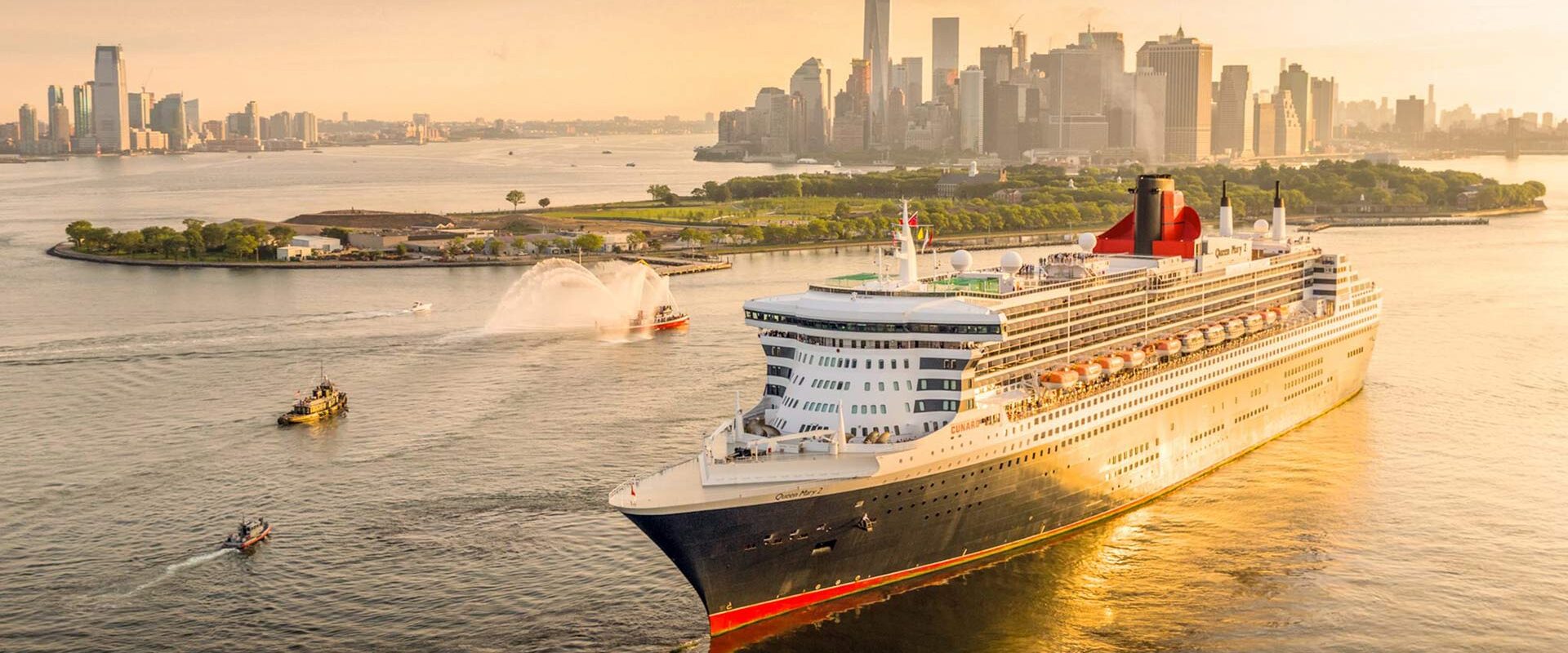
My hopes, inspired by that documentary, and certainly not dimmed even by Leonardo DiCaprio’s watery end in ‘Titanic’, of doing my own voyage by sea seemed doomed until Cunard decided at the turn of this century that there was life left in the old trade and designed a ship built to travel specifically between the Old World and the New.
Appropriately named Queen Mary 2, she was 20 years old when a friend of mine announced he had some shopping to do in New York. His plan was to travel over by sea, and asked me to join him. We had shared ownership of a sailing yacht for some years and both knew we could survive each other’s company for such a trip, so it was less than a second’s thought before saying yes.
We duly arrived at Southampton docks, and by gosh she looked massive! I felt a smooth passage was almost guaranteed as she was surely too big for any seas to have much effect on her!
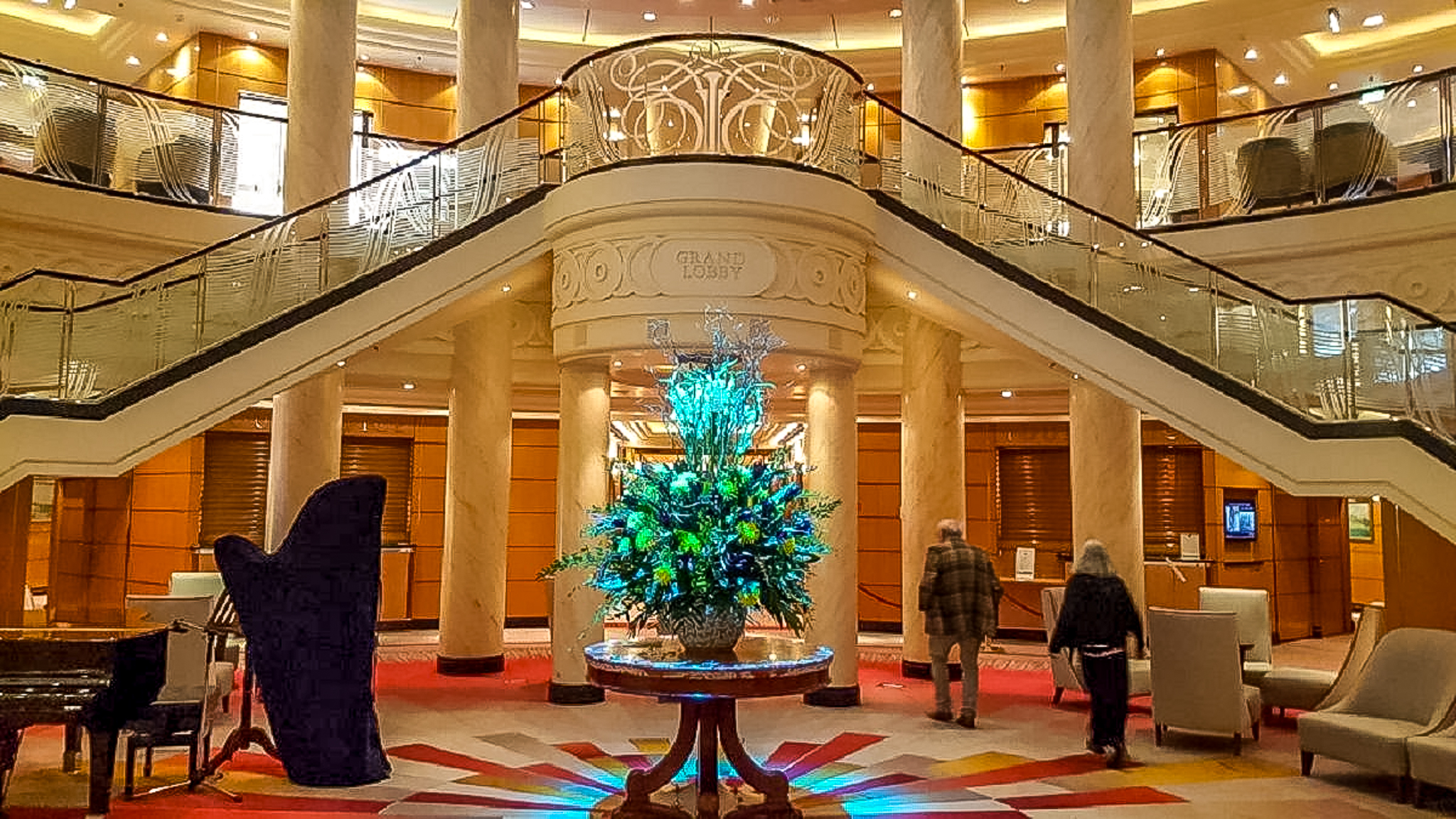
The ship has now been in service for 20 years and, yes, it is just beginning to show in places (not least in the quality of satellite internet connection) but that is nit-picking. Overall, the grandeur and elegance of the great days of the ocean liners was still there. In a largely art deco-themed interior our first sight upon boarding was the central atrium. Rising several decks and with a double curved staircase sweeping from the deck above and a string trio playing soothing music, a ball-gowned Kate Winslet descending those steps would not have seemed out of place.
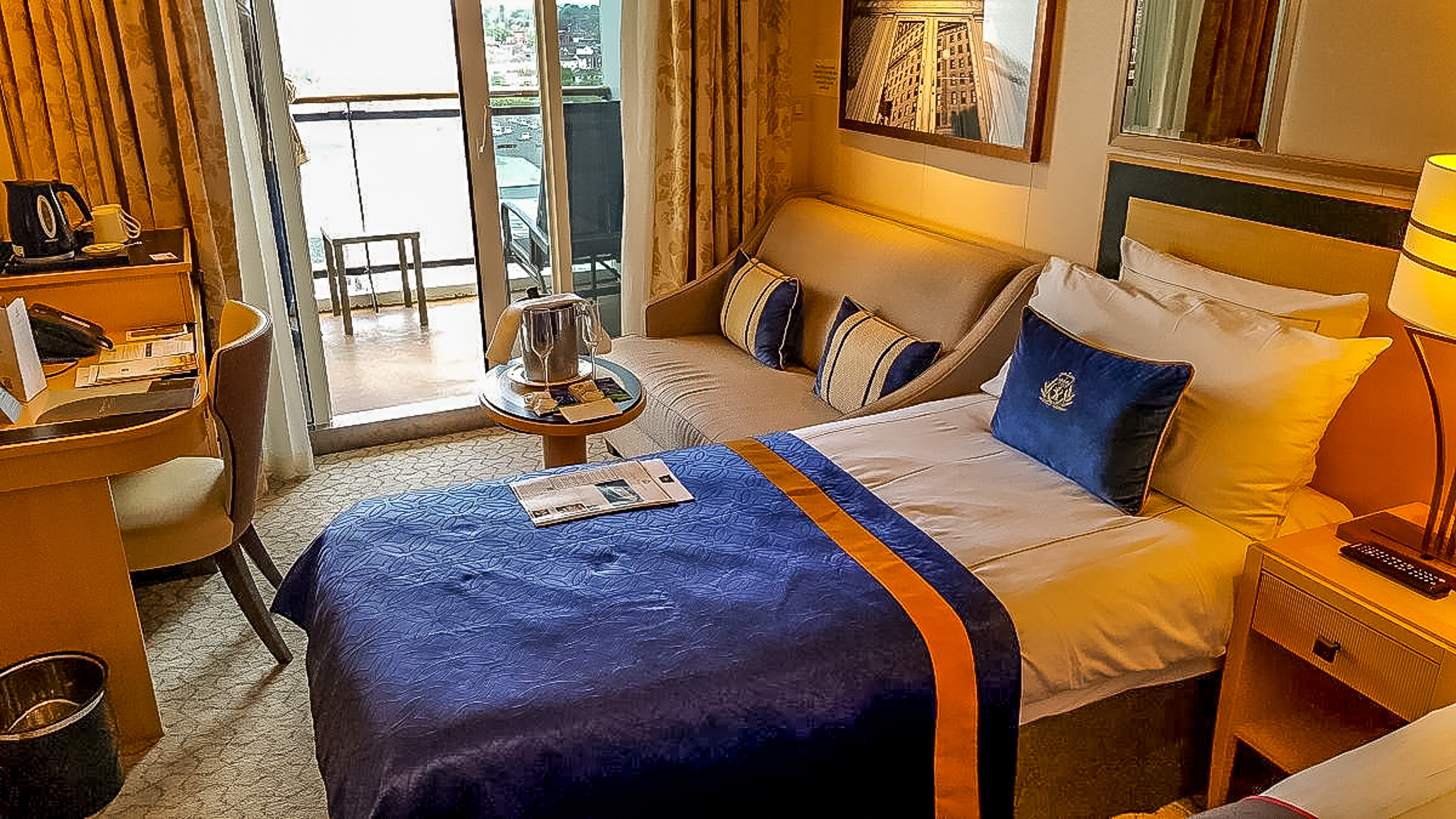
A lift, with wonderful art deco style glass doors, whisked us silently up to the upper decks and then a short walk to our cabin. Not enormous, but furnished with a couple of very comfortable beds, a desk and chair, a small sofa and, in the centre of a coffee table, an ice bucket with a bottle of sparkling blanc de blancs. Sliding doors opened on to a private balcony with two loungers for those cruises when the sun appears and temperatures soar. The final touch was our bathroom, small but well thought out .
A steward allocated to our stateroom soon arrived to introduce himself and explained he was there for anything we might need during the voyage, from shoe cleaning to ironing, running errands or mrely advice on how to get from one part of the ship to the other. It does make you feel rather privileged.
It wasn’t long before we discovered the real difference between the Queen Mary and the average cruise ship. There was no frantic activity. We weren’t expected to fill every passing minute ‘enjoying’ ourselves. Yes, there were afternoon talks, lectures, and music recitals if the mood took you. There was bridge and other card games, as well as a swimming pool and, for the seriously energetic, a padel tennis court. Post dinner entertainment was in the ship’s theatre or there was dancing to the ship’s orchestra in the Queen’s room. And so many bars scattered around the various decks that the crossing was barely long enough for even the most dedicated drinker to visit them all.
Our own routine, in the evening at least, was a pre-dinner cocktail in the Commodore’s Lounge, perched just below the bridge with views over the bow to the far horizon. And excellent cocktails, of course. Dinner in the main dining room followed, with food and wine as fine as any top class hotel, and on two evenings, evening dress was positivly encouraged. Although not compulsory, the majority of men took the opportunity to blow the moths out of their dinner jackets and the ladies could go to town on their outfits.
After dinner we’d check out the programme in the ship’s theatre, then finally we’d recline in a lounge with a glass of brandy while watching the reflection of the moon on the sea as we rushed at a sedate 22 knots towards the Big Apple.
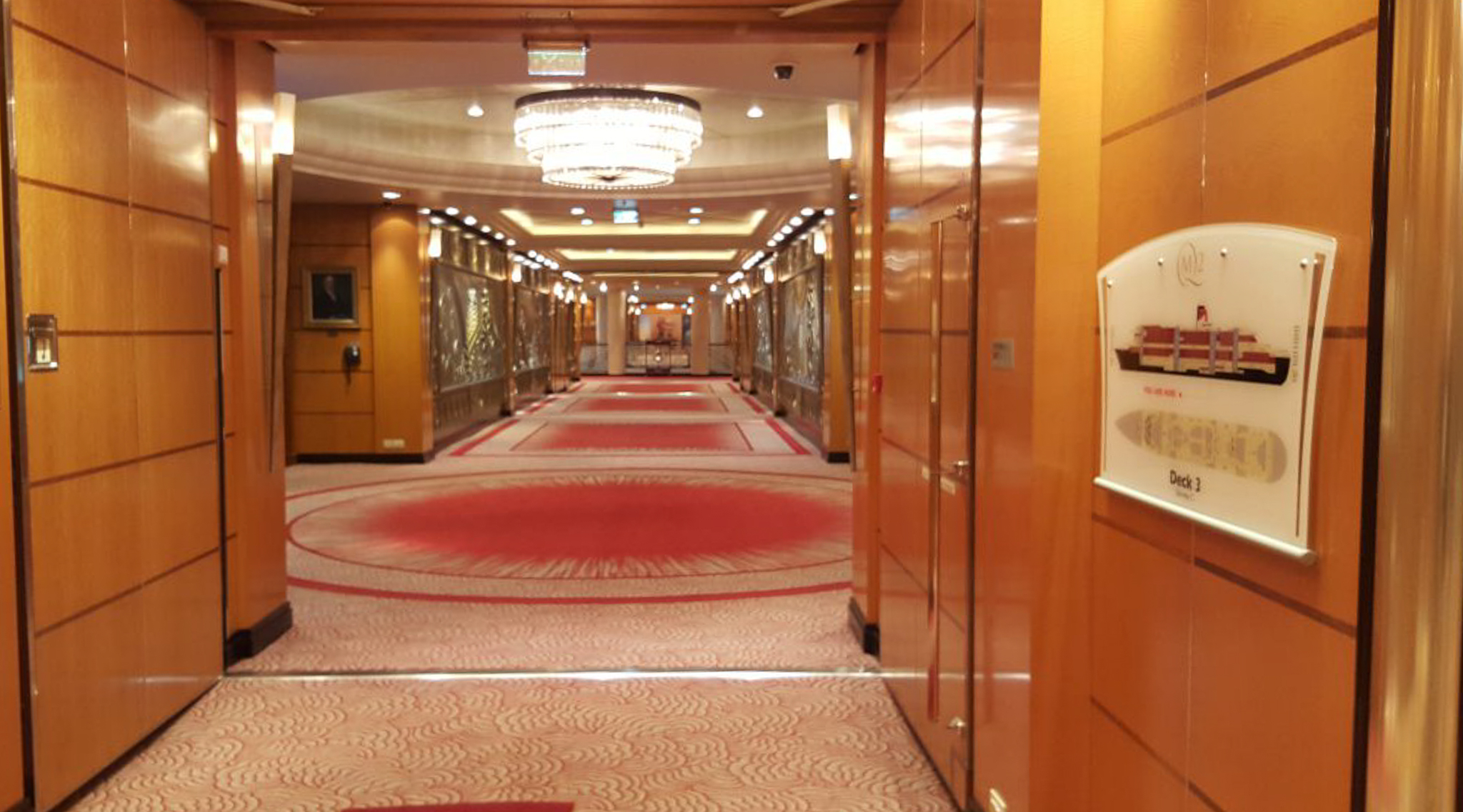
And so our days passed. We had occasional contact with the outside world via the slightly shaky satellite internet, but for the most part this was the perfect opportunity to, quite literally, get away from it all. Our idyll was only interrupted when the navigating officer announced one day we were now passing the point where that fateful iceberg was struck by the Titanic. Her remains lay a long way beneath us, but of icebergs, there was no sign. Global warming sometimes does have its advantages.
At 4am my alarm goes off. Uncivilised as this seems, we are about to witness a view not seen by any other form of transport. We are approaching the narrows at the entrance to New York harbour. It is still dark and at much reduced speed the ship slips under the Verrazzano Bridge and there in front of us lies the iconic view of Manhattan. The city stands ablaze with light from every building and by now, just the hint of sunrise in the East. To our left another patch of light illuminates the Statue of Liberty. I briefly wondered how many millions of people this old lady had greeted over the years as they arrived to start their new life in America.
Like the stately Queen she is, our ship proceeds slowly up the harbour approahes, not, sadly to the old Cunard berth right in Manhattan, but to the cruise terminal in Brooklyn. Not quite as glamorous perhaps, and less convenient for onward travel, but as full daylight arrives the New York skyline towers in front of us in all its brash magnificence.
Crossing the Atlantic by plane may be quicker, cheaper, and provide a more panoramic view upon arrival at one of the world’s most vibrant cities, but nothing, in my opinion, beats an arrival by sea. That moment alone is worth the price of the voyage.
https://www.cunard.com/en-gb/cruise-destinations/transatlantic-cruises