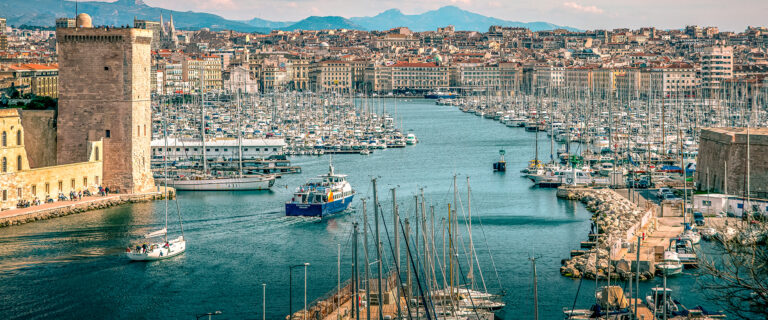

An Elegy in Stone
Crete has a way of capturing your senses before you even set foot on its shores. The scent of thyme and oregano drifts on the breeze, the mountains tumble into a sapphire sea, and time feels deliciously slower. Nestled along Crete’s north-eastern coast, the fishing villages of Elounda and Plaka may be small, but reflected in the bright waters of Mirabello Bay, they carry a presence far larger than size suggests – a blend of elegance, history, and a touch of mystery.
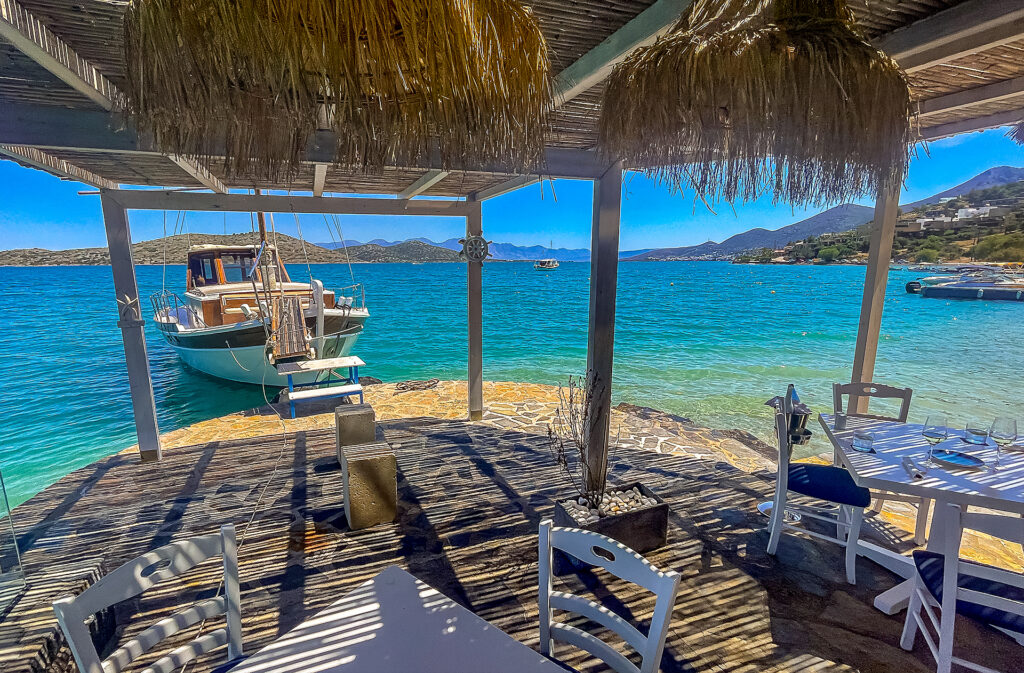 The beautiful coastline of Mirabello Bay, where time beats to a deliciously slower rhythm.
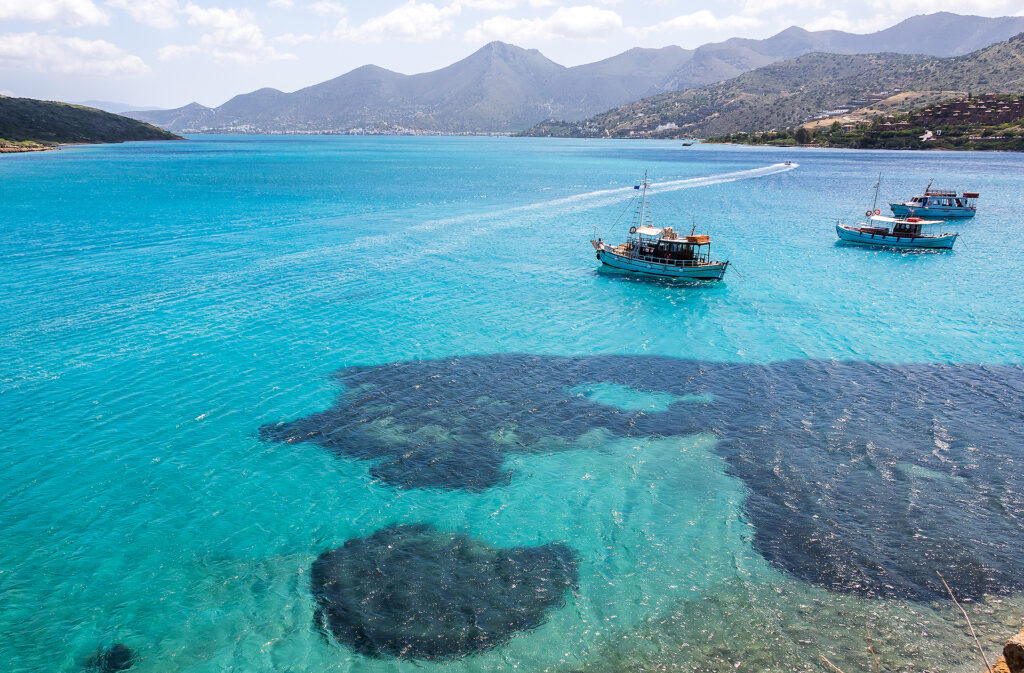 The tranquil waters of Mirabello Bay, looking towards the village of Elounda from the walls of Spinalonga.
 The beautiful coastline of Mirabello Bay, where time beats to a deliciously slower rhythm.
Across the bright and tranquil waters of Mirabello Bay lies an island that holds its silence like a prayer. Spinalonga, with its Venetian walls crumbling against the Cretan sun, is not merely a place to visit—it is a memory, a scar carved into stone, a hymn to lives that once unfolded in exile. From Elounda’s colourful harbour or the sun-soaked shores of Plaka, Spinalonga seems almost dreamlike. Boats drift lazily back and forth, carrying curious travelers to its gates, just as once they carried the forgotten, the outcast, the afflicted. To step through the arched entry is to cross into a world that no longer exists but refuses to vanish.

Often called the ‘island of the living dead’, once a Venetian stronghold and later an Ottoman refuge, Spinalonga is infamous as Greece’s principal leper colony. For 50 long years, from 1903 to 1957, the island was home to those forced into exile by Hansen’s disease. Yet within these walls, life went on. Walking its narrow lanes, you can almost hear the footsteps of those who lived and suffered here. Crumbling houses line the cobbled streets, their walls weathered but standing, as if unwilling to surrender their stories. An abandoned schoolroom still whispers of children who learned and played despite exile. The church bells, now silent, once rang over a community bound by resilience rather than despair. It is a haunting place, not because of what is gone, but because of what endures. Standing at the edge of the island, with Elounda’s luxurious coast shimmering in the distance, you feel the strange tension between past and present: life flourishing on one shore, memories of isolation on the other.
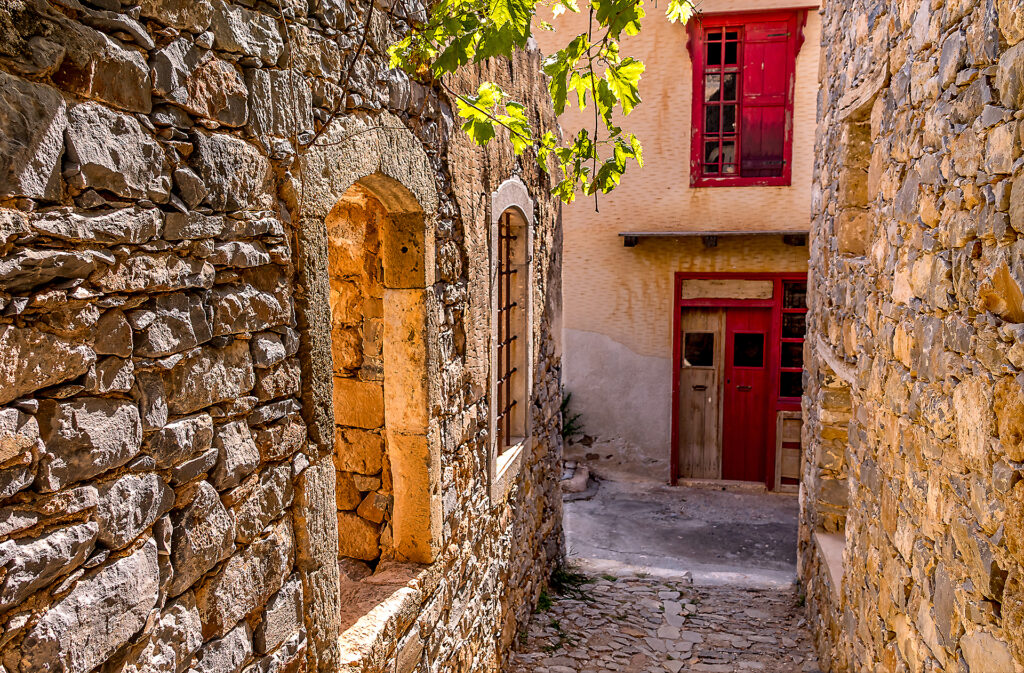 Walking the narrow lanes of Spinalonga, “island of the living dead’, you can almost hear the footsteps and voices of those who lived and suffered here.
 The sunlit Venetian fortress and crumbling walls of Spinalonga
 Walking the narrow lanes of Spinalonga, “island of the living dead’, you can almost hear the footsteps and voices of those who lived and suffered here.
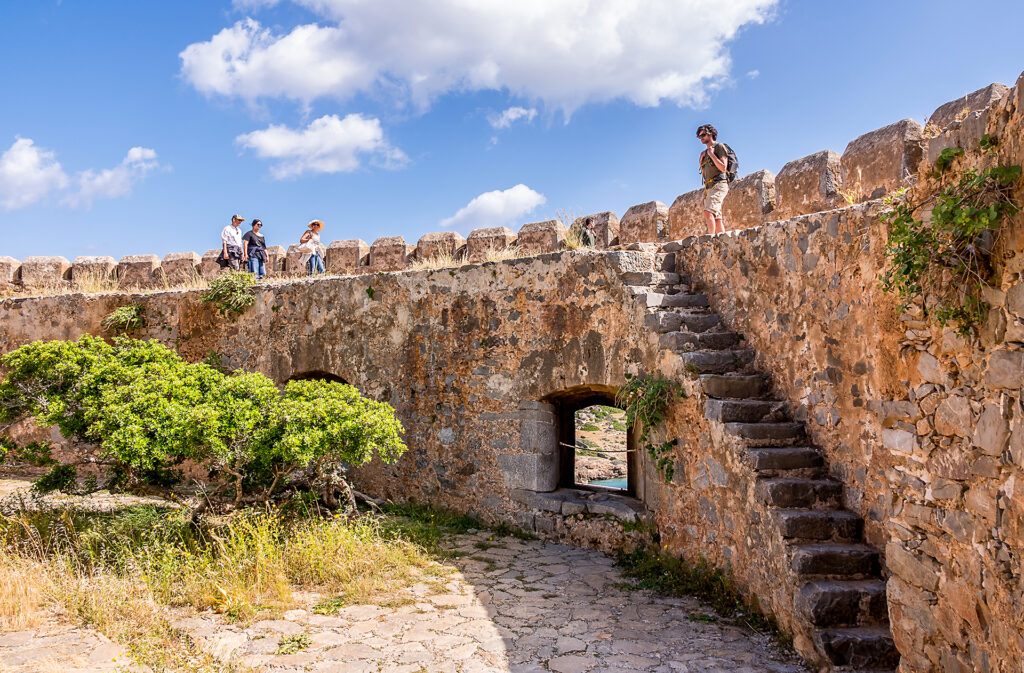 Once a Venetian stronghold, the battlements and fortress on Spinalonga still stand proud.
 Walking the narrow lanes of Spinalonga, “island of the living dead’, you can almost hear the footsteps and voices of those who lived and suffered here.
 On Spinalonga, crumbling houses line the cobbled streets, their walls weathered but standing, as if unwilling to surrender their existence.
 Once a Venetian stronghold, the battlements and fortress on Spinalonga still stand proud.
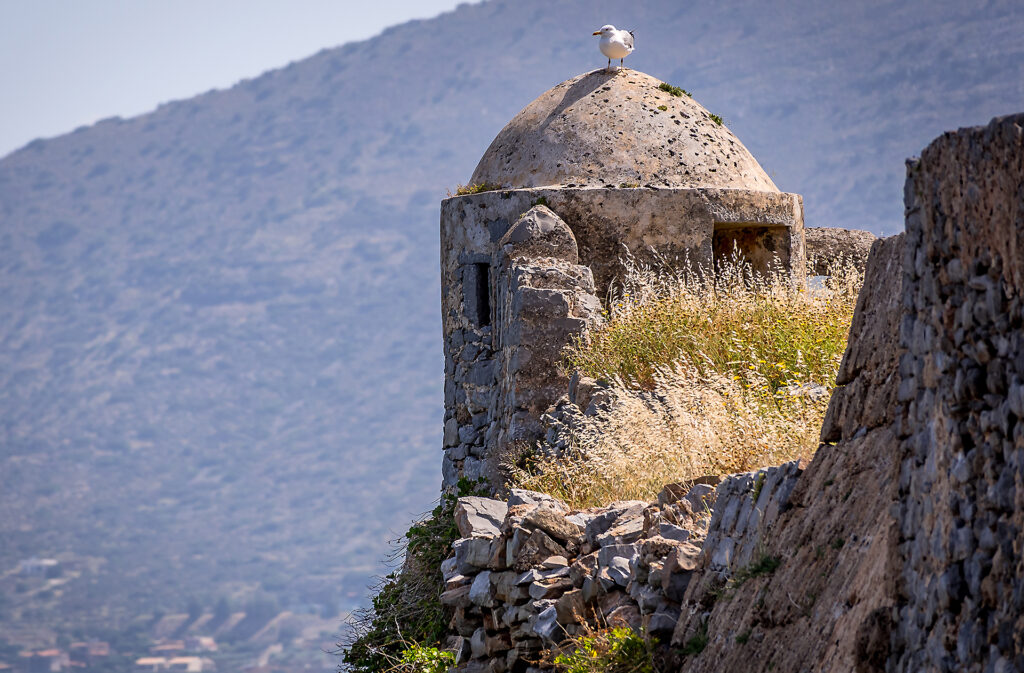 Once a Venetian stronghold, the battlements still stand proudly against the elements.
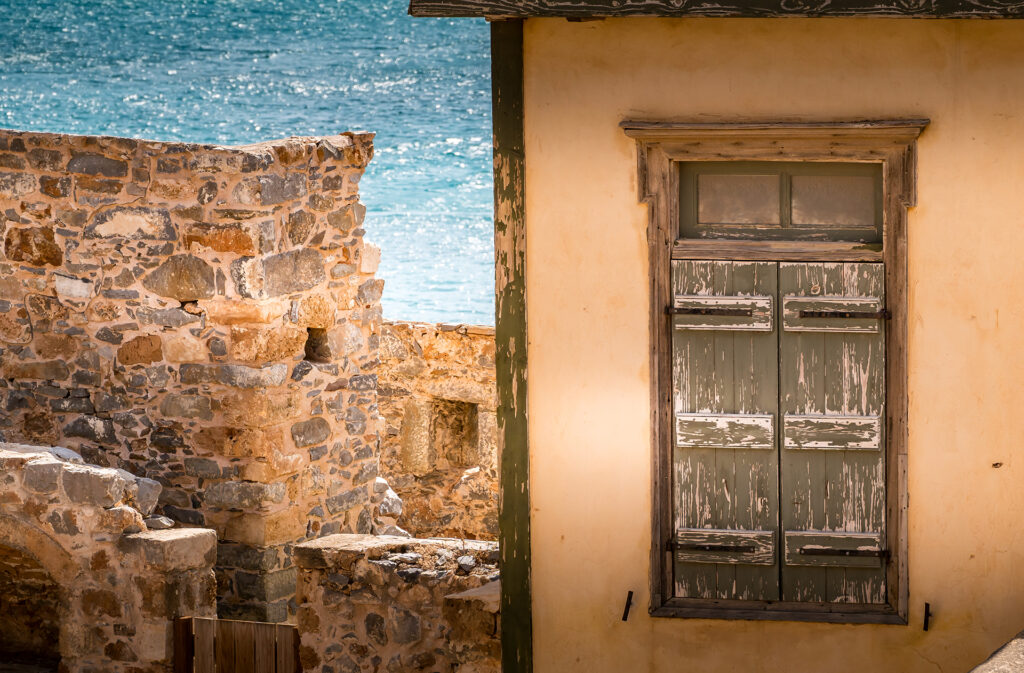 On Spinalonga, crumbling houses line the cobbled streets, their walls weathered but standing, as if unwilling to surrender their existence.
Just across the narrow water, Plaka has always been bound to the island. From this small fishing village, families once watched the boats carry loved ones away. The sight of Spinalonga was both too close and unbearably far. Today, Plaka is alive with colour. Its stone houses wear bright shutters of turquoise and green, while bougainvillea cascades in brilliant pinks. Along the waterfront, tavernas serve grilled octopus and fresh fish, their tables spilling onto the quay where fishing boats still bob gently. Visitors sip wine and gaze across at Spinalonga, its silhouette now softened by distance, though its presence is unmistakable. Plaka has become a place of warmth and vibrancy—a living counterpoint to the silence across the water. Where Spinalonga holds memory, Plaka reminds you of resilience, of life moving forward.
 The colourful tavernas along the waterfront in Plaka, a counterpoint to the silence across the water on Spinalonga.
 The Spinalonga ferry from Plaka – the only way to acess the ‘island of the living dead’.
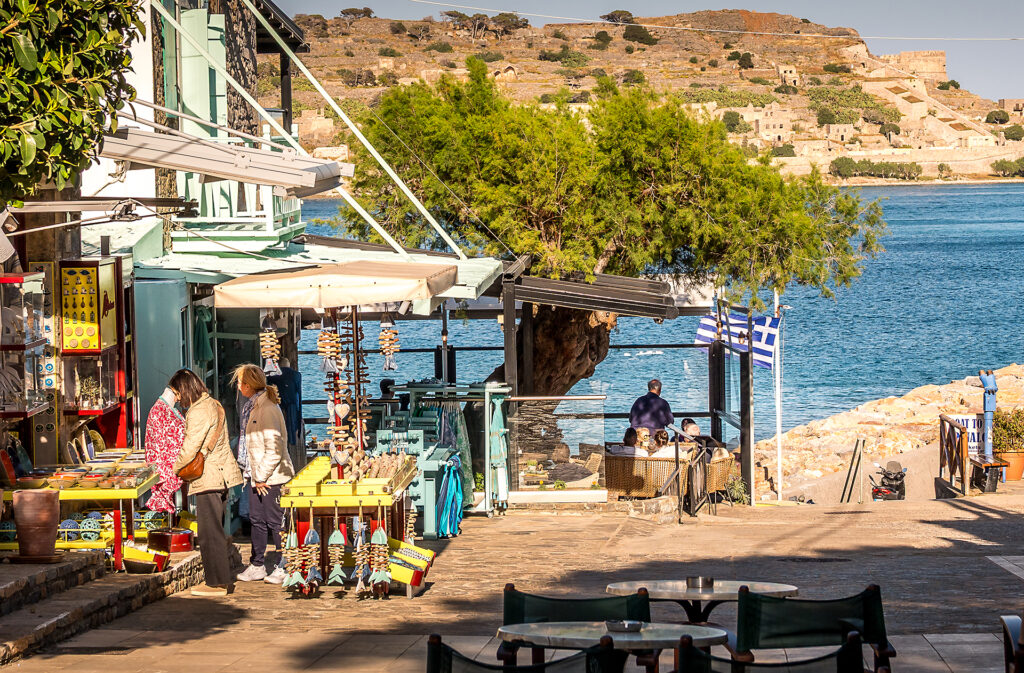 The colourful waterfront of Plaka, a counterpoint to the silence across the water on Spinalonga.
To the south, Elounnda stretches across the bay in gentle elegance. Once a small-scale fishing village, it now welcomes travellers with a unique mix of luxury and authenticity. Its harbour glitters with brightly painted fishing boats, while tavernas along the waterfront invite long lunches and even longer evenings of mezze, wine, and laughter. There’s a rhythm here that resists haste. Shopkeepers greet you with a smile and a story. Children chase each other down narrow lanes while old men sip raki at shaded cafés.
 Elounda harbourside, awash with colourful fishing boats and lined by lively tavernas.
 Tavernas and restaurants around the harbour in Elounda, invite long lunches and even longer evenings.
 Elounda harbourside, awash with colourful fishing boats and lined by lively tavernas.
Above it all, the Royal Marmin Boutique Art Hotel gazes benevolently across the waters of the bay. Carved into the hillside, its stone architecture blends seamlessly with the rugged landscape. Olive trees frame the walkways, and bougainvillea spills over whitewashed walls. More than a place to stay, it’s a gallery, where hospitality meets artistry. The interiors are a dialogue between contemporary elegance and timeless Cretan charm. Local artworks hang in rooms and common spaces, giving the feeling that you’re staying in a gallery curated by the island itself. The rooms themselves are an embrace of contemporary luxury and traditional Cretan touches: whitewashed walls, local art, and sleek design that allows the turquoise bay to take centre stage. But what lingers most in memory is the calm. From the infinity pool that seems to spill into the horizon, to evenings spent sipping Assyrtiko wine while the sun dissolves into shades of pink and gold, the hotel curates a sense of effortless serenity. Evenings invite unhurried indulgence. The hotel’s restaurants offer a culinary journey rooted in Cretan gastronomy—think lamb slow-cooked with herbs, just-caught fish drizzled with olive oil from the hotel’s own groves, and honey-drenched desserts that linger on the tongue. It’s the kind of place where you catch yourself whispering, as if raising your voice might disturb the poetry of the setting.
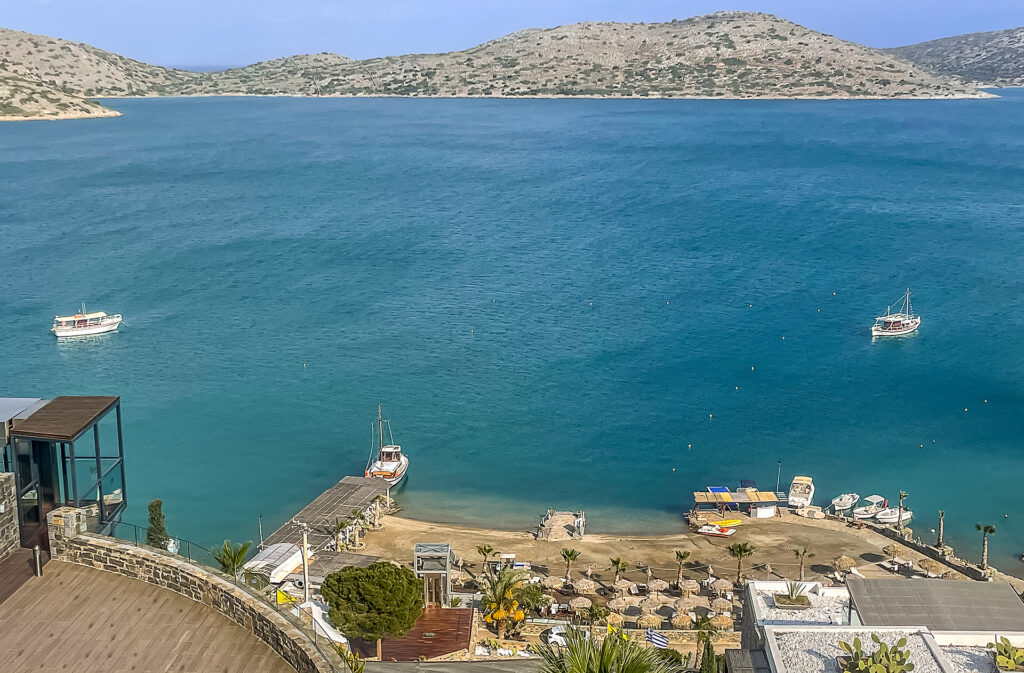 The Royal Marmin Boutique Art Hotel, where every balcony frames a picture-postcard view of Mirabello Bay.
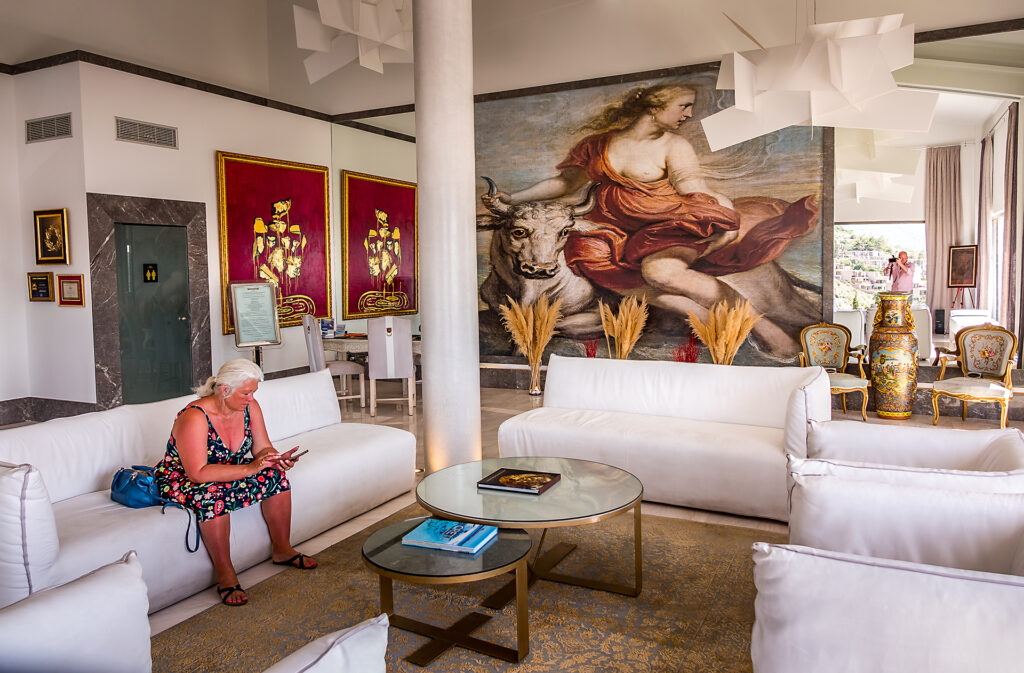 The Royal Marmin Boutique Art Hotel, where luxurious hospitality meets art.
In Elounda and Plaka, the embrace of life continues. Meals linger into the night, wine glasses catching the glow of lanterns. The sea invites you to swim, to float, to forget. And yet, across the bay, Spinalonga never quite lets you go. Its outline sits quietly along the horizon, a shadow reminding you of what once was. It’s no longer an island of exile but remains a place of remembrance – a eulogy written in stone.
Useful Links
Where to stay:
The Royal Marmin Boutique Art Hotel https://www.royalmarminbay.gr/
Where to eat:
Megaro. https://www.megaro-restaurant.gr/
Nikos Fish Tavern. https://www.eloundafishtavern.gr/
What to read: ‘The Island’ – by Victoria Hislop