Pirates, Ahoy!
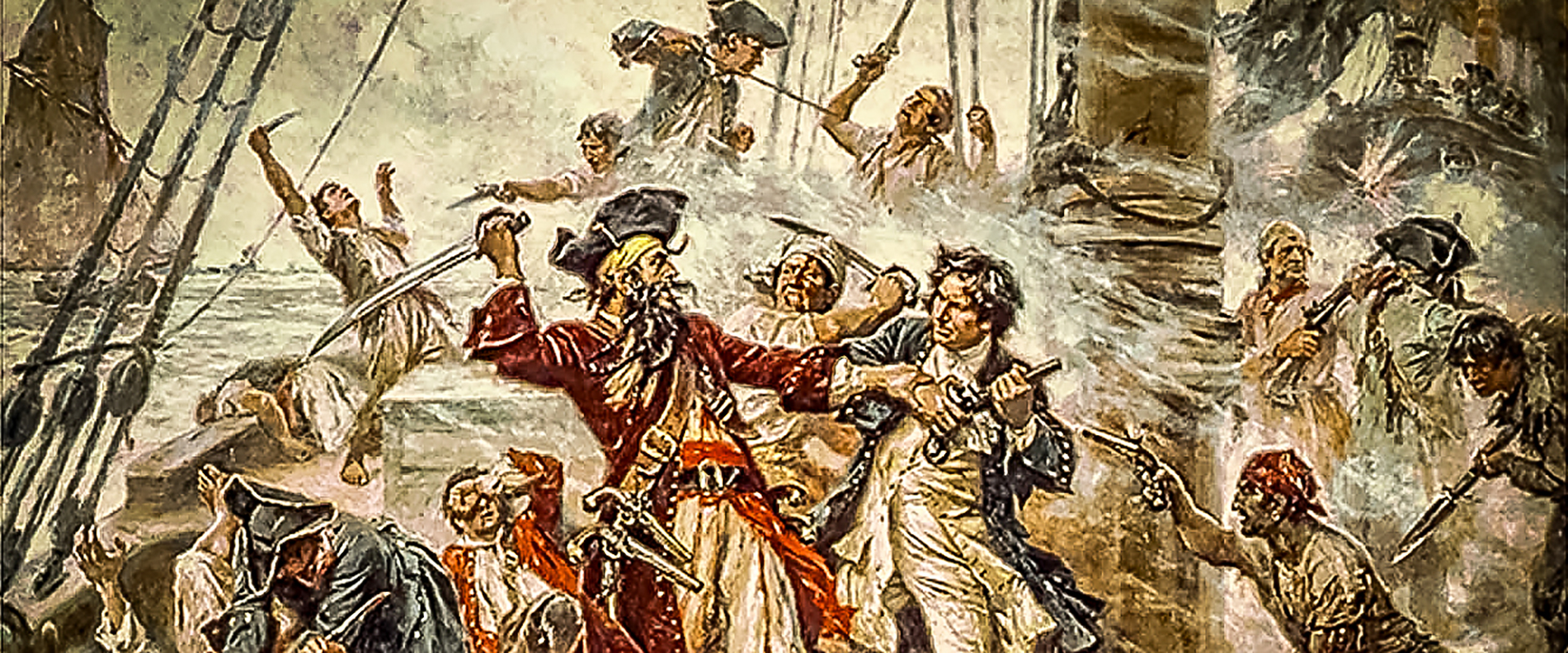
‘A merry life..and a short one’. The quote from Bartholomew Roberts, aka ‘Black Bart’, the most successful pirate in the Golden Age of Piracy is probably the most accurate description of the popular conception of pirate life.
‘Pirates’, a new exhibition opened at the National Maritime Museum, Greenwich, this month, traces the changing depictions of pirates through the ages and reveals the brutal history often obscured by fiction. Often portrayed as scoundrels or tricksters, pirates are largely swashbuckling adventurers associated with lush islands, flamboyant dress, and buried treasure. ‘Pirates’ deconstructs these myths and illuminates the realities of pirate lives, including those of the most infamous – Edward ‘Blackbeard’ Teach, William Kidd, Anne Bonny, and Mary Read.

Covering theatre, film, and fashion, the exhibition brings material together from early literature on piracy in the eighteenth-century to 1980s fashion. The first section, ‘The Pirate Image’, explores popular culture and why pirates generate so much fascination. Whether as comical characters like Captain Pugwash, villains like Captain Hook and Long John Silver, or anti-heroes like Captain Jack Sparrow, pirates have captured the imagination for generations.
From television to theatre, pirates are portrayed in a similar guise, bearded outlaws dressed in seventeenth-century fashion and sporting a tricorn hat. Much of this originates from Treasure Island by Robert Louis Stevenson, the novel that popularised myths such as walking the plank, pet parrots and hiding treasure.

Images courtesy Isabel Ryan/Estate of John Ryan, and Penny Rose/CosProp
A highlight loan among the exhibits is a selection of original illustrations from the comedy animation Captain Pugwash. The artist and writer John Ryan (1921–2009) created the comic character of Captain Horatio Pugwash, first appearing in cartoon strips before being featured in a television series using hand-animated figures. These simple but highly distinctive pirates continued to be popular off screen with more than twenty Pugwash books published. Textile loans include the costume worn by Orlando Bloom in Pirates of the Caribbean: The Curse of the Black Pearl and a Vivienne Westwood ensemble from the 1981 ‘Pirate’ collection. Westwood’s designs, created with Malcolm McLaren, were immediately popular with the New Romantic movement in the early 1980s.
Beyond fiction, ‘Real Pirates’ delves into tales of specific pirates focusing on the so-called ‘Golden Age of Piracy’ from the 1680s to the 1720s. A key text informing this period was ‘A General History of the Pyrates’ by Captain Charles Johnson which narrates the lives of famous piratical figures. First published in 1724, it was an instant hit. The National Maritime Museum has one of the world’s most comprehensive collections of ‘A General History of the Pyrates ‘ thanks to Philip Gosse, the son of Edmund Gosse, a lifelong friend of Robert Louis Stevenson. Inspired by Stevenson, Philip began to acquire a pirate library, later purchased by the Museum. The exhibition draws on this collection to show how Johnson’s various editions fed into and responded to popular ideas of pirates across Europe, tracking how illustrations of pirates became more elaborate and theatrical to appeal to the public.

Courtesy National Maritime Museum, Greenwich, London
In ‘Global Pirates’ highlight objects include a hanging captured from a junk in the fleet of the Chinese pirate Shap Ng-tsai, who was active in the mid-nineteenth century. Originally thought to be a flag, it is now believed to have been a shrine on board the ship, dedicated to Tien Hou, regarded as a calmer of storms and protector of marine commerce, fishermen and sailors. Shap Ng-tsai’s fleet of 27 junks was destroyed in a joint action by an Anglo-Chinese squadron under Captain John Charles Dalrymple Hay and Major General Hwáng on 20 October 1849.
Exploring Barbary piracy, the exhibition studies the Bombardment of Algiers, in 1816, when a combined British Dutch force attacked Algiers to resolve the longstanding issue of piracy on the North coast of Africa. A table centrepiece from leading London silversmith Paul Storr, commissioned by British officers at Algiers and presented to their commander, Admiral Pellew, is a proud feature of the exhibition. It shows the fortress at Algiers, bristling with tiers of guns, and scenes of the bombardment. The surrounding figures represent British seamen fighting Algerians and releasing Christian captives. The Bombardment resulted in the release of 3,000 Christian captives but came at a cost that was more deadly than the Battle of Trafalgar.
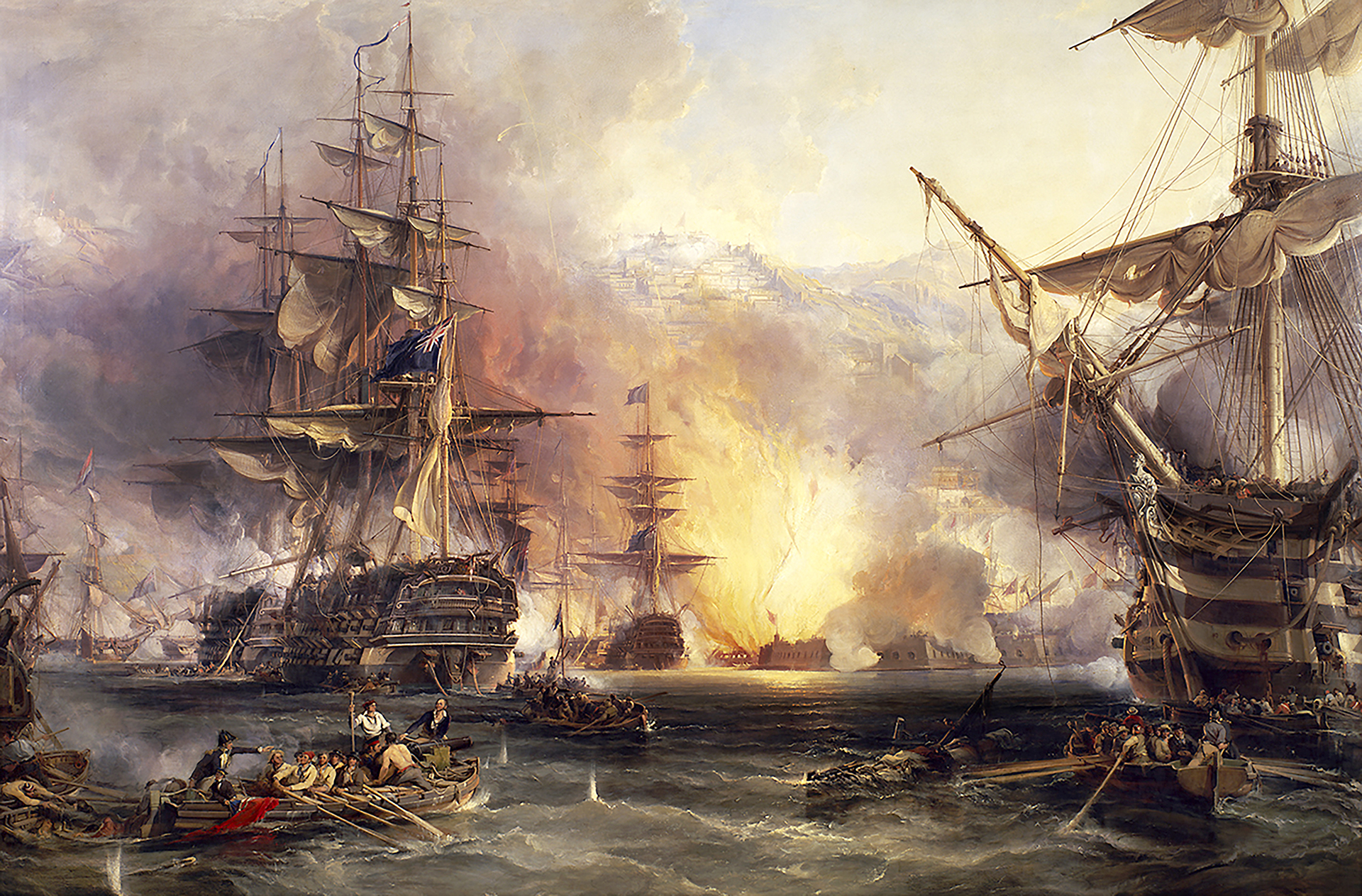
Courtesy National Maritime Museum, Greenwich, London. Greenwich Hospital Collection
The National Maritime Museum forms part of the Maritime Greenwich UNESCO World Heritage Site.
‘Pirates’ runs from 29 March, 2025 through to 4 January, 2026 at the National Maritime Museum, Greenwich, London.
For more information: www.rmg.co.uk